



AN UNIMAGINABLE APOCALYPSE.
A SCARED YOUNG GIRL.
A STUBBORN OLD WOMAN.
BUT WITHOUT EACH OTHER, NEITHER WILL SURVIVE.
Pam is in her mid-seventies, widowed and hiding from the world behind a caustic sense of humour. Her health is declining, and she’s afraid of dying alone, but her most pressing concern is complaining to the council about her waterlogged garden.
When Pam’s ten-year-old neighbour, Charlotte, is foisted upon her, a tentative friendship begins to unfurl, cracking open Pam’s hard exterior.
But the puddles in the garden become pools, and then sinkholes. Nowhere seems safe. With no help coming, Pam and Charlotte can only shelter in place for so long – eventually, they know they must attempt to navigate a catastrophically altered world.
The Water Takes is a work of astonishing literary imagination with the urgent page-turning propulsion of a thriller. Full of surprises and revelations, with a sense of humanity that is never clichéd or sentimental, The Water Takes will make you laugh and cry – and it will stay with you forever.



(2/5)
The beginning of this novel confused me, and although a rereading of the first thirty pages may have helped my confusion, I continued.
The concept of the world as we know it being swallowed up by water, creating sinkholes and disappearing buildings and people, was an interesting one, especially in this day and age, when sinkholes are appearing more often.
The relationship between elderly Pam and her young neighbour Charlotte and their reliance on each other to survive was an interesting one.
(5/5)
I thoroughly enjoyed The Water Takes, Sarah Walker’s debut novel, which is on the surface a story about Pam, a woman in her mid-seventies, and Charlotte, her ten-year-old neighbour, who must find a way to survive as puddles in their neighbourhood turn into sinkholes that swallow whole buildings and roads. But it’s much more than that – it’s really a story about what it is to be old, to have a body that no longer functions as you want it to, and to suddenly realise you are vulnerable.
Pam is a wonderful character. She is bad-tempered, rude, impatient, and has a caustic sense of humour. She also has a sharp awareness of how people behave when their lives are threatened. By writing The Water Takes from Pam’s point of view, Walker was able to effectively contrast Charlotte’s naivety and growth to Pam’s cynicism and terrifying deterioration, so as to create a story that is gritty, funny, warm, insightful, and beautifully written.
My thanks to Good Reading Magazine and Simon & Schuster AU for the review copy.
(5/5)
Throw together a seventy-six-year-old widow, a suddenly orphaned and clearly grieving ten-year-old girl, a wholly unpredictable natural disaster (whose cause might lie with land development and climate change), the supply of essential utilities failed, and an absence of the expected, organised assistance usually provided by civil authorities, and you have Sarah Walker’s compelling, thought-provoking debut novel, The Water Takes.
Her older protagonist’s grudging care, grumpy attitude, frequent lack of kindness, and unvoiced fears will strike a chord with readers of a certain vintage, while her resilient and resourceful young charge shows an intelligence and compassion beyond her years, evidencing her well-balanced upbringing. The premise is certainly credible, even with the hint of paranormal; given the old lady’s history and character, the ending seems inevitable, although it may not satisfy every reader. Highly recommended.
(4/5)
In Sarah Walker’s The Water Takes, puddles become pools and pools become sinkholes, swallowing buildings as a horrific aquatic apocalypse unfolds. This remarkable novel follows Pam, a widow in her seventies, and Charlotte, her neighbour’s child. An unlikely alliance, thrown together, they must cooperate to survive as their world dissolves (literally). It is a story of humanity, relationships, and the humour that can surface even in dire situations.
Initially, I struggled with the narrative’s direction, perhaps due to the sheer horror of the situation. The book poses a haunting question: in a world focused on “things,” what do we have left when they are taken away? It prompted me to wonder how I would react, though none of us truly knows until we are tested.
Once engrossed and reading quickly, as I wanted to find out what happens to these two characters that I suddenly found myself caring about, I found the flashbacks a distraction. While I understand their importance, I wondered if the backstories could have been integrated more seamlessly. Consequently, I have given the novel four stars; nevertheless, it is a story I will remember for a long time.
(1.5/5)
While I appreciate the opportunity to read an ARC, I found this book quite difficult to get into. The writing style didn’t resonate with me and at times felt somewhat simplistic. I had high hopes going in, but unfortunately, it wasn’t a book that I connected with. Of course, not every book will appeal to every reader, and this one simply wasn’t my cup of tea.
(5/5)
Water everywhere! From when a hose is left running as an old man dies, to the mysterious dark sinkholes that swallow up people and places, the ordinary daily world is strangely collapsing into the unknown. It is a fascinating story of the reactions of two unlikely friends: Pam is a cantankerous old woman sensing the danger of people gone rampant, whilst Charlotte, the curious 10-year-old girl she comes to care for, is full of enthusiasm about solving problems and finding friendship and safety.
Most heart-warming is the way the roles of the caretaker and the cared-for child are gradually reversed, as Pam in turn becomes dependent on Charlotte’s care. It is a strange but beautiful story of love and kindness in a dystopian world that teeters on the edge of mayhem. The conclusion is an uplifting ode to the wonder of nature, a praise to the joy of life. This is such an entrancing book that I could easily read it all over again.
Highly recommended.
(4/5)
A thrilling read on every page.
A story of two women thrown together suddenly, elderly Pam (70s) and young neighbour, 10-year-old Charlotte, both have great losses and must learn to not only like and trust each other but to survive.
Set in a surreal world with sinkholes, strange water, scared people, and strange noises.
Love, defiance, heightened emotions, not for the faint-hearted.
(4/5)
A few days after I started this book, a newspaper headline reported: “Sinkhole in CBD forces school to close”. Yes, a sinkhole had opened in central Sydney, and the front of a truck fell in.
In The Water Takes, Pam realises all is not well when she gardens and finds that the soil is very wet, though there has been no rain, and when she kneels on the grass, her clothes get wet. She visits the pharmacist, “skirting a dinner plate-sized hole in the pavement”. Within a few days, she “stepped out the front door into ankle-deep water”. Soon after, her yard is flooded. These events are reported in a very matter-of-fact manner, as is the developing friendship between 76-year-old Pam and 10-year-old Charlotte.
This relationship is the core of the book – telling us of the fear and difficulties they face together against forces out of their control, and difficulties between an older, and quite cantankerous woman, and a bewildered, grieving, headstrong young girl.
There is another relationship of great importance that weaves through the novel – that between Pam and her husband Tomas.
It is a devastating and compelling book of fear, anxiety, hope, humour, sacrifice, and something that looks a lot like love.
(4/5)
The first half of The Water Takes intrigued me so much that I could not put it down. Pam is the elder lady we’ve all seen down the block tending to her garden and not wanting to deal with anyone else’s drama. Her 10-year-old neighbour, Charlotte, is thrust into her life, and the two are the most unlikely of duos. When sinkholes start popping up around the town, the novel takes a turn from found friends to dystopian thriller.
Pam and Charlotte turn to each other for comfort and strength when the world around them crumbles. The struggles they face start to pull at the strings that once held them together.
Towards the end of the book, I found my attention was not 100% into the story. What once was entertaining became a bit confusing, and the ending didn’t make any sense to me.
Afterwards, I thought for a while, was this book about climate change, or was Pam suffering from the same Dementia her own mother was plagued with?
A lot of questions are unanswered, which could annoy some readers, but it was a breath of fresh air, and the twists and turns in the storyline kept me engaged throughout most of the book.
(4/5)
The Water Takes is an intriguing and fascinating dystopian story.
Pam, an older woman who is still coming to terms with the loss of her husband, has the neighbour’s 10-year-old daughter, Charlotte, thrust upon her when her parents disappear. A whole new experience for Pam, having had no children of her own, she forms a tentative and fragile bond with Charlotte, which is constantly tested throughout the novel.
Together, they try to navigate a now unknown world that appears to be sinking, and in order to survive, they must rely on each other. This intergenerational relationship explores both the strengths and weaknesses of the two. Due to Pam’s experiences in her earlier life, she comes across to Charlotte as an unfeeling and stubborn person, but as young and scared as she is, Charlotte sees the good in people and tries to convey this to Pam, often causing conflict between them.
Although I’m not a huge fan of dystopian fiction, this was a ‘hard to put down book’. The care and connections that constantly emerged made it a riveting read. I look forward to reading more books from this author in the future.
(5/5)
‘The Water Takes’ completely pulled me in! Sarah Walker’s writing is beautiful, atmospheric, and immersive, giving the story a heavy, haunting feeling that stayed with me. It felt quietly devastating but also deeply human, and I found myself thinking about it even when I was not reading. The eerie, strange dystopian world felt vivid and unsettling, creating a sense that something was never quite right, yet also strangely familiar.
Pam was a standout character for me – sharp, stubborn, complex, and at times unexpectedly funny. I really loved how Charlotte was vulnerable yet resilient, and I especially loved the relationship that grew between them. Their connection gave the story so much heart, and watching their bond develop in such a bleak and unsettling world was one of the most powerful parts of the book. It felt tender, raw, and deeply real.
What I loved most was that beneath the survival story, this book tells of grief, resilience, and human connection. It left me emotional, unsettled, and fully absorbed, and had me thinking about the future and the world we live in now. This was such a memorable read for me, haunting and beautifully written with so much heart and mystery.
(3/5)
This book tells the story of a town struck by sinkholes, starting with a waterlogged garden, then small sinkholes, and eventually big ones that take entire constructions.
Elderly, grieving Pam and young but wise beyond her years Charlotte inadvertently have to navigate this new world – when the usual course of actions doesn’t give results, what to do next, and how to handle their different views on how to get help?
I thought this story was very believable (especially since this advanced copy review was timed with the news about the subsiding M6 tunnels under construction in Sydney), and so for me, the paranormal side to the water didn’t add anything extra to the story, other than to further divide Pam’s and Charlotte’s views and actions in their apocalyptic world.
(4/5)
The world is being swallowed up by water. Puddles turn into pools and then sinkholes. Pam, a grumpy old woman, teams up with Charlotte, a young girl, to survive in this apocalyptic story.
We never learn exactly how or why the apocalypse is caused, but that’s not the point. The world-building focuses on the immediate description of the world, which is simple, imaginative, and evocative.
The book is much more about the characters and their relationships. We get a lot of background about Pam and her late husband, Tomas, and this reveals to us more about Pam’s mindset. She’s a grumpy and suspicious woman, contrasting with Charlotte’s trustworthy nature. Whose attitude will be more effective in the apocalypse?
I found the situation original, and there were some interesting problems that were credibly and compellingly described, then solved by the couple. Pam was well-characterised, and there was a range of authentic and understandable emotions – happiness, irritation, anger, apathy, sadness. I felt I wanted to know Charlotte better, and the relationship needed to be deepened and to grow more to be truly satisfying, though.
(5/5)
The Water Takes is a stunning character-driven tale that will stay with you.
Blending literary sensibilities with magical realism, it contrasts the weariness of age with the possibilities of youth, united by the human compulsion to survive.
Pam, 76, is experiencing the grief and rage that comes with the loss of her partner and peers, physical decline, and the fear of losing her mental acuity and independence.
Into her shrinking world comes ten-year-old Charlotte. Despite her own losses, she shines with honesty, optimism, and a willingness to adapt to her new future.
They are forced into a partnership of necessity by the third major character of this book: the water that is swallowing their world.
If you have read the author’s award-winning non-fiction essay, Piscine, you will recognise the use of water as a motif for life in all its stages, from beginning to unavoidable end. Both necessary and feared, the water is always moving; it nourishes, and it takes.
This book reminds us that the cycle of life and love is never-ending. The future is always uncertain, and you can’t cling to safety forever. Eventually, you have to let go.
It’s engrossing, heartwarming, and heartbreaking. I loved it!
(3/5)
The Water Takes explores the concept of an apocalyptic world, while following the unlikely friendship of Pam and Charlotte. Their friendship offers readers a sense of hope and survival, however as the book progresses, we start to see this relationship being tested. There are hints of deeper themes and emotional backstories throughout the book, but it just never quite feels like the story fully commits to exploring them. Instead, we skim along the surface (no pun intended) and move on to the next chapter quickly.
I found the main character, Pam, difficult to connect with and generally unlikable. Her flashbacks serve to reinforce why she has become hardened and untrusting of strangers, but because of this, the emotional core of the story feels a bit distant at times. The book didn’t give me a great sense of momentum or climax, and the ending felt quite abrupt, leaving readers to fill in some blanks.
Overall, it’s an intriguing concept with a lot of potential, but I finished the book wishing it had explored its characters and themes in more depth.
(4/5)
The Water Takes by Sarah Walker is an interesting book.
I struggled a little at the beginning as the story is almost like reading a news bulletin, but it is worth persevering to the end.
The story loosely follows two main characters, a bitter old woman and her young neighbour, who are thrown together under extenuating circumstances in a battle for survival. Heavy prolonged rainfall has caused widespread sinkholes to appear which have randomly swallowed some houses and businesses and left others intact. Essential services have been cut and survivors re left to their own devices in a battle to find food and water supplies, while waiting for some sort of emergency support to arrive.
I personally found it strange that the emergency services failed to make an appearance, it was almost like the whole country had fallen into a sinkhole, not just a town, which spoilt the story somewhat.
I give it four stars.
(4/5)
I don’t often read dystopian novels, but something about this one piqued my interest. It tells the story of an elderly lady, Pam, and her ten year old neighbour, Charlotte, who are thrown together by circumstance, and must navigate their changing world together.
As the world Pam and Charlotte knew is gradually swallowed, they both need to find a way to survive their new reality. Pam’s age and experience, and Charlotte’s youth and fitness, mean they are reasonably well equipped to survive. They work together to make the best of their opportunities.
I did find Pam’s character annoying at times. She didn’t always deal well with Charlotte or other characters, but that aside, this was an interesting and absorbing book.
(5/5)
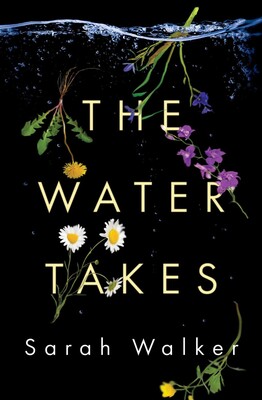
Firstly, I would have purchased this book purely for its cover. Just an amazing depiction of the words within.
I loved the dystopian, suspense, thriller ambiance within the written word. The imagination of Sarah Walker, on paper, is intoxicating.
I fell in love with old Pam and 10-year-old Charlotte and how Pam thought she was protecting Charlotte, but really Pam was using her as a safe haven. Better in company right?
The surprises of living in an altered world and survival instincts that can see the demise, or valour of the recipients, had me flipping the pages to get the outcome of each event.
I found the novel well written, taking the reader on a journey of ‘what would I do here’ and hoping that young and old will concur with the catastrophic changes they endured.
A thriller, imaginative, at times overwhelming story that will capture your heart.
(3/5)
The Water Takes follows a survival journey of Pam, an elderly, lonely and sassy woman and her young 10 year old neighbour, Charlotte. They have survived catastrophic events of giant sinkholes that put danger in every corner. Both experienced grief and they need each other to make their way, both physically and emotionally.
The story has plenty of emotion, drawing the reader in. Sarah Walker is an excellent storyteller, though I found the storyline was quite confusing. I found myself wanting to read to the end, hoping to make some sense of what was happening. Was it imaginary? Was it real? Prepare for full on imagination to be working overtime.
(4/5)
The Water Takes is a literary dystopian novel exploring human connection, the innocence of children and scepticism of adults.
We begin the story with a stream of consciousness style writing setting the scene where we are in Pam’s head and life is normal. We see her meeting Charlotte, the little girl from next door. Pam is not maternal, yet there is a connection between her and Charlotte that even she cannot explain.
Things progress as the water rises and we move into what feels like a scarily close to home dystopian reality.
We follow Pam and Charlotte as they form an unlikely friendship and must figure out survival in the most unprecedented circumstances. It was interesting to watch their different approaches to their minimal interactions with strangers that they come across.
We also have chapters glimpsing into Pam’s past to give insight into her character. There are some wonderful descriptions of monotonous everyday moments that were conveyed in a way that makes them so beautiful.
The writing style of this book was fantastic, and it kept me interested the whole way through. A wonderful read.
(4/5)
When Pam (equal parts misanthrope and chronic people pleaser) and her precocious 10-year-old neighbour Charlotte are left to fend for themselves after the world around them literally starts to fall apart, we see their strong yet imperfect bond form.
Pam pushes through intense physical pain with a drive to protect Charlotte, who in turn cares for Pam while pushing the boundaries of what to do and where to go when the people and places they once knew start falling into the abyss. Their relationship is as tense as the plot as they struggle with fear, hunger, and whether to trust the few people they encounter.
The writing is taut and visceral; you’ll feel like you’re in Pam’s lounge room, shivering and starving alongside the protagonists. Expect a few ‘oh my god!’ moments as well as funny, heart-warming and genuinely sad ones. While I thought Charlotte’s relationship with the water could have been more fleshed out, it didn’t detract from the overall plot.
Set aside a weekend for this one as it’s a real page-turner – and be prepared to develop a fear of puddles for a solid week afterwards!
(4/5)
This is a mesmerizing book that keeps you turning the pages.
This was a book that I had to sit with for a while, before I could do my review. Even now, I am unsure if my star rating is my final decision. This is a book that builds and escalates. I wished that I had been reading it with my Book Club, so that I could have talked immediately with others about what they thought of the ending, as well as discussing so many other things along the journey.
The story follows Pam, a witty lady in her 70s, as she navigates a sudden but growing situation where water is taking over the ground around her. Pam is accompanied by her 10 year old neighbour, Charlotte, who she had recently started spending time with. It is not for the faint hearted and there are layers of trauma woven into the narrative; however it is a mix of light (the humour) and dark. It left an impact on me that won’t disappear quickly and left me thinking about it long after turning the last page.
(5/5)
This is a compelling page turning read, that was so engaging, I couldn’t put it down.
The characters of Pam and Charlotte will capture your heart as they navigate the increasing sinkholes in their community and their relationship. Pam being set in her ways and stubborn was a great match for Charlotte, a 10 year old girl as she pushes Pam past her limits and helps her to come to terms with the events but also how to care for someone after a loved one has died many years before.
The flashbacks give us a real insight into Pam and why she is the way she is. I loved getting to know her as a younger person through these moments.
I laughed, cried and felt grief along with the characters as they started to imprint a place in my heart as I turned the pages.
This is great for people who enjoy a dystopian feeling book and one that includes such great characters to give them insight into the thoughts and feelings as well as journey alongside them through the disaster.