


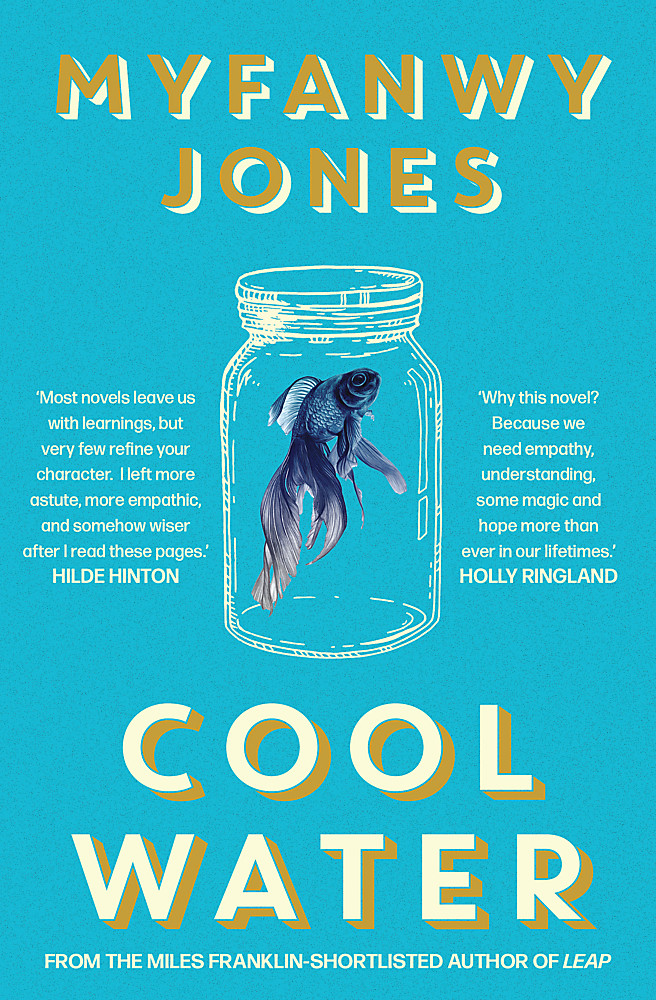
Frank Herbert and his wife have come from the North Queensland city of Cairns to Tinaroo Dam, on the Atherton Tableland, joining friends and extended family for the wedding of his only daughter.
The area has been important in Frank’s life, not just for family holidays. His recently-deceased father grew up there, his grandfather was the town butcher during construction of the dam, and his great-grandfather was the butcher in the town of Kulara, drowned under the dam waters.
All three used violence and disapproval to cow their families and Frank fears that no matter how hard he tries to be a good man, the damage of that generational violence will one day overcome him. Symbolically, he had left the family business of meat to start a seafood company.
The novel’s action moves between that wedding weekend and 1956 when we meet Frank’s father Joe as a young boy, living in the dam-building town with his brothers, mother and father Victor, the personable butcher who dominates his family with violence.
Each week it is Joe’s job to deliver copies of the Dam Digest around the town, and he looks forward to afternoon tea with Evelyn, wife of the newsletter editor/lead engineer.
The atmosphere of a construction village hosting many nationalities is well-drawn, along with artist Evelyn’s discontent, Victor’s involvement in community activities, the fear with which he rules his family, and his ‘hobby’ of extra-marital pursuits.
For Frank, the voice of Joe, who never thought his son would amount to much, accompanies him throughout the wedding preparations, particularly when fishing on the lake. Juxtaposed with the story of this family’s life at Tinaroo in the 1950s, it is a sobering reminder of how generations of one family can live in the shadow of cruelty, and maybe overcome it.
Reviewed by Jennifer Somerville
Read an interview with Myfanwy Jones
ABOUT THE AUTHOR
 Myfanwy Jones started out in a Saigon newsroom, subbing and writing restaurant reviews, before enrolling in RMIT’s Professional Writing and Editing course where she was mentored by the late Olga Lorenzo. Myfanwy’s debut novel The Rainy Season was published in 2009 and shortlisted for The Melbourne Prize for Literature’s Best Writing Award.
Her stories and essays have appeared in numerous journals and anthologies; including, most recently, Split: true stories of leaving, loss and new beginnings (ed. Lee Kofman).
A playful collaboration with Spiri Tsintziras – the bestselling Parlour Games for Modern Families – was awarded ABIA Book of the Year for Older Children in 2010.
Myfanwy’s second novel, Leap, was shortlisted for the 2016 Miles Franklin Literary Award and longlisted for the Voss Literary Prize. Her third novel, Cool Water, will be published by Hachette in February 2024.
Alongside her own practice, Myfanwy has judged short fiction and non-fiction writing awards, and has worked as a freelance editor and manuscript assessor for 25 years. She is especially privileged to mentor emerging writers, sharing her particular keenness for structure and the character of place.


0 Comments