



In She Who Remembers, MEGAN DALLA-CAMINA explores feminine wisdom, inner authority and the quiet knowing many women have been taught to ignore. Drawing on her corporate leadership experience and PhD research, she invites women to reconnect with body, intuition and truth.
ROWENA MORCOM reports.
Megan Dalla-Camina grew up in Sydney in what she describes as a typical Australian family. But, she says, ‘From a very young age my inner world was anything but typical.’
Her childhood was shaped by the performing arts. She spent most of her time in dance classes, rehearsals and performing with her local theatre group – a world she loved and one that carried her through her teenage years.
‘Looking back, performance gave me a deep connection to the body, emotion and expression. It taught me how to feel, how to inhabit different inner landscapes and how to communicate beyond words. As a teenager, I also became deeply curious about New Age ideas, self-help and spirituality. I was creative, emotional, intuitive and often pushing against systems that felt too rigid or limiting.
That tension between expression and structure shaped me early, and I can now see it as the beginning of my lifelong relationship with feminine wisdom.’
From these early experiences, Megan believed she would become an actor.
‘There was never really another option in my mind. Performing wasn’t just something I did,it was who I was. I felt most alive on stage, in movement and in creative expression.
 ‘What I didn’t realise at the time was that this longing wasn’t only about acting. It was about meaning, embodiment and being able to tell stories that reflected something true about the human experience. Even now, I see a very clear through-line between that early dream and the work I do today – the desire to give voice to what often remains unspoken.’
Although she attended a performing arts school after high school, she entered university at 25, eventually completing two master’s degrees.
‘At that stage of my life, formal academia felt too narrow for who I was becoming. I was far more interested in experience, creativity and exploration than credentials.’
Her early life in performance would later contrast sharply with her move into highly structured, outcome-driven corporate environments.
‘I worked across many different industries, then landed at GE, and later at PwC and IBM, in roles spanning marketing, strategy, gender diversity and leadership. On the surface, I adapted well. I was capable, articulate, and driven with all of the external markers of success. But internally there was a constant negotiation between my creative, intuitive self and the expectations of corporate culture. I learned how to perform competence just as much as I had once performed on stage – only now the script was professionalism rather than art. That dissonance stayed with me.’
Reflecting on that time, Megan saw firsthand how women were navigating corporate life.
‘What I saw most clearly was how much women were expected to contort themselves to fit systems not designed for their lives or bodies. Many women were navigating careers alongside caregiving responsibilities, with very little structural support for childcare, flexible work or the realities of different life stages.
‘I saw brilliant women downplay their needs, hide exhaustion, and push through physical and emotional limits to avoid being seen as “difficult” or “less committed”. Mothering, menopause, wellbeing, and mental health were rarely named. Success often came at the cost of wellbeing, and that trade-off was quietly normalised.’
Those observations led her to found Women Rising, a leadership development program for women. The award-winning organisation now partners with more than 860 companies, helping women develop and ‘succeed on their own terms’.
 ‘Women Rising emerged from a desire to create something different to empower women who often felt stuck and invisible in systems they needed to succeed in. I wanted to support women who were ambitious and capable, but who didn’t want to succeed by disconnecting from themselves. These were women asking deeper questions: How do I grow without burning out? How do I lead without losing my values? How do I stay true to myself in demanding environments?
‘We have had more than 10 500 women globally go through the program in the past four years with exceptional life-changing outcomes. It has been remarkable to witness.’
Alongside this work, Megan is also a PhD researcher in women’s spirituality.
‘My PhD research is really about how women experience feminine wisdom in their everyday lives. Rather than focusing on belief systems or formal religion, I explore how women know what they know – through the body, intuition, lived experience and the quiet rituals of daily life. It’s about the moments when a woman feels something deeply true, even if she can’t immediately explain it, and how she can learn to access and trust that knowing.
‘The research draws on women’s stories, feminist thought and spiritual traditions to understand how this kind of knowing has often been dismissed or marginalised. I’m especially interested in how women reconnect with that inner wisdom and how, once remembered, it subtly but powerfully reshapes how they live.’
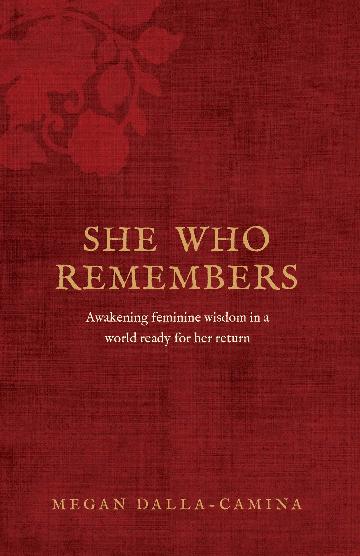
This research has informed her new book, She Who Remembers, though Megan says the book reaches beyond academia.
‘This is not an academic book, but it is deeply informed by years of research and listening; to women’s stories, to ancient teachings and to the quiet patterns that repeat across women’s lives. My research helped me name experiences many women already know intimately but haven’t always had language for.
‘The book weaves together themes from women’s history alongside contemporary women’s stories, revealing shared patterns of disconnection, silencing, awakening and return. Women recognise themselves in these stories and realise that what they’ve been feeling privately is not a personal failure, but part of a much wider collective experience.
‘She Who Remembers invites women to see their lives within a longer arc – one that honours feminine wisdom, inner authority and the remembering of what has always been within them.’
In the book, Megan explores the disconnection many women feel from their bodies, having been ‘taught to override fatigue, intuition and emotion in the name of productivity’, and from ‘rest and rhythm, living as though constant output is normal or sustainable’.
‘We’ve also become disconnected from inner authority. Many women have learned to trust external validation more than their own knowing. At a deeper level, we’ve become disconnected from meaning, living lives that look successful on the outside but feel hollow on the inside.
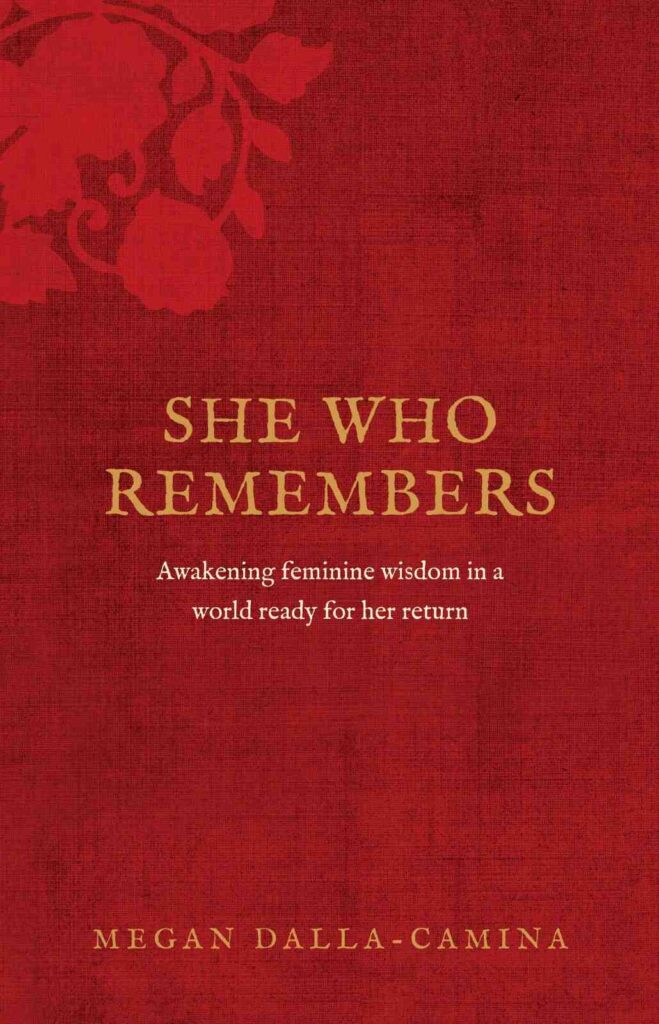 ‘She Who Remembers is an invitation to gently return.’ Megan encourages women to reconnect with ancient feminine wisdom. She explains that feminine wisdom is not about gender, but a way of knowing rooted in the body, in cycles, in relationship and in intuition.
‘The first step is listening – really listening – to your body, your energy and your inner responses. Small practices matter more than grand rituals: pausing before reacting, noticing what drains or nourishes you, honouring rest without guilt. This isn’t about adding more to already full lives. It’s about removing what no longer fits and creating space for what feels true.’
Looking back at the growth of Women Rising – now a global movement embraced by organisations worldwide – Megan reflects on what she witnessed.
‘I saw women being asked to carry too much alone. To be resilient without rest, confident without doubt, capable without care. Much of the support available focused on fixing women rather than questioning the conditions they were navigating. Women Rising was born from the recognition that women need spaces where their full humanity is welcomed – where ambition and vulnerability, strength and softness, coexist. It became a movement because it spoke to something many women were feeling but didn’t yet have language for: the desire to rise without self-erasure.’
Looking ahead, she hopes both She Who Remembers and Women Rising will have a lasting global impact.
‘My hope is that women feel less alone in their remembering. That they recognise their longing not as weakness, but as wisdom calling them home. I want women to trust what they feel, what they know, and what their bodies have been quietly telling them for years. If this work does anything, I hope it helps women remember who they truly are beneath expectation, performance and conditioning. Because when a woman returns to her inner wisdom and power, her life begins to reorganise around truth – and that changes everything.’
ABOUT THE AUTHOR
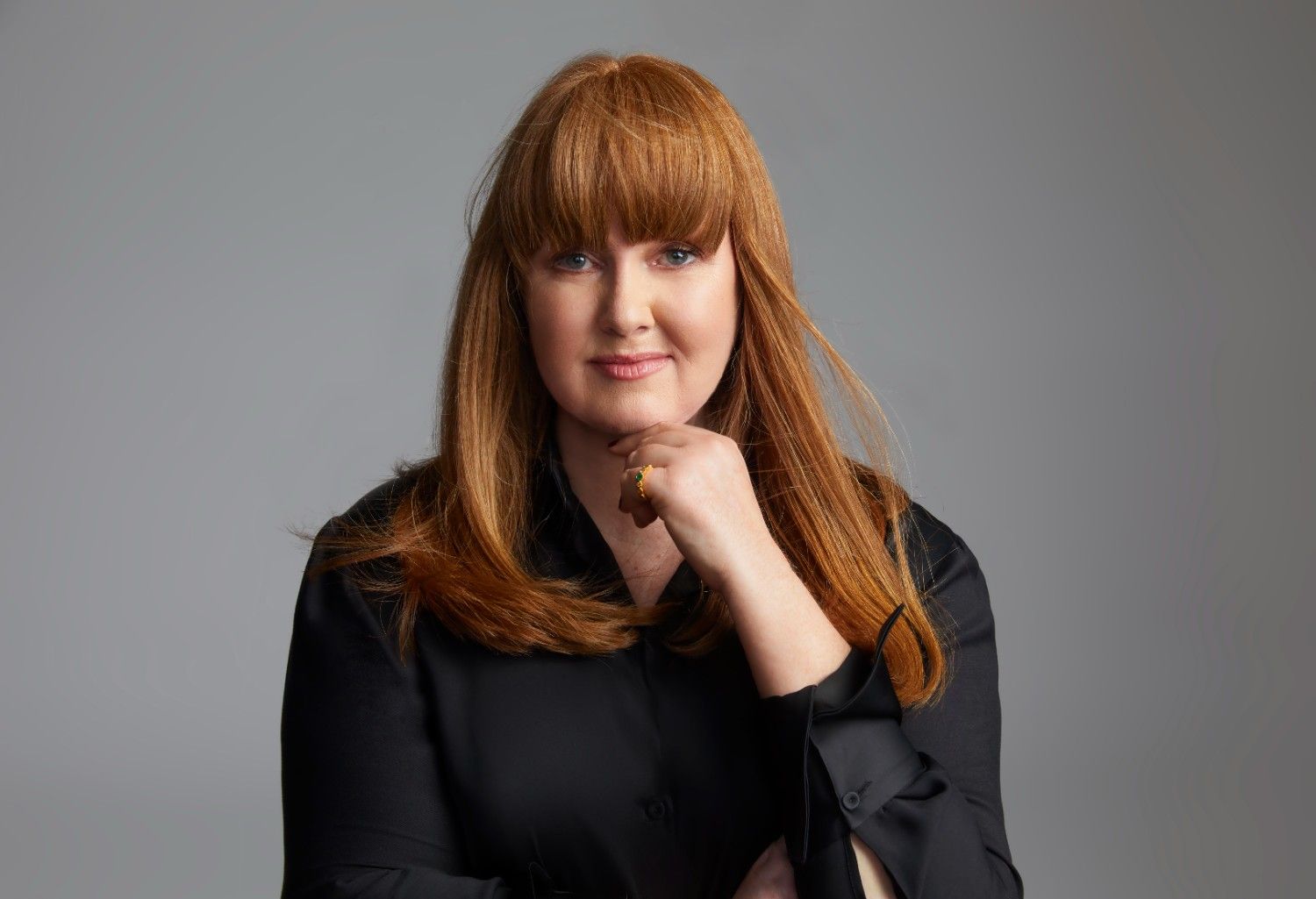
 Megan Dalla-Camina is a best-selling author, award-winning teacher, and PhD researcher in women’s spirituality. Her work is dedicated to women’s sacred return home to themselves. She is the founder of Women Rising™ and The Feminine Wisdom Codes™, guiding women around the world to awaken their feminine wisdom and embody their true power. For more than two decades, Megan has worked at the intersection of women’s leadership, empowerment, and spirituality – bridging science, spirit, and sādhanā. A long-time student and teacher of yoga, meditation, and ancient wisdom traditions, Megan is an initiate of Himalayan Tantric-Vedantic lineage and a lifelong seeker.
She lives by the sea in Australia with her family, where she writes, teaches, and continues her research on feminine wisdom and awakening.
Visit Megan Dalla-Camina’s website


0 Comments