




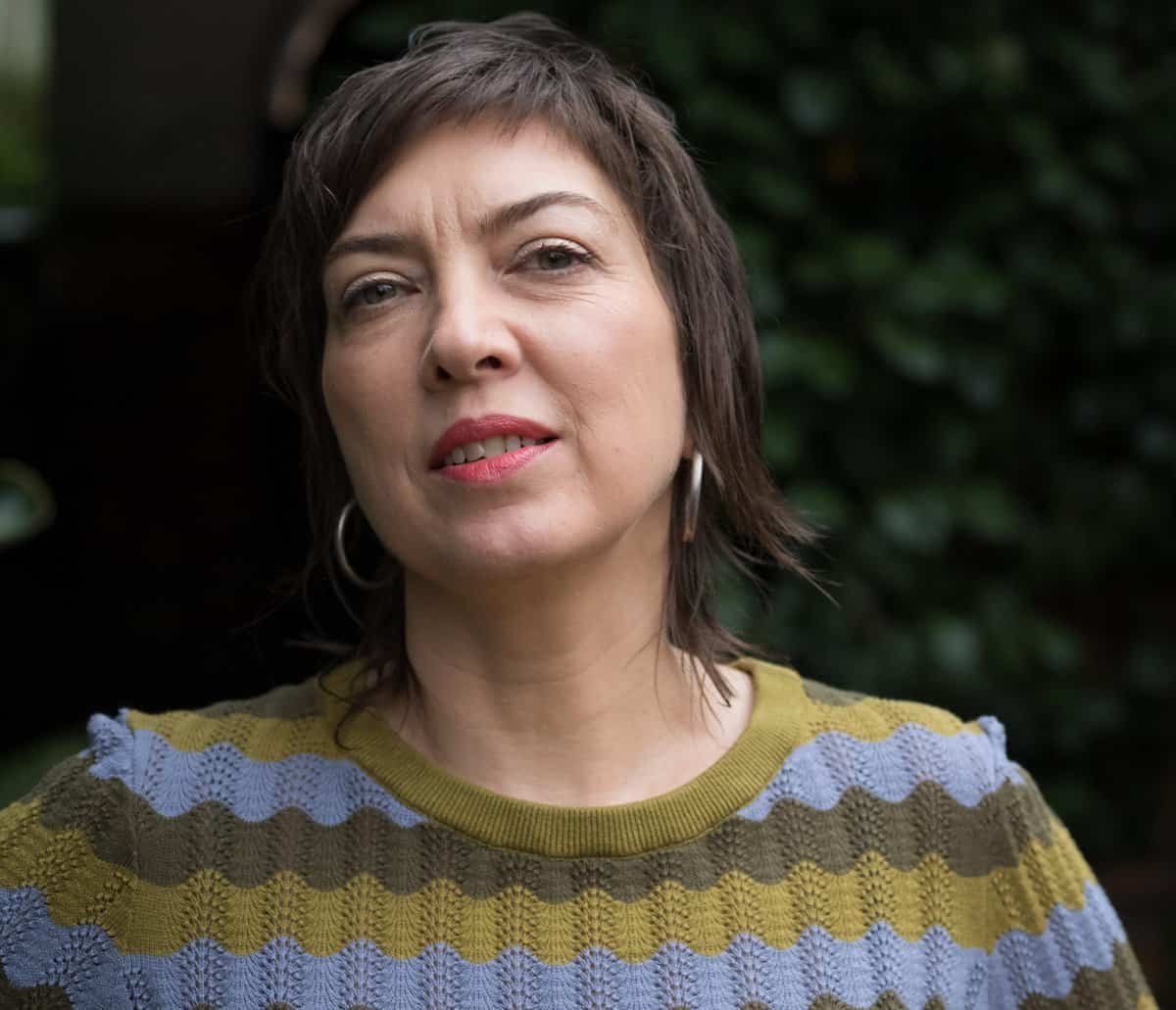
MYFANWY JONES is the Miles Franklin-shortlisted author of Leap. Her new novel, Cool Water tells the story of fathers and sons, and the damage that can ripple through generations.
Good Reading chatted with Myfanwy about the book and how stories begin with places.
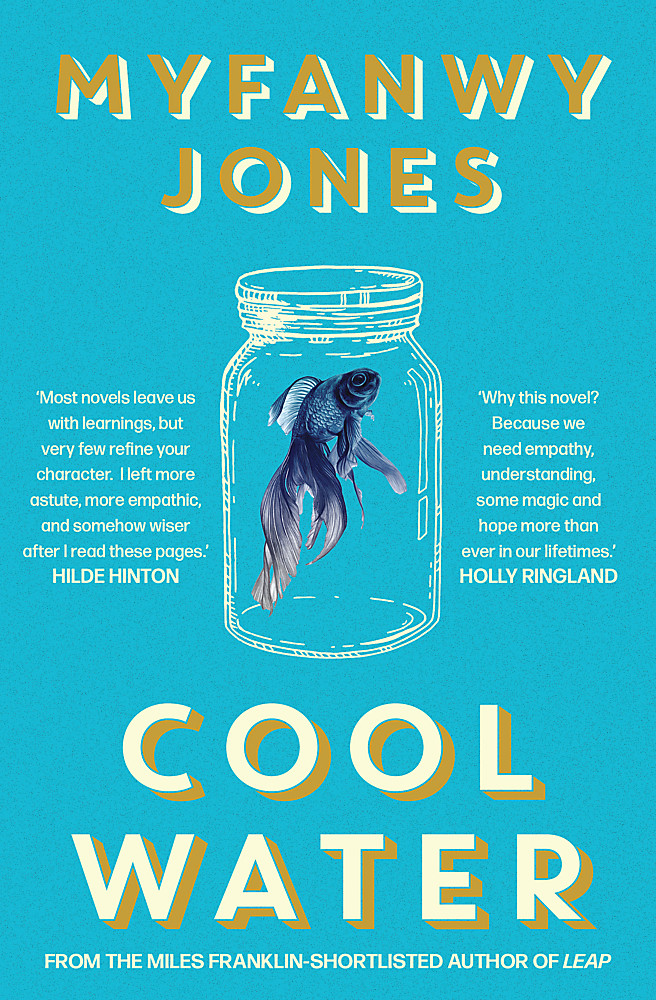
 ABOUT THE BOOK

Frank feared a reckoning, but what he feared more was that all the men in his family were cursed.
Frank Herbert’s family has gathered at Tinaroo Dam for his daughter Lily’s wedding – the first time he’s been back since the death of his father, Joe, a year earlier. Like Frank, the dam is at an all-time low and as the water recedes, objects begin to emerge – abstract and disquieting.
Joe’s father Victor – Frank’s grandfather – was the butcher of Tinaroo during the dam’s construction, but Joe refused to speak of him. Joe was not a talker, but he could roar. And he could smash things. What sorrow was his fury, and this place, concealing? And can Frank find a way into a future of his own making?
Moving between the weekend of the wedding and the explosive year in the 1950s that would shape the Herbert men’s destiny, Cool Water is an unforgettable novel about fathers and sons, what it means to be a good man, and the damage that can ripple through generations.
MEET MYFANWY JONES
How did the idea for Cool Water develop?
Cool Water was seeded on my very first visit to Tinaroo Dam, on the Atherton Tablelands of Far North Queensland. My stories always seem to start with place, and characters grow up from this, weedlike.
In 2017, Tinaroo Dam was at 25 per cent capacity and full of blue-green algae; pieces of the old, submerged town of Kulara had begun to surface – an eerie manifestation of the ever-present past. A signposted walk along the water’s edge told the story of the dam’s construction – the largest in Queensland at the time, built for the tobacco industry which ultimately collapsed. The streets of Tinaroo were completely empty, but a big wedding was taking place at our hotel.
All in all, it screamed: write me. I’d started research before we checked out. And when I look back, all the main elements of the story were right there at the start.
What aspects of your own life and family have entered into or inspired the characters and happenings in Cool Water?
The murkiness of the dam water is like the murkiness of blood, of families. I think the heart of Cool Water – Frank’s quest to understand his father Joe, and where Joe came from – was inspired by the complex relationship I had with my own father.
Dad was a powerful and sort of magical figure for me … picture T S Eliot crossed with Logan Roy and Willy Wonka. He was a poet, and he put us to bed each night with Grimms fairy tales. He instilled in me a love of words and made me want to be a writer. Dad was loving and loyal and could also be menacing and mean.
When I started writing the novel, Dad’s health was failing and my decades-long marriage was ending, so I was thinking a lot about intergenerational patterns. What gets passed down; what we’re aware of and what lurks beneath the surface. I’m not surprised it turned into a family saga.
What was involved in your research process for this novel?
Oh my goodness, I had fun. For the historical storyline, I immersed myself in all things 1950s Australia. Magazines, books, movies. Food. Music. Radio programs. On my writing desk, I had paper dolls, a pair of lace gloves and a rusty old Australian tobacco tin; things to pick up and play with. I found the old vinyl of Frankie Laine’s Hell Bent for Leather! in an op shop in Thornbury – his version of Bob Nolan’s ‘Cool Water’ was a hit the year my novel is set. My family has listened to that album a lot. More specifically, I read everything I could find on the history of Tinaroo.
I owe a particular debt to Gwen Price’s More Than Just the Dam: The Story of Tinaroo Falls and Marjorie Anne Gilmore’s PhD thesis ‘Kill, Cure or Strangle: The history of government intervention in three key agricultural industries on the Atherton Tablelands, 1895-2005’.
Cool Water is set in Tinaroo – do you have a personal connection to the place?
My first encounter with Tinaroo was a happy accident … I had friends living up that way, and an elderly uncle in Atherton. But while researching the novel, I learned that my paternal grandfather did his World War II army training in Danbulla Forest, in a camp now submerged by Tinaroo Dam. This was a really interesting layer to uncover.
Unsurprisingly, I’ve developed a strong connection to the place. I was blessed to make the acquaintance of a wonderful septuagenarian Dane, Inge Jensen, who runs a B&B beside the dam. She invited me to be her writer-in-residence and I’ve had no fewer than five intensive retreats, writing in situ.
The old Tinaroo Community Hall is an important venue in the historical story. It’s not used much anymore and is kept locked, so I’ve spent a lot of time sitting in my parked car on Lamb Street, feeling my way into it. Then, on my last visit, the front doors were open! There was a school group in there and I was able to poke my head in. Wonderful!
Cool Water looks at the devastating impacts of intergenerational trauma. What compelled you to explore this in your story?
There are these lines from Margaret Atwood’s brilliant novel Cat’s Eye: ‘You don’t look back along time but down through it, like water. Sometimes this comes to the surface, sometimes that, sometimes nothing. Nothing goes away.’ We are these incredible accumulations: we carry our ancestors in us, their traumas and triumphs. The burgeoning field of epigenetics looks at how genes can be switched on or off by traumatic experience, so we can inherit a response without any direct knowledge of its cause. But the research also shows that working with intergenerational trauma can remove epigenetic tags. And in Cool Water, I’m particularly interested in the fluid nature of intergenerational trauma: not a fixed quantity but something that is constantly changing shape, between and within generations.
I was also compelled by how intergenerational trauma plays out in the landscape. When Tinaroo Dam was built on Yidinji Country in the 1950s, there was this post-war shimmer, a sense of limitless possibility. We live in a very different time and are having to profoundly reassess how we relate to the land we’re on.
What messages or reflections do you hope to convey through your novel?
I think my novels are probably too full of ambiguity to convey messages! But it’s a great question. I hope that the novel is ultimately optimistic … That it makes a case for doing the enormous and largely invisible work of reckoning with what we’ve inherited. Eating our own shadows.
How did the process of writing this book compare to your last book Leap?
It couldn’t have been more different. I coughed Leap up like a giant furball: it was strenuous but took little conscious effort, arriving in two quick drafts. In contrast, the first draft of Cool Water was chaos. My life at that time was chaos! The novel grew out of the rubble, and I had to work hard to understand what it was trying to tell me. I had countless conversations with Frank Herbert away from my computer, trying to get a better grip on him. It took several years and several drafts for Cool Water to really become itself, so what I feel for it is a hard-won love.
Have you listened to, read or watched anything recently that you found inspiring?
The Hummingbird Effect by Kate Mildenhall and The Crying Room by Gretchen Shirm were two of my favourite novels of 2023, and I’ve just had the privilege of reading an advance copy of Jen Ackland’s new novel Hurdy Gurdy (out June 2024) – a powerful, propulsive, deeply moving piece of work. I’ve been dipping into Philip Salom’s new book of verse, Hologrammatical, and listening to Stephen Cummings’s 100 Years from Now.
ABOUT THE AUTHOR
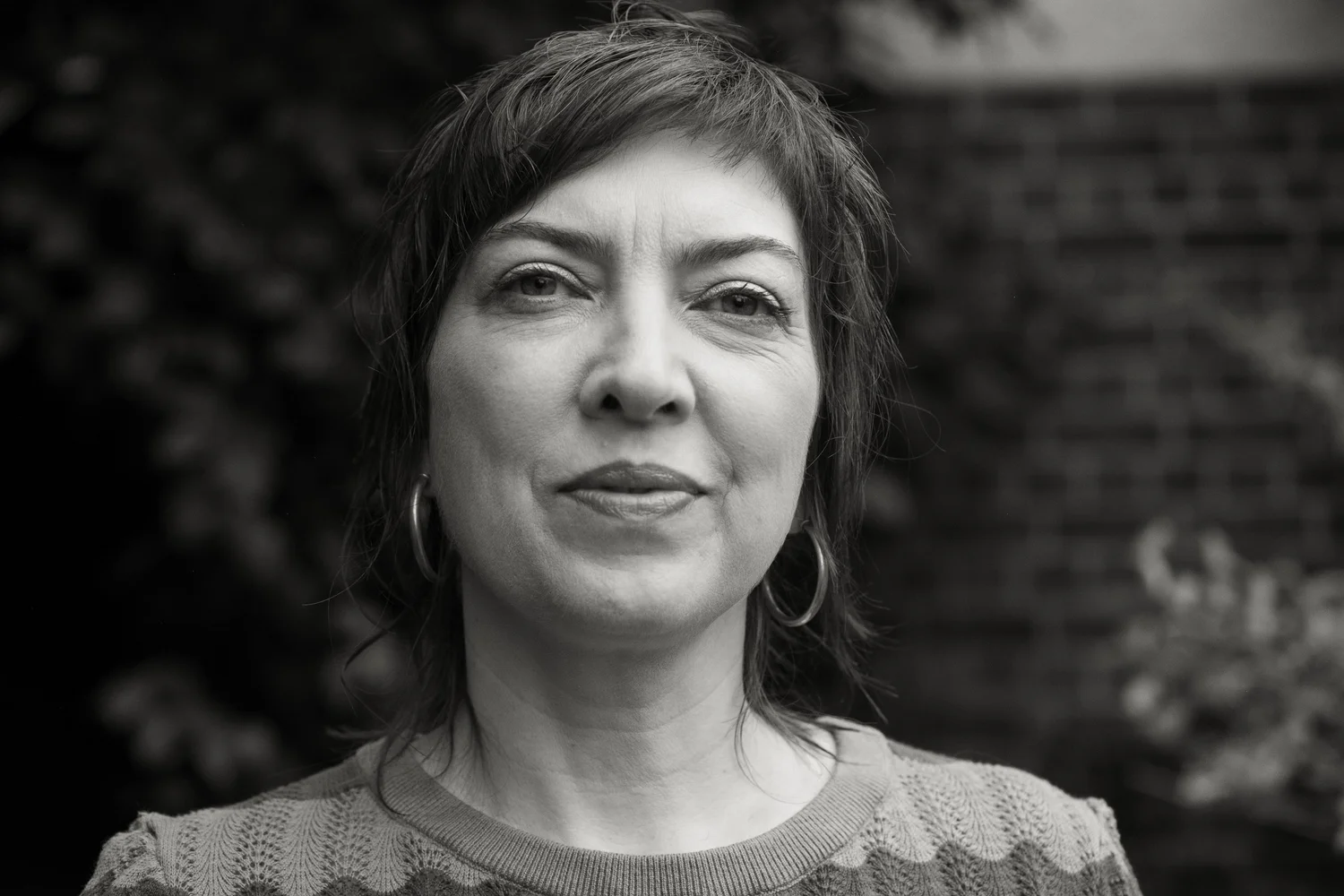
Myfanwy Jones started out in a Saigon newsroom, subbing and writing restaurant reviews, before enrolling in RMIT’s Professional Writing and Editing course where she was mentored by the late Olga Lorenzo. Myfanwy’s debut novel The Rainy Season was published in 2009 and shortlisted for The Melbourne Prize for Literature’s Best Writing Award.
Her stories and essays have appeared in numerous journals and anthologies; including, most recently, Split: true stories of leaving, loss and new beginnings (ed. Lee Kofman).
A playful collaboration with Spiri Tsintziras – the bestselling Parlour Games for Modern Families – was awarded ABIA Book of the Year for Older Children in 2010.
Myfanwy’s second novel, Leap, was shortlisted for the 2016 Miles Franklin Literary Award and longlisted for the Voss Literary Prize. Her third novel, Cool Water, will be published by Hachette in February 2024.
Alongside her own practice, Myfanwy has judged short fiction and non-fiction writing awards, and has worked as a freelance editor and manuscript assessor for 25 years. She is especially privileged to mentor emerging writers, sharing her particular keenness for structure and the character of place.


0 Comments