


Why does the sea move all the time?
Where do waves come from?
Are the waves that break on the beach the same as those that rise and fall out to sea?
Is there a way to recognise different kinds of waves and tell them apart?
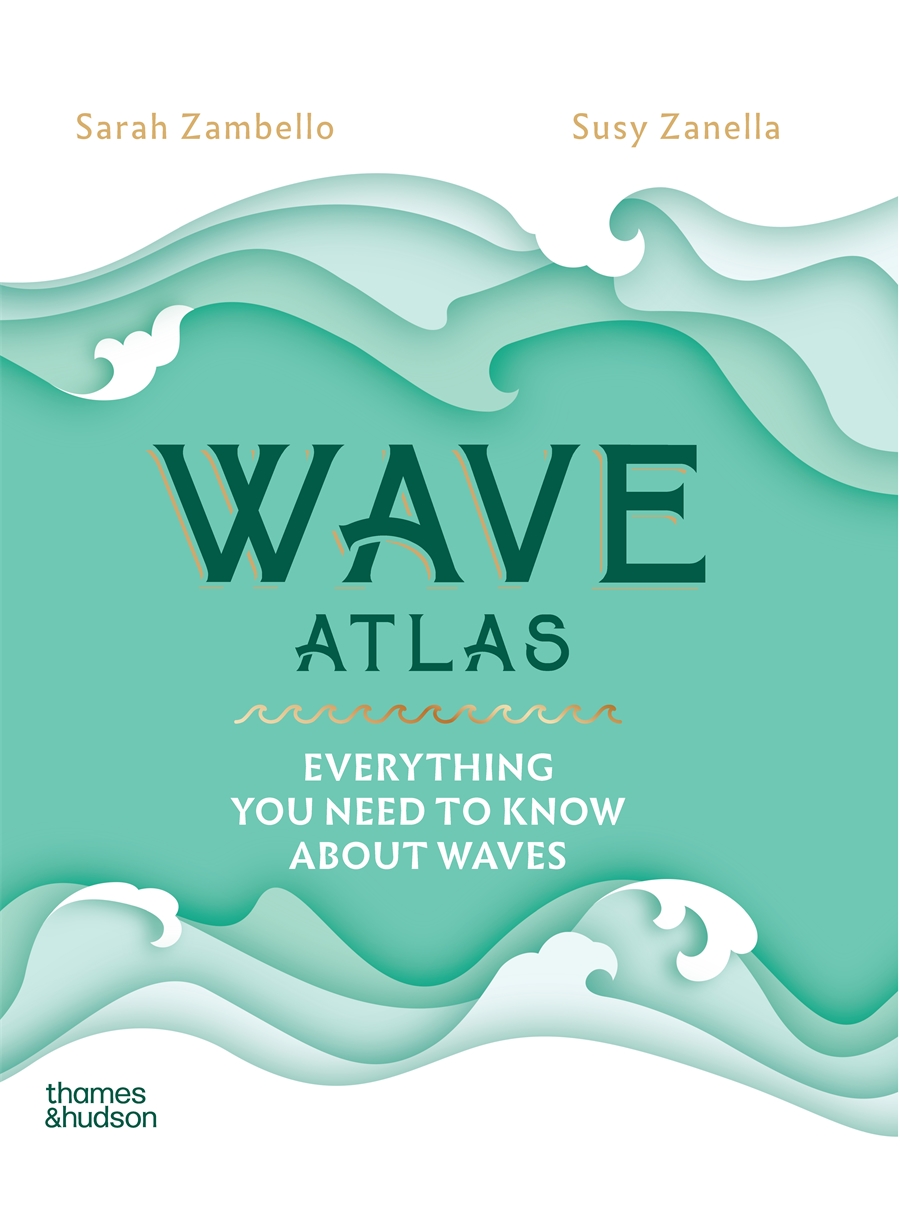
These are just some of the questions explored in Wave Atlas by Sarah Zambello and Susy Zanello. If you were a fan of their previous book Cloud Atlas – which looks at the natural phenomena of clouds – Wave Atlas follows in a similar vein of combining science, history and art to teach readers about currents, tides and waves.
Wave Atlas is a beautifully illustrated book that begins by exploring the various theories surrounding the origins of water on Earth. Along the way we learn lots of interesting facts. Did you know that ‘Earth is the only planet where water exists in a liquid state’? Or how vital ocean currents are to life on Earth? They are so vital that water from the depths of our oceans carry oxygen and nutritional substances that sustain our world!
Ever wondered how tides work? The book explains how they are produced by the Moon’s gravitational pull over water. There’s also quite a large section dedicated to measuring waves and identifying different types from calm, smooth, slight, moderate, rough, high to phenomenal. And how sailors learn to identify these different waves to help them navigate the seas.
While this book is described as an introduction to waves for children, the content is quite niche and at times very scientific – so I’d personally recommend this for older younger readers. But otherwise it’s a very informative read.
Reviewed by Sarah Martin
Age Guide 8+
ABOUT THE AUTHOR
Sarah Zambello is a pedagogist who manages reading, education and storytelling workshops in schools, libraries and bookstores.


0 Comments