



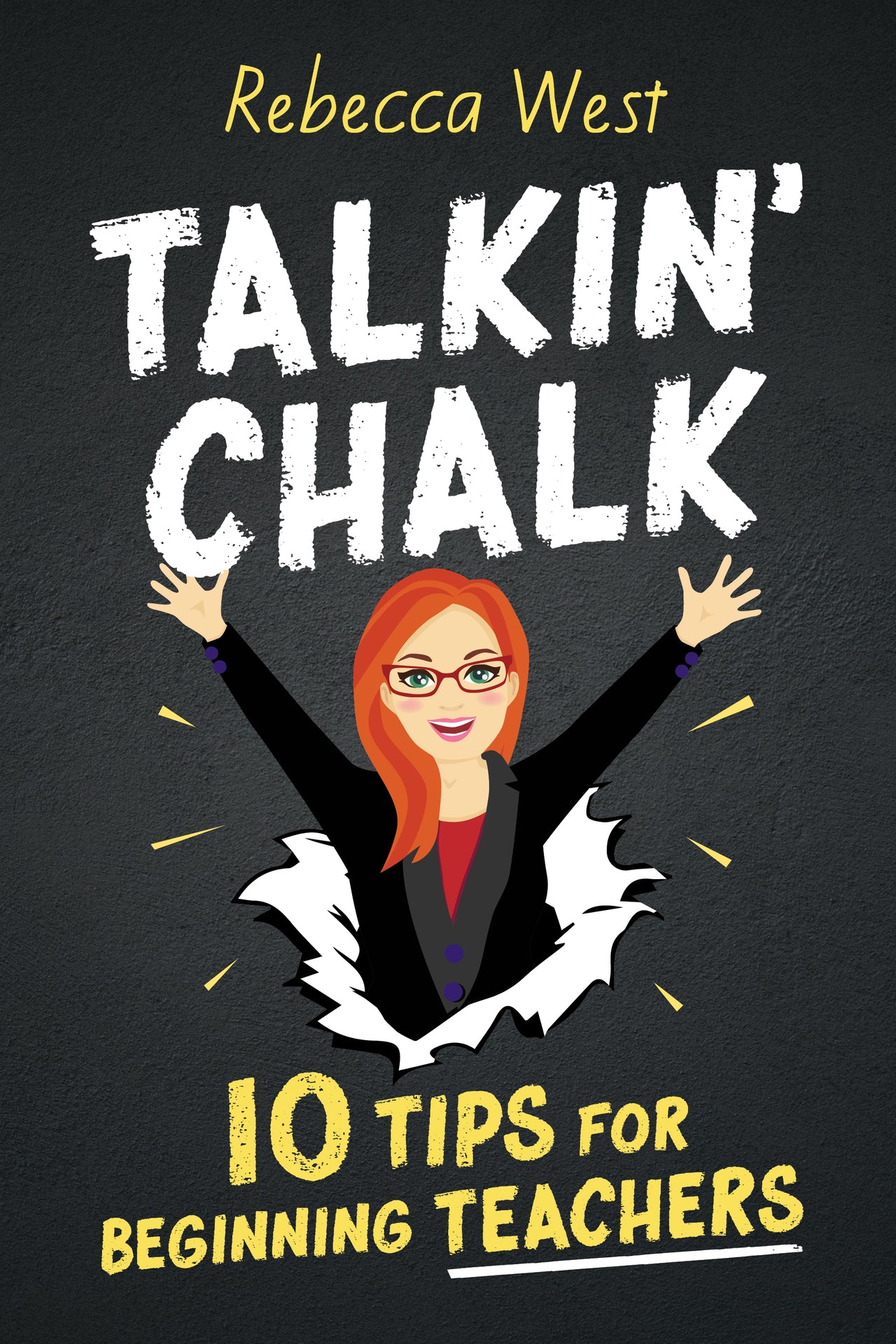
Author Rebecca West, a particularly innovative Deputy Principal, sets a collegial, positive tone by reflecting and sharing why she decided to become a teacher. She encourages beginning teachers to reflect on their own ‘why’ within the dynamic, ever-changing field of education.
Talking Chalk: 10 tips for beginning teachers is pitched at those beginning teachers with younger learners (eg kindergarten, primary, foundation, or prep); however, it’s valuable for teachers in any classroom context. Much of the advice relates to planning and organisation, navigating oneself within a new school territory, managing expectations and workload, building relationships, and being kind to yourself and colleagues. Each chapter/tip features easy-to-read, practical tips, anecdotes, and advice.
The handy illustrations/photos and one-page summaries (‘Keep your storage tidy and clearly labelled to separate personal and school-allocated resources,’ ‘Include the students in creating learning displays,’ ‘Share successes regularly.’) are beneficial. First tip is planning your classroom setup to ensure a comfortable learning environment. Everything from resources, storage, and the layout of student seating, furniture, and classroom walls is explored and discussed. The book’s later chapters offer helpful tips on education-specific tasks and documentation (eg designing and developing Individual Education/Behaviour Plans, Personalised Learning Pathways, timetables, daily/weekly schedules, and student reports) that will streamline a teacher’s role.
Talking Chalk: 10 tips for beginning teachers encourages teachers to monitor and manage their time, tasks, workload, and wellbeing as professionals in the workplace. It offers advice on the value of seeking colleague support and what to do when work becomes cumbersome and teachers might be at risk of burnout. The chapters on setting expectations – incentives, support materials, and managing noise – and reflecting on one’s teaching practice are insightful and valuable.
As a former casual teacher, I particularly liked ‘Tip 9: Be kind to the relief teacher’ and the welcoming suggestions. Additional advice is offered when teachers deal with those unexpected problems as diverse as wet shoelaces, tricky-to-open chip packets, birthday cupcakes, permanent markers, hand-picked bunches of flowers and ubiquitous student farts. Online extras include links to YouTube clips (featuring the author) and editable templates for letters, schedules, reports and other handy school documentation.
A valuable book for any beginning teacher.
Click here to download the templates in Word.
Click here to download the templates in PDF.
Reviewed by Mark Parry
ABOUT MARK PARRY
 Mark Parry is a learning designer, teacher and digital content producer with over 30 years of experience in teaching, curriculum development, digital media production, and teacher professional development. Mark has worked across various educational sectors including schools K-12, vocational, higher education, corporate and community education. He reads mostly non-fiction.


0 Comments