



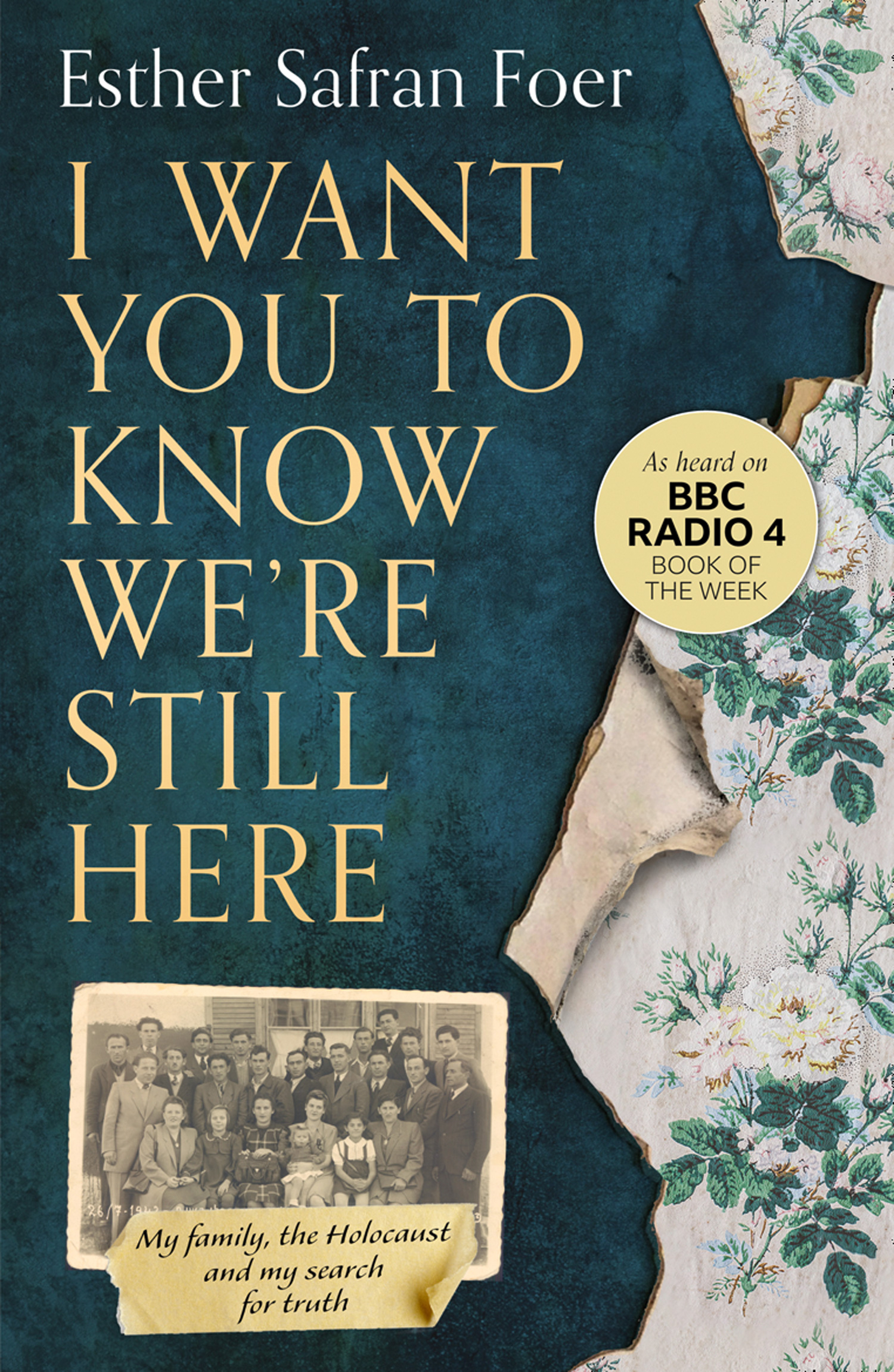
When Foer’s Holocaust survivor mother died in December 2018, she left a large family of children, stepchildren, grandchildren and great-grandchildren. One of the grandchildren, watching the family at a Washington synagogue for the funeral, quipped, ‘Take that, Hitler.’
That, indeed, seems to be one of the themes of this book, which celebrates the survival of people from eastern Europe where the ‘Holocaust of Bullets’ killed up to two million Jews during World War II. Some were locked in synagogues which were then set on fire; others were shot over open pits where they were buried.
Foer’s mother and father had grown up in shtetls (small Jewish towns in eastern Europe, particularly before World War II) in eastern Poland, now western Ukraine.
They did not meet until after the war, and the author was born in Poland before the family emigrated to the United States. Her father killed himself when she was eight, and it was only recently that
Foer’s mother revealed that he had had a wife and daughter killed by the Nazis. Foer’s mother Ethel started running east in 1941 when the Germans came to her village of Kolki. She spent three years moving further and further east with a friend until they reached Kazakhstan and then Uzbekistan, working on farms and in factories. Family members she had left behind were all killed, buried in a mass grave in the woods.
Foer’s father, who escaped the murder of his family, was hidden by neighbours in his village until it was safe to emerge.
Foer, a prominent woman in Washington, DC, wanted to trace that life-saving family, as well as discover what she could about her long-dead half-sister. For years she has tenaciously researched in Israel, Brazil and Ukraine, and was delighted to finally meet the family who saved her father as well as discovering the name of her half-sister.
This is a story of extraordinary survival and of tragedy, not mawkish or vengeful, but grateful for life and memories.
Reviewed by Jennifer Somerville


0 Comments