




Is life an illusion? Walsh, one of the world’s leading researchers in artificial intelligence (AI), believes that we humans are easily tricked. We’re starting to build technology that deceives us and pretends to be something that it’s not.
‘Increasingly, machines are going to fool us into thinking they are human’, part of a continuing and troubling trend. Technological trickery has been around for centuries. The fake chess-playing machine from 1700s, ‘The Mechanical Turk’, is a curious historical artifact and serves as a perfect metaphor. (There were human operators inside the machine.) In our current tech era, the deception has become more problematic. If a machine can fake one intelligent task, we are likely to trust them on others.
Walsh says this trust with AI could be a perilous mistake. He asks some complex yet valid questions related to AI.
Faking It features dozens of curious examples of the limitations of AI responding to a range of mathematical, commonsense, moral and ethical questions. (Here’s an excerpt from AI’s reply to my initial question: ‘Whether or not life is an illusion is a complex question with no easy answer. It’s up to each individual to decide what they believe based on their own experiences and beliefs.’)
Faking It is an enjoyable, intriguing, and insightful reading experience. Framed around discussion on the complexities, limitations and challenges of measuring an elusive human goal such as ‘meaningful engagement’, the author attests that perhaps the greatest gift we’ll get from the machines is greater insight into the profound mysteries of morality, free will and human consciousness.
Reviewed by Mark Parry
ABOUT THE AUTHOR
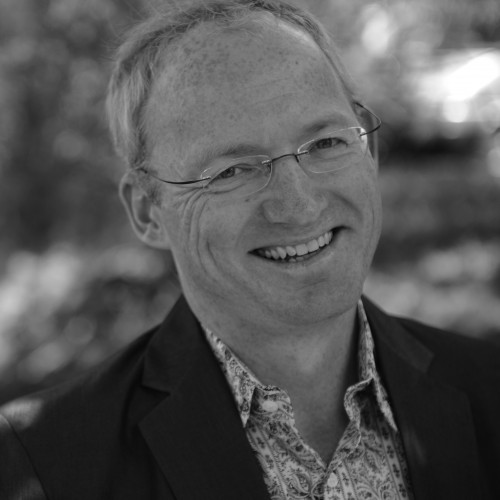 Toby Walsh is one of the world’s leading researchers in Artificial Intelligence. He is a Professor of Artificial Intelligence at the University of New South Wales and leads a research group at Data61, Australia’s Centre of Excellence for ICT Research.
He has been elected a fellow of the Association for the Advancement of AI for his contributions to AI research, and has won the prestigious Humboldt research award. He has previously held research positions in England, Scotland, France, Germany, Italy, Ireland and Sweden.



0 Comments