



When I was in primary school I was taught that Australian Aborigines were nomads, wandering from place to place with no permanent homes and living off the berries on the bushes and the native animals they killed. My only idea of an Aboriginal child was the statue of a little black boy, standing on one foot and holding a long spear in the garden of a house nearby.
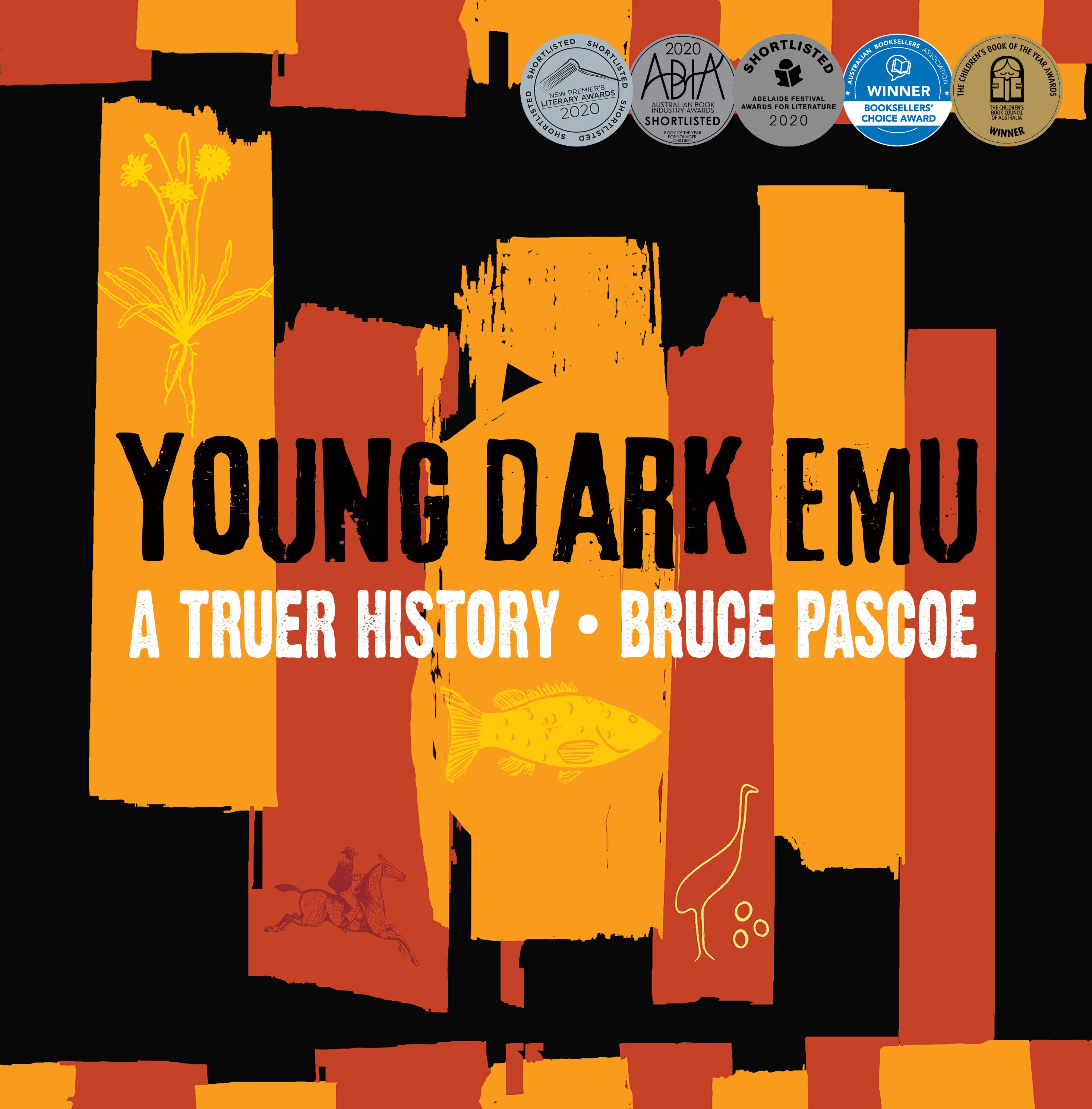
I am now so delighted that the author, Bruce Pascoe, has written this book, Young Dark Emu, especially for the younger readers. He has based it on his original book, Dark Emu, which won both the Book of the Year Award and the Indigenous Writer’s Prize in the 2016 New South Wales Premier’s Literary Awards. Now our young readers of today can be informed of a ‘Truer History’ of Australia. And what is so impressive is that we can actually read eye-opening accounts, including diaries and sketches from explorers in the 1800s such as John Batman, Thomas Mitchell and Charles Sturt. They tell of coming across well-organised settlements surrounded by farmlands of crops, permanent houses plastered over with clay and clods of turf, fish traps at least 40 000 years old and beautiful burial grounds, an example of which you can still see at a farm near Ballarat in Victoria. This evidence coming from the explorers and colonists proves that Aboriginal Australians were living in a society that could have been ahead of many other places in the world.
And finally, I wondered why Bruce Pascoe called this book Young Dark Emu. He tells us that we use the constellations of stars to tell our stories but the Aboriginal Australians often use the darkness between the stars to tell their stories. Dark Emu is a shape in one of those dark spaces in the Milky Way.
As he says, ‘It’s a different way of seeing.’
Reviewed by Merle Morcom
Age Guide 10+


0 Comments