



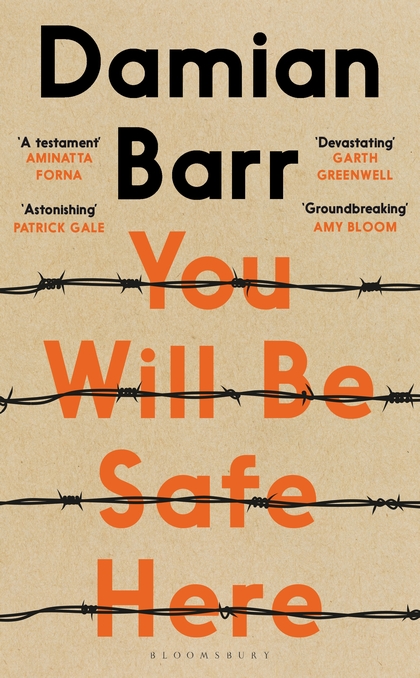
Two instances of inhumanity more than a century apart led this British author to spend five years researching and writing a devastatingly sad and revealing novel, set in South Africa.
In 2011, Barr saw a newspaper article about a white teenage boy who had died in one of the many camps in South Africa run by former military men. They believe that white South Africa one day will rise again, righting the wrongs of not just the Boer Wars but also majority black rule.
Parents pay to send their sons to those camps, hoping they will learn to survive in an increasingly violent society.
The story of such a camp, and boys who suffered under its draconian rule, makes up the second part of the novel. That story is linked, in sometimes subtle ways, with the first part of the book, a journal kept by the wife of an Afrikaner farmer in one of the many concentration camps established by the British during the second Boer War (1899-1902).
Those 40 camps were not ‘death camps’ but were established to ‘concentrate’ the 116 000 mostly wives and children made refugees by the scorched earth policy of the British Government. The soldiers, from Britain, Canada, Australia, New Zealand and India, torched 30 000 Boer farms. There were up to 89 separate camps for black farm workers.
All the camps were underfunded and the death rate was high. The Anglo-Boer War Museum, on the site of the first concentration camp, has documented more than 17 000 deaths but it is likely even more died.
The stories of the Boer Wars (1880-81 and 1899-1902) are no longer taught in either South African or British schools, so this devastating novel lays bare the past, as well as the mindset of people running the modern boot camps for boys in South Africa.
Reviewed by Jennifer Somerville



0 Comments