


The key to writing for busy readers is to have clarity, relevance and conciseness. In keeping with that concept, I thought I’d leave it there, but perhaps some further explanation may help.
We’re too busy to read everything. ‘The relentless competition for our time affects our ability to engage with communications we receive.’ Conversely, we all write, even if it’s only shopping lists or text messages.
Emails, especially in a business environment, are reaching saturation point. In order to cope, most people skim read, or just delete messages unread. The ‘TL;DR’ response (Too Long; Didn’t Read) is an easy excuse to cease reading. To have impact, the writer must grab the reader’s attention promptly.
The authors have listed six principles which apply mostly to imparting information and requesting responses. Naturally, this relates mostly to a business setting, but the first two principles could be applied to fiction writing as well. They suggest using fewer, simpler words, with shorter sentences. The authors go on to suggest that simple changes to layout will engage readers successfully, making them more likely to care and to respond as needed.
These principles are founded on quantitative research, and copious reference notes are included. The book is quite US-centric. Completely out of left field, some Danish text is included – the authors even acknowledge that they don’t understand it. Its only purpose is to illustrate formatting basics.
Rogers and Lasky-Fink offer simple ways to write so that the message cuts through. Not all of it may apply to your writing, but there are gems to be found in Writing For Busy Readers.
Reviewed by Bob Moore
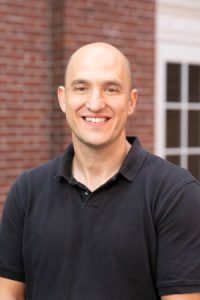
ABOUT THE AUTHORS
Todd Rogers is a professor of public policy at Harvard University and cofounder of the Analyst Institute and Everyday Labs. He is the author of Writing for Busy Readers (with Jessica Lasky-Fink).
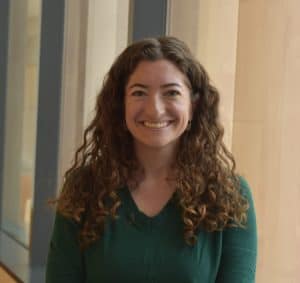 Jessica Lasky-Fink is the research director at The People Lab, based at the Harvard Kennedy School. Her research focuses on improving the delivery of government programs and services. She earned her Ph.D. in Public Policy from the University of California, Berkeley. She is the author of Writing for Busy Readers (with Todd Rogers).



0 Comments