



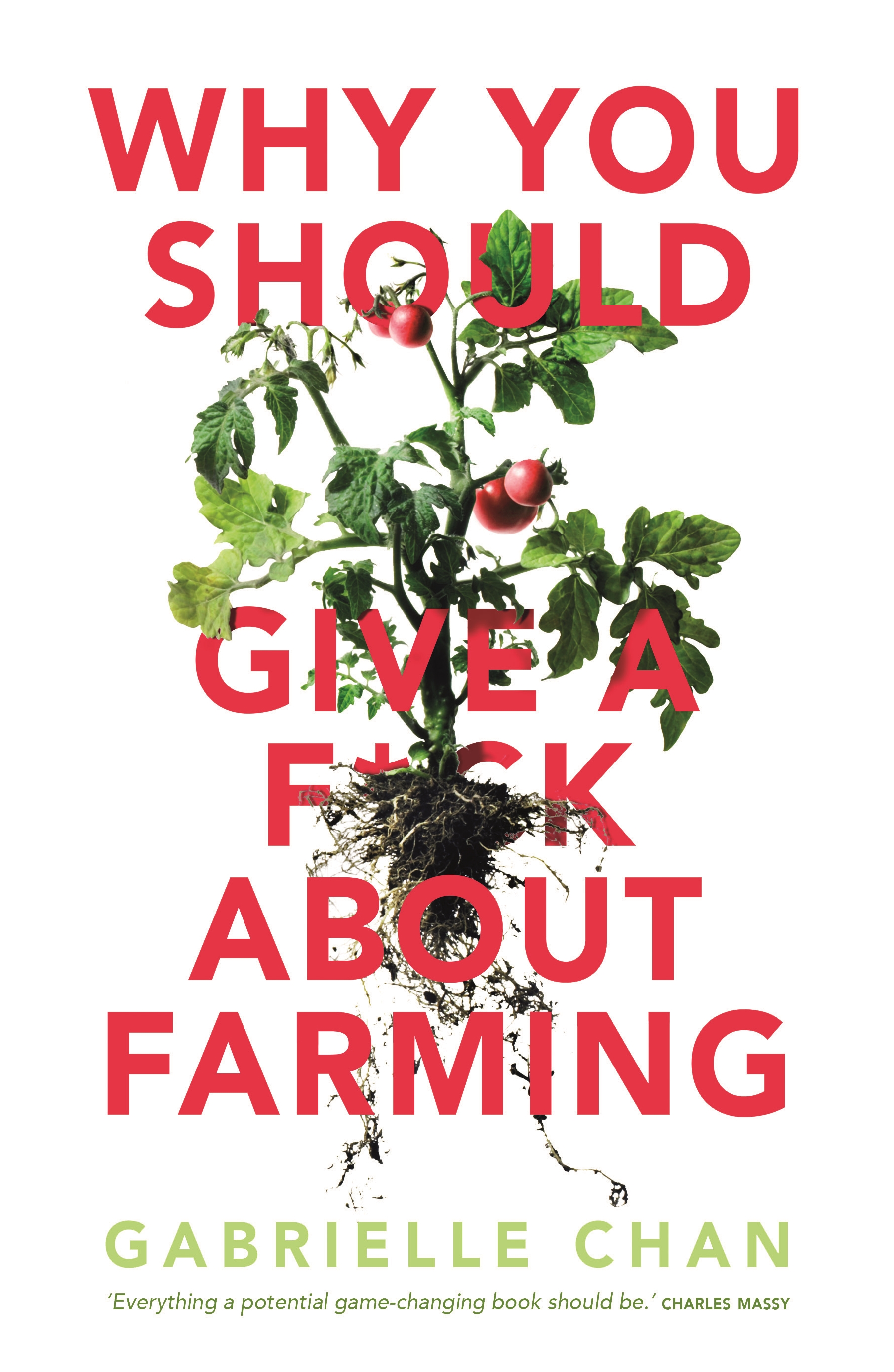
I already care about farming. Both my wife and I grew up on farms and her family still farms in the Central West of NSW. There is, however, an overwhelming majority of people (perhaps you’re one of them) who haven’t had our upbringing and have no experience or knowledge of the land. So, why should you care? Chan answers that question in the book’s subtitle: ‘Because you eat’.
This book addresses the disconnect between farm and fork, where people are unaware – or unconcerned – where food comes from, how it’s produced and what impacts food production has on the planet. Agriculture is due to have a bumper season, with harvests expected to fetch over $70 billion this year. Good years such as these make headlines but mask problems that are both entrenched and emerging.
Chan positions herself as ‘a journalist, not a farmer’. She has spent decades on a farm, though, due to her partnership with the man described endearingly in the book as ‘The Farmer’. She has a fair proportion of skin in the game, but her many years of political and economic journalism also allow her to step outside her own situation to dissect the cycle of food production nationally. With humour and accessible language, Chan describes the challenges arising from climate change, the markets and (especially) from government – most particularly since the advent of economic rationalism.
Chan provides an overview of farming culture. There is justifiable pride in growing the food which delivers a vital component to society … even if those consuming it don’t appreciate its origins. Rural Australia tends to be generalised as conservative, but that can ignore the ability of farming families to meet necessary change and the agility they must have to be successful. The culture itself has also changed over time, with the ‘man on the land’ now often a woman.
There’s been a consolidation of farms into fewer and fewer hands, some of which has been achieved by purchasing land from neighbours. Some consolidation is more insidious, where land is being swallowed by corporations. On those farms, profit is sometimes the driver of rapacious farming practices and may ultimately result in soil degradation.
Survival on family farms can mean having to diversify income. There’s also the added complexity of anticipating food trends and navigating the undercutting by supermarkets. Technological advances leave some behind and Chan describes the argument over ‘regenerative’ farming as simplistic and unedifying.
Chan’s greatest concern, however, is the lack of a national plan. She captures this neatly in the chapter, ‘On Water’, where the ridiculousness of the Murray-Darling Basin Plan is exposed. Trading water rights can be more lucrative than anything produced on-farm.
This is an extraordinary book. The concerns it raises should have been in the public eye for years, but it’s taken Chan’s experience, keen eye and incisive journalism to capture it. Mandatory reading for anyone who eats.
Reviewed by Bob Moore



0 Comments