



Waiting to interview Helen Macdonald in 2015 at the Sydney Writers’ Festival, I caught a glimpse of her through the tall glass doors of the restaurant she was taking refuge in. She had a mane of bushy black hair piled between two taut, hunched shoulders. To me, Helen still occupied the world of thorny bramble and gore-splattered talons she’d written about in her extraordinary memoir, H is for Hawk, about training a stubborn and murderous northern goshawk to hunt in the wake of her father’s death. I imagined she was bent over some limp, bloody thing freshly dispatched by her hawk, rather than whatever fancy fare the wharfside diner had served up. I was intimidated to say the least.
Once we’d sat together and Helen had spent 15 minutes enthusing about the local cockatoos, that intimidation subsided somewhat. She was modest, generous, seriously insightful and, when I admitted to her H is for Hawk was one of the best books I’d ever read (a refrain she’d no doubt heard hundreds of times before) she grabbed both my hands in hers with warm and sincere gratitude.
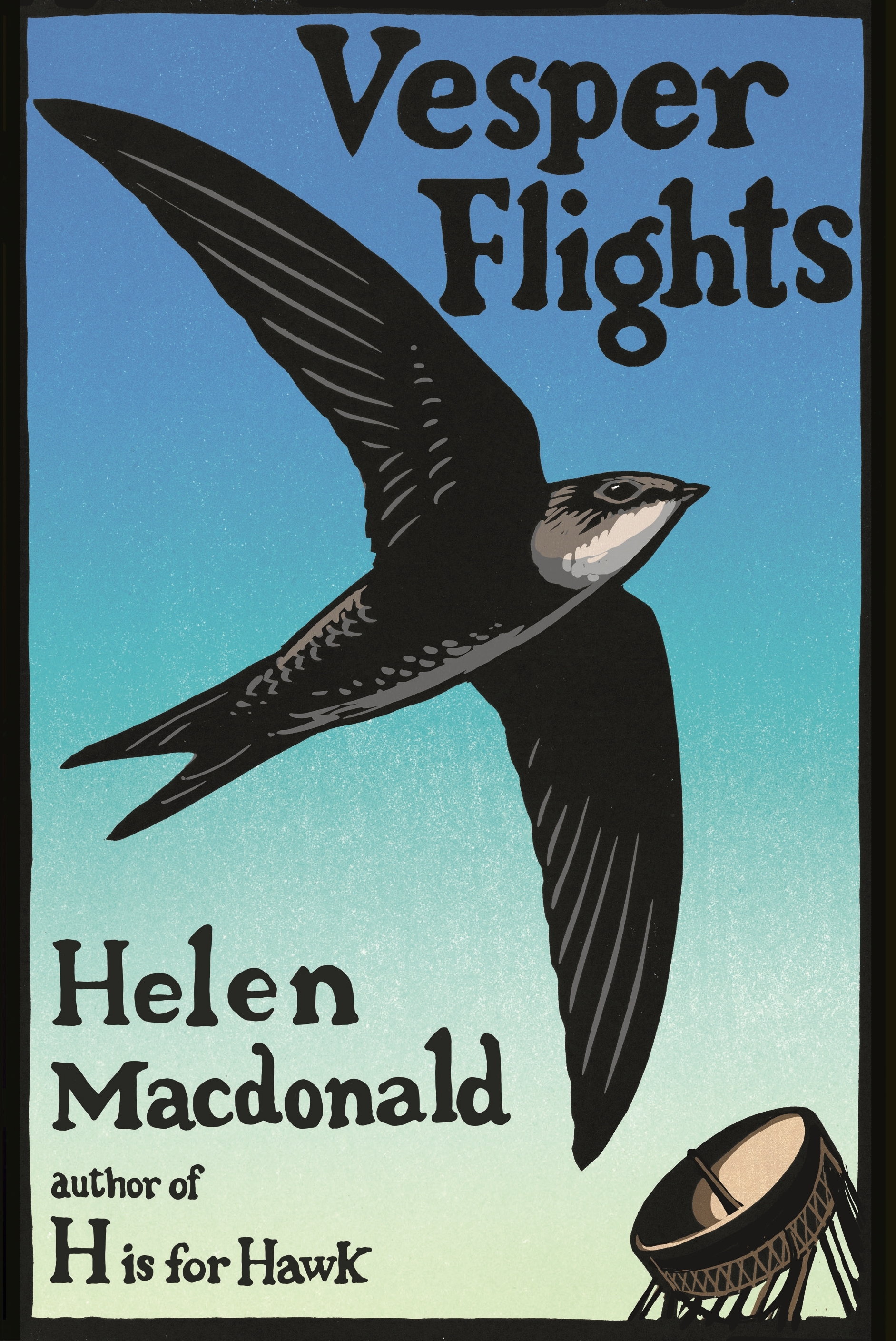
Vesper Flights is Helen’s follow-up book of essays. While they vary in scope and subject, latitude and length, each essay examines some meeting point between humanity and nature.
There’s a gripping five-page piece early in the collection about Helen’s meeting with a boar. To Helen, the boar is a beast that has sprung from the pages of myth, all mohawked bristle and bunched muscle and sharp tusk. Native to the UK but wiped out in the Middle Ages, the boar represents the re-introduction of mystery and intoxicating danger to a British wilderness drained of wildness. Helen writes: ‘The single boar appearing from behind the trees felt like a token of hope; it made me wonder if our damage to the natural world might not be irreversible, that creatures that are endangered or locally extinct might one day reappear.’
Helen also introduces us to man-made spaces that unexpectedly teem with life. She lines up for hours to ascend the Empire State Building in New York, arriving 100 storeys high in a landscape dominated by glass, steel and spotlights. But while tourists pose before the world’s most famous cityscape, Helen stares higher still into the night sky with her binoculars. Up there she spies a deluge of birds, from hunting peregrines to migrating black-crowned night herons, sailing high above the skyscrapers.
There are more human-focused pieces in Vesper Flights, too. One is a powerful profile of a young epidemiologist seeking asylum. Another centres on Nathalie Cabrol, an astrobiologist refining our knowledge of potential extraterrestrial life by studying microbes living in extreme conditions on earth. Together she and Helen brave barren South American saltpans and find bands of green and purple bacteria living in salt crystals. They flee when a nearby volcano begins to spit jets of poisonous vapour.
Helen Macdonald’s nature writing seems the perfect meld of a child’s gleeful entrancement, an academic’s studied gaze, a writer’s wisdom, a scientist’s rigour, a realist’s clear-eyed observation and an optimist’s pulsing hope. Many of the essays question why we’re so bent on ridding the spaces we live in of non-human life.
Put away the Mortein, the lawnmower, the rifles, Helen urges. Let the bees and the bugs return. Let boars trot down English lanes and goshawks snatch dormice from front porch flower pots. Let huntsmans gallop across your wallpaper and possums curl in attic corners and fruit bats fossick in public parks. May wombats be our landscapers and may magpies rouse us from sleep each morning. We’ll be all the richer for it.
Reviewed by Angus Dalton

0 Comments