




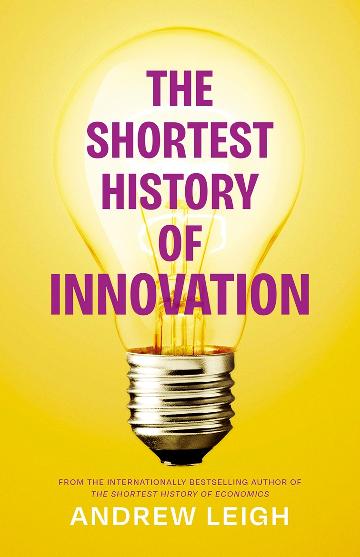
This book explores how human creativity has shaped the modern world. In just 220 pages, Leigh traces innovation from early human toolmaking to today’s digital revolution and AI, arguing progress is neither inevitable nor evenly distributed. His central thesis is clear: innovation flourishes when societies foster openness, competition and the free exchange of ideas.
Leigh writes with clarity, distilling economic and historical research into vivid examples. He moves briskly from agriculture and the printing press to the Industrial Revolution and the rise of Silicon Valley. Along the way, he highlights how institutions – such as secure property rights, education systems and inclusive political structures – encourage experimentation and risk-taking. Particularly compelling is his emphasis on collaboration: many breakthroughs emerge not from lone geniuses but from networks building on one another’s work.
A strength of The Shortest History of Innovation is its global perspective. Leigh highlights contributions from diverse cultures while examining why Enlightenment-era Britain or post-war America became centres of invention. He also warns that inequality, declining competition and complacency can cause innovation to stagnate.
While the book’s brevity is part of its appeal, some readers may wish for deeper analysis. Nonetheless, Leigh offers a concise survey inviting reflection on how innovation happens – and how it might be sustained.
The Shortest History of Innovation is an insightful primer on the forces driving human progress and reminds us that the future depends on today’s choices.
Reviewed by Anthony Llewellyn-Evans
ABOUT THE AUTHOR
 Andrew Leigh is a member of the Australian Parliament. He holds a PhD from Harvard University, and is a fellow of the Academy of Social Sciences in Australia. Before being elected in 2010, he was a professor of economics at the Australian National University. His books include The Shortest History of Economics, The Luck of Politics, Battlers and Billionaires and Randomistas.



0 Comments