
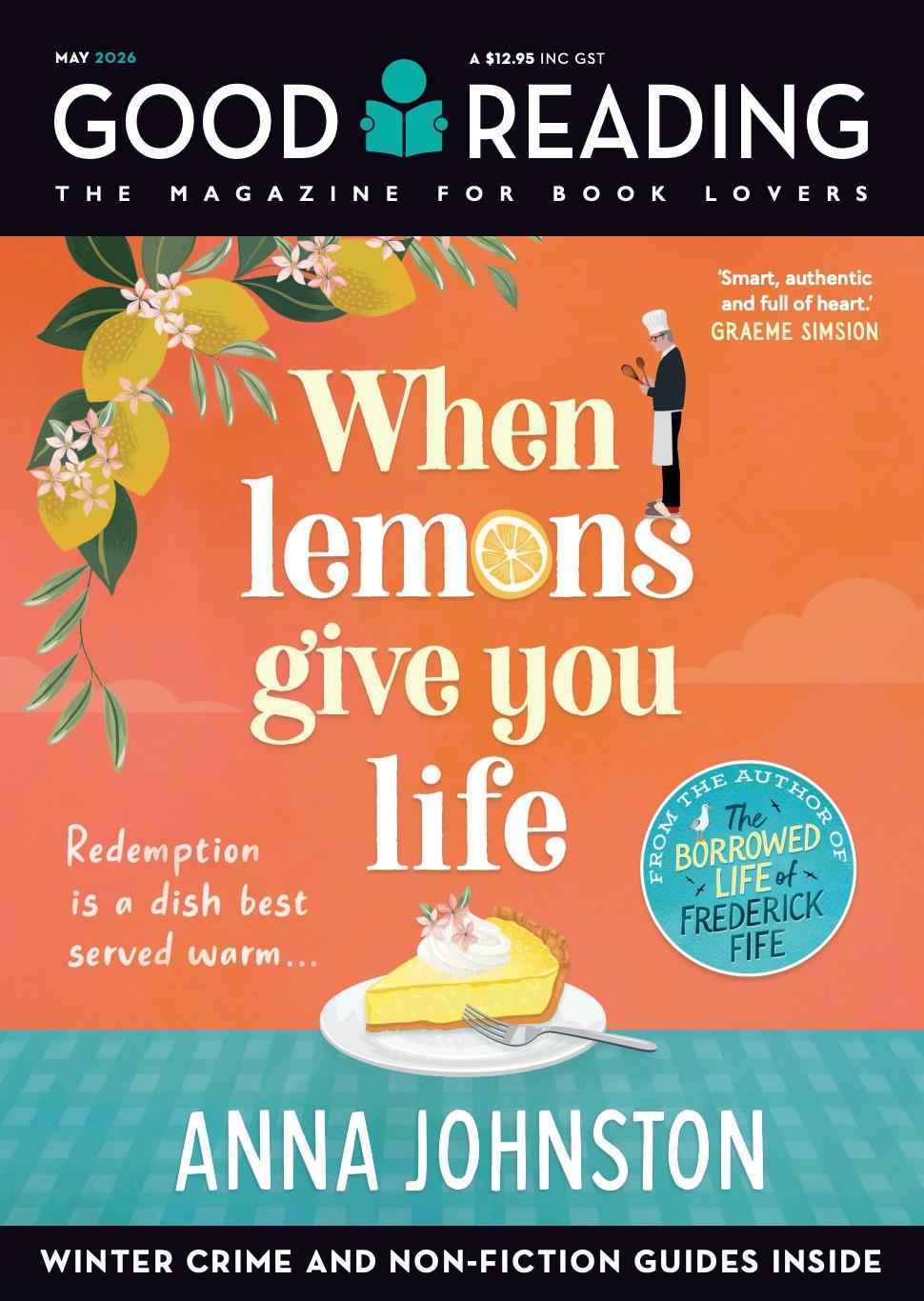


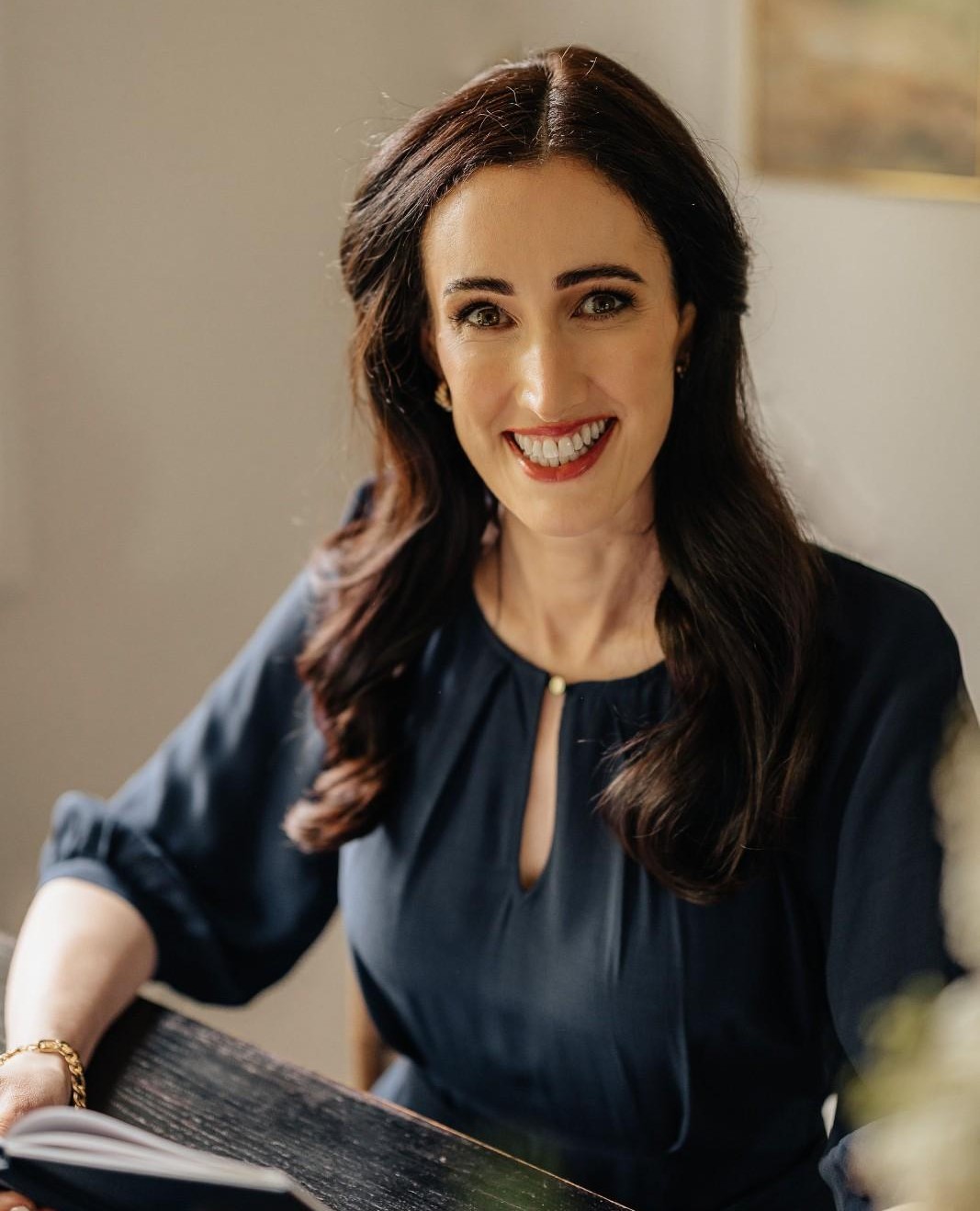
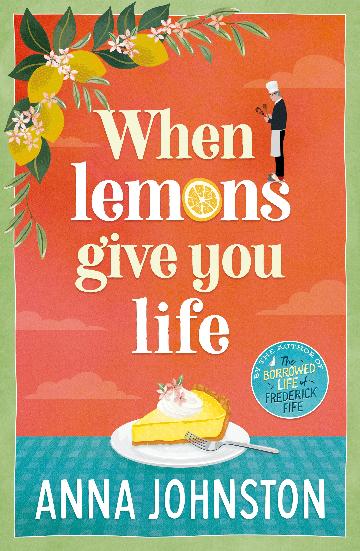
ANNA JOHNSTON’s debut, The Borrowed Life of Frederick Fife, became a bestseller and has been optioned for Netflix. Her eagerly awaited follow-up, When Lemons Give You Life, is now on shelves.
ROWENA MORCOM sat down with Anna Johnston to explore her passion for aged care and the stories that inspire her writing.
Anna Johnston describes her childhood as ‘idyllic’. Born in the riverside town of Echuca in country Victoria, Anna’s family then moved to Bendigo before a final move to Melbourne. Her father was a GP and her a mother a ‘jack of all trades’.
‘Some of my most vivid memories are of time spent at my maternal grandparents’ property nestled in the bushland around Bendigo, where the days were as expansive as our imagination. We swam in the dam, flew on tree swings, built boats to send down the stream, made treasures in the woodshed with Pa, planted bonsais with Nan, and disappeared for hours into make-believe worlds with my cousins.’
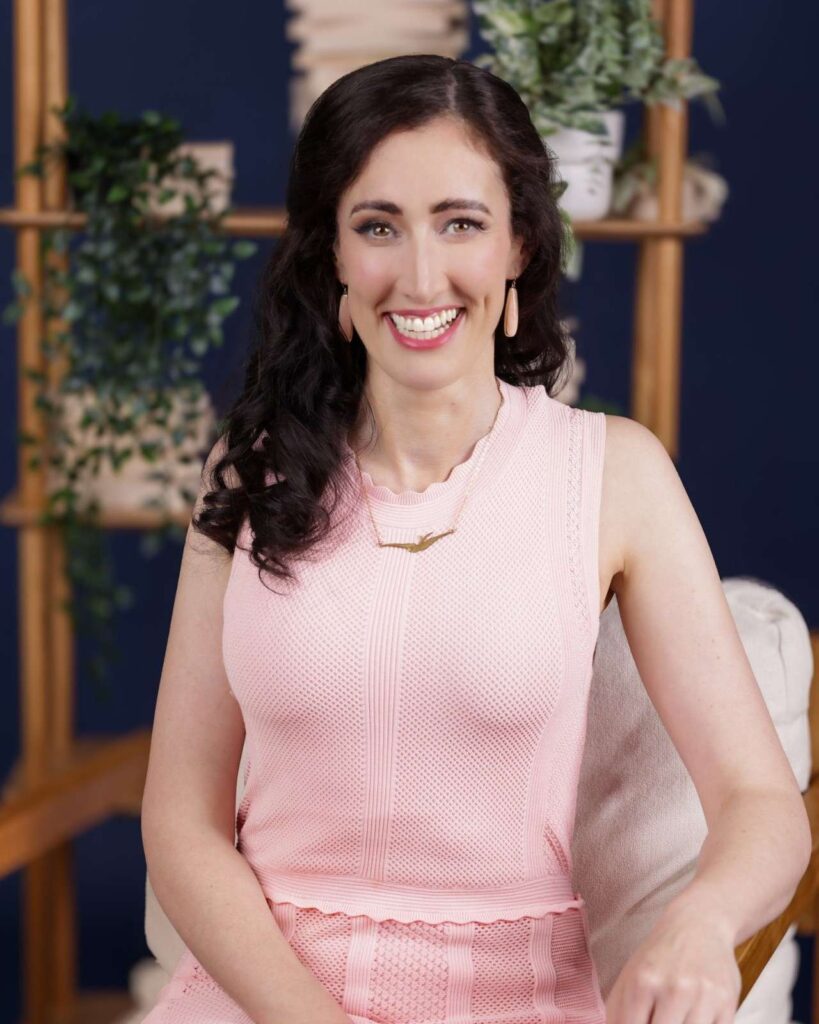 She expected, as many others did, to follow her father into medicine, but that path shifted during her studies.
‘My father was a wonderful GP and I always aspired to be like him and worked hard to get into medical school. Yet when I was nearing the end of my medical studies, I began to discover that my true fulfilment lay in aged care. While my fellow med students were fascinated by cadaver dissection and pharmacology, I was struck by the number of older patients who were socially isolated and the tangible effect this had on both their mental and physical health. In Medicine we learned how to keep people alive, yet I saw so many who had a pulse but were not really living. A defibrillator could keep a heart beating yet could never give it someone or something to beat for. I knew I wanted to be part of prevention rather than treatment.’
Aged care felt like a natural progression, shaped by her close relationship with her grandparents.
She transferred to study Health Promotion, and when her grandfather Fred was diagnosed with dementia, her path became personal.
‘When my grandfather and best friend Fred was diagnosed with dementia, I followed my heart into his nursing home and became the social support coordinator so we could spend more time together. It was here that I found my dream job, and what would later become the setting for two of my novels.’
This is where she found joy in her work, which centred on connection and purpose.
‘My role involved finding creative ways of fostering relationships and purpose, regardless of their physical health or dementia diagnosis. I became a seeker of connection and hunted for pockets of joy in the darkness. I loved shaking up the usual activities and building a sense of ownership among the residents by bringing them into the decision-making process. Instead of passive entertainment, we created opportunities for agency and expression – a drama group, choir, and computer classes where residents could connect with grandchildren over Facebook. The most enjoyable and fulfilling moments were often the smallest: when a resident reconnected with a part of themselves they thought age or disability had stolen, and the joy in their eyes as they found a way back into the world – whether through an adapted version of something they once loved, or by discovering an entirely new passion at 90.’
But the work came with emotional challenges.
‘Death and decline are sadly an unavoidable part of working in aged care, and probably the most challenging aspect. In one facility, we were explicitly instructed by management not to form emotional attachments with residents – but for me, that was impossible, and frankly, inhumane. That emotional investment made the work harder, but it was also what made it meaningful.’
After her grandfather’s death, the arrival of her children, and an injury requiring multiple surgeries, Anna stepped away from aged care. During the pandemic, she turned to writing.
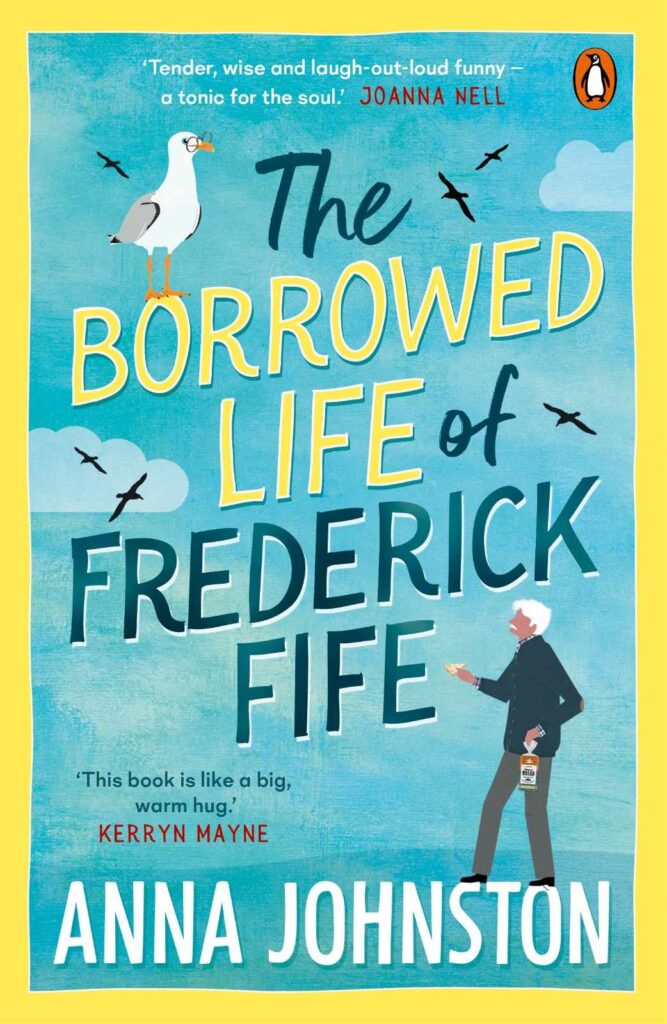 ‘The idea for my debut novel, The Borrowed Life of Frederick Fife, began with the creation of my protagonist, Fred, who not only shares my late grandfather’s name but also his delightful, selfless and endearing nature. People over 80 are under-represented or misrepresented in the arts, so I wanted to create not just an elderly character but an elderly hero who inspires hope and shows that worth, unlike eyesight, does not diminish with age.’
It became a bestseller and was optioned for screen, bringing success and pressure for what came next.
‘The protagonists for my second book had big shoes to fill and I was challenged in this novel to create different characters that readers would still root for, but who couldn’t rely on that same perfect unwavering goodness distinctive to Frederick Fife.
‘In When Lemons Give You Life, I wanted to explore heavier themes and lean into characters who are more complex – messier, perhaps – but still deeply human and, I hope, even more relatable.’
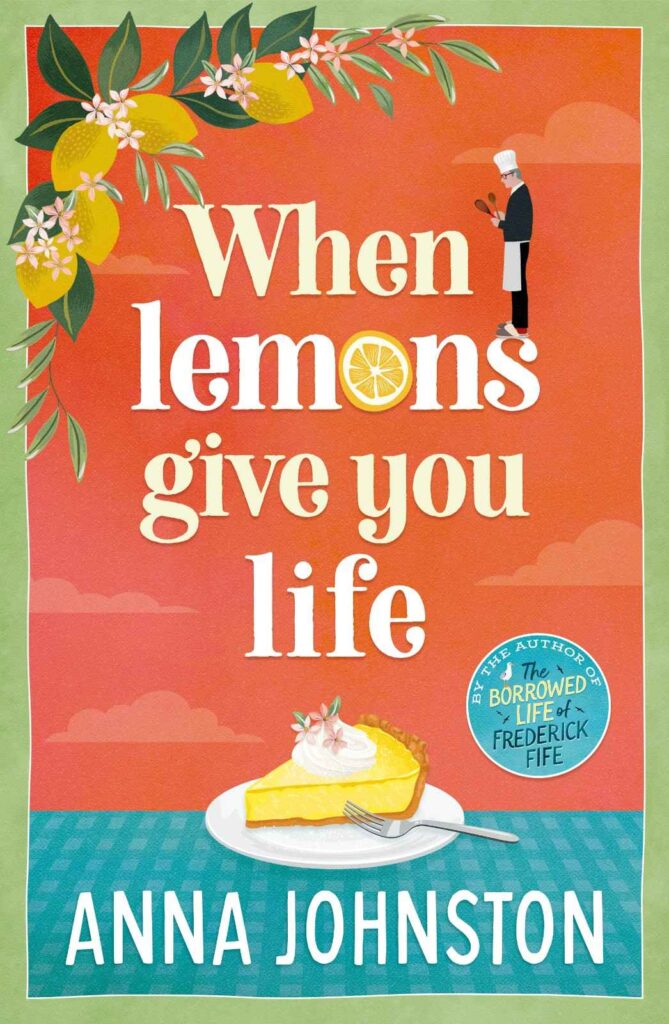
The novel follows Griff, a retired Michelin-star chef grieving his husband, Beau, in a nursing home, where he creates a ‘Death Menu’ of possible ways to end his life. Cooking one final meal becomes a turning point, reconnecting him with purpose as he secretly cooks for other residents. Meanwhile, his half-sister, Lisa, navigates her own personal challenges while maintaining a fractured relationship with him.
‘It is the “lemons” – life’s bitter events – that have brought Griff into aged care in the first place. But here, lemons also represent the raw, sometimes sharp ingredients of life that can be transformed into something sustaining and joyful. For Griff, that transformation is both literal and emotional: actual lemons become a lemon tart and, in the making of it, he reignites a part of himself he thought was long gone.’
Food sits at the heart of the story.
 ‘One of the most formative experiences of my career was developing an award-winning local government cooking program for widowed older men. What began as a practical course quickly became something deeper. As the men learned to cook nourishing meals, not only did their health improve, but confidence grew, friendships formed, and a sense of pride and purpose returned.’
‘Food tells people they matter. In nursing homes, where so much is controlled, good food can be transformative – in this story, it becomes a way back into the world. It’s not only essential for physical and mental health – it’s a universal vessel of care, and I wanted to celebrate its emotional and sensory power while inviting readers to imagine what dignity really tastes like.’
‘Cooking forms an integral part of Griff’s identity. It was his safe space as a child, his greatest achievement as an adult, and the way he holds onto himself. As someone with a rough exterior who finds it hard to express his feelings in words, it’s also how he’s shown love to others throughout his life. It was a part of his existence that he considered over. When he begins to cook again, it forms a crack in his tough shell, creating space for joy and renewed purpose to slowly, but surely, seep back in.’
Anna shaped her characters from people she met in aged care and from her own experiences.
‘Lisa is the character most closely drawn from real life. As a woman diagnosed with ADHD later in life, her lived experience is heavily inspired by my own as well as that of close female friends and relatives who have walked a similar path. I wanted to illuminate that full spectrum with empathy, humour and truth, and much of what you see in Lisa reflects my own experience and that of women I love, who are richer and more complex than the labels placed on them.’
‘While Griff, Beau, Scotty and Frank are all entirely imagined, supporting characters – like Patricia, Rob and Mabel – were loosely inspired by residents I had the pleasure of caring for. Allison – the cold, money-focused manager of the aged care home – was also sadly inspired by multiple people in leadership I’ve encountered in the aged care industry who run facilities purely as businesses rather than homes where people live.’
Though beneath that, Allison is also a woman grappling with her own fear of ageing, and that felt important to explore.
‘For this novel, I also undertook research into the realities faced by queer older people in nursing homes, and it really opened my eyes to the issues and inequalities still experienced by the LGBTQIA+ community as they age. I was shocked to learn that many queer older people actually go back into the closest when they move into care, out of fear of prejudice – especially from other residents of a generation who may never have questioned more traditional views. Others fear that dementia or memory loss may erase the hard-won steps they have taken in claiming their identity.’
Despite its weighty themes, Anna’s writing balances humour and emotion with a light touch.
 ‘This balance really reflects who I am as a person. As my friends and family will attest, I am 50 per cent humour, 50 per cent emotion, 20 per cent sentimentality – and bad at maths! I love to explore deep, hard-hitting issues, but a sense of humour has always been central to who I am.’
‘I’m a major empath, but this empathy doesn’t stop with real people! I also feel deeply for my characters and can often be found weeping at my computer over something that happens to them. I’m not sure if this makes for good writing or if I should be seeking professional help. Yet if I’m not feeling what my characters go through – both the joy and the heartbreak – I can’t expect my readers to.’
Her experiences shaped her understanding of dementia that she ploughs into her writing. Her grandfather remains a profound influence.
‘Pa was also a wordsmith and a great inspiration to me as a writer, and he and my grandmother Dawn had a love story for the ages. Despite his memory loss, this love never wavered. When he could no longer compose beautiful prose for her as he once had, I became his pen – helping him to write to her and buy flowers so he could continue loving her in the way I knew he wanted to. Memory may have faded, but emotion remained.’
‘I was also privileged to work with many other residents and their families living with various forms and stages of dementia, including early-onset Alzheimer’s disease. I’ll never forget one particular gentleman with dementia who loved sketching and horses. Ignoring the assumption that because he could no longer feed himself he could no longer draw, we placed a pencil in his hand. His resulting sketch of a galloping horse remains the most moving piece of art I have ever seen.’
What does she hope readers take away after they read the last page and close the book?
‘In a youth-obsessed society shaped by a multi-billion-dollar anti-ageing industry, I hope readers consider what ageing well truly means – whether we see it as something to fear and resist, or as a privilege that is not afforded to everyone. I hope it invites reflection on what really matters when we look back on our lives: the wrinkles we’ve accumulated, or the times we were able to be part of something kind and restorative.
‘I hope it sparks conversations about how we can better care for people of any age who are grieving or lonely, especially those with no family or friends, or those caring for loved ones with dementia. And, of course, I also hope it prompts discussion about the importance of good food in aged care, and the issues still faced by the LGBTQIA+ community as
they age.
‘In a post-pandemic world shaped by conflict, uncertainty and fear, I think we’re hungry for stories that offer hope and a renewed faith in humanity. When Lemons Give You Life was written as an antidote to despair. I hope readers come away with the idea that joy is still possible after profound loss and when life has lost its flavour – and that redemption and healing from trauma can be found, even in the darkest of days.’
So what’s next for this author?
‘I’m working on my third novel, The Last Milkman, which follows Stanley Sparrow, an 80-year-old, who, in a fast-moving world of instant gratification still rises at dawn to deliver milk to his small Tasmanian community. When an uncollected delivery changes everything, Stanley is forced out of his comfort zone and must confront what truly matters in life. In a neighbourhood rushing toward convenience and anonymity, Stanley may be the last remaining slow thing – but he might also be the only one willing to stand still long enough to save what matters.’
Read our review of The Borrowed Life of Frederick Fife here.
ABOUT THE AUTHOR
Anna Johnston is a former baby, aspiring octogenarian and emerging Australian author with a love for the heartfelt and hilarious. She grew up in country Victoria before moving to Melbourne where she lives joyously with her husband and daughters by the beach. Anna left an imminent career in medicine to follow her heart into her grandfather’s nursing home where she became the social support coordinator, taking great delight in shaking up the usual program. When injury left her unable to continue working in aged care, she began to write about it, channelling her love for older people onto the page. Anna has enjoyed a life-long passion for screenplay, theatre and creative ageing.
Follow Anna Johnston on Instagram
Read more about Anna Johnston’s work

0 Comments