




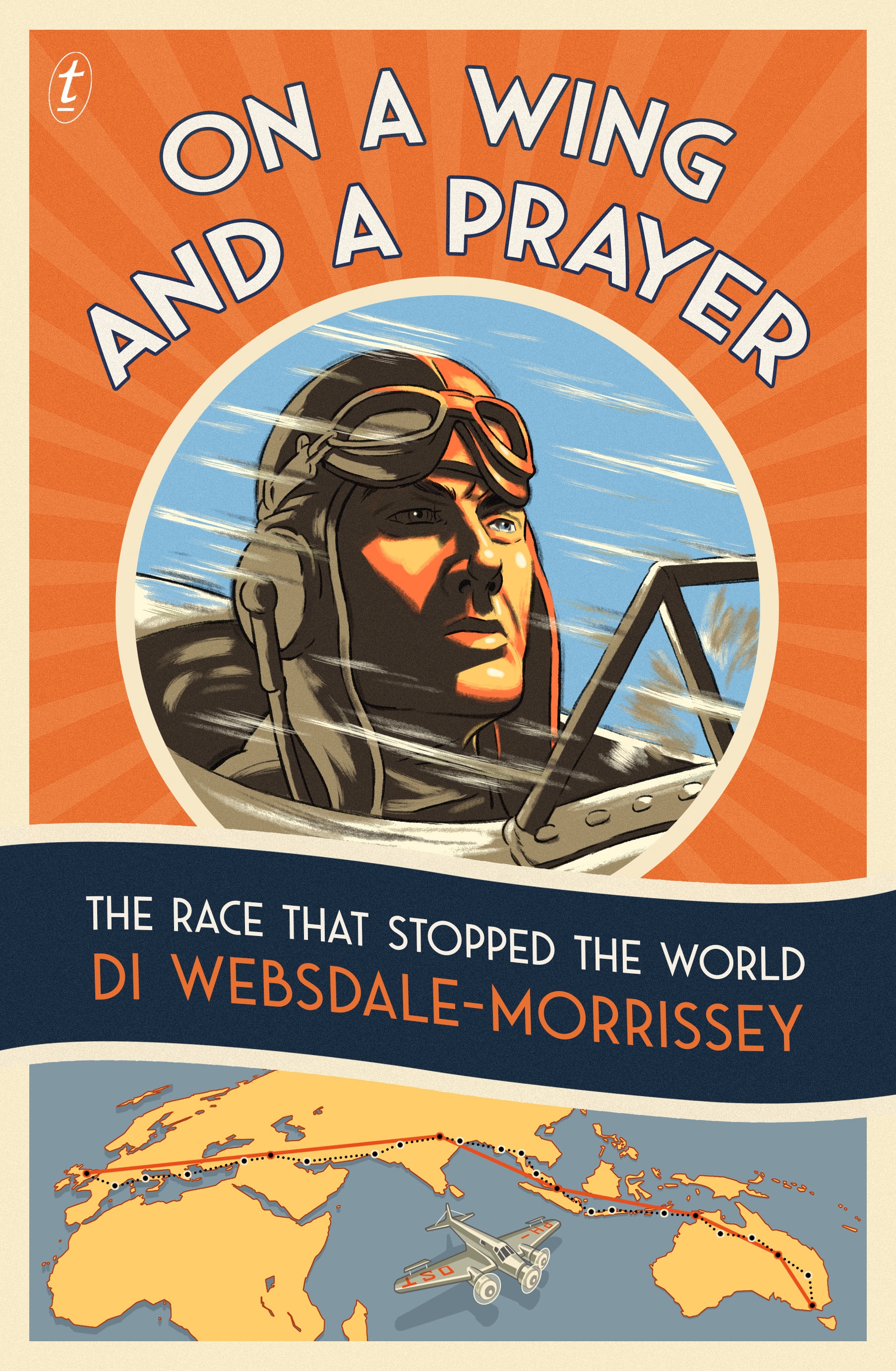
There were to be two races. The first, an open race based entirely on speed, and the second, a handicap race, governed by a complicated formula, would be based on the planes speed capacity. The race would attract planes that could demonstrate their commercial viability and therefore stretch aviation’s weight, seating and flight distance capabilities.
Websdale-Morrisey shares the many facets at play. The finishing post would be an imaginary line between two tall pylons erected at Melbourne’s Flemington Racecourse. Entries were to be received by 1 June 1934 at a cost of 50 pounds for the speed race and 10 pounds for the handicap race. The proposed route had five compulsory control points: Baghdad, Calcutta, Singapore, Darwin and Charleville. Obtaining permission to land or overfly countries on route took an interminitable time as communication was by post. Language problems made handicapping difficult. Overall, 20 aircraft took part in the race.
The author has related each entrant’s history and experience in fine detail, making factual, compelling and enjoyable reading for those interested in aviation or, for that matter, the characters that made this all happen. A race that intrigued the whole world!
I can’t help but wonder how we have been able to reduce flight times from 30 days to 24 hours, over 84 years – something that would not have happened without the above adventures.
Reviewed by David Clive



0 Comments