


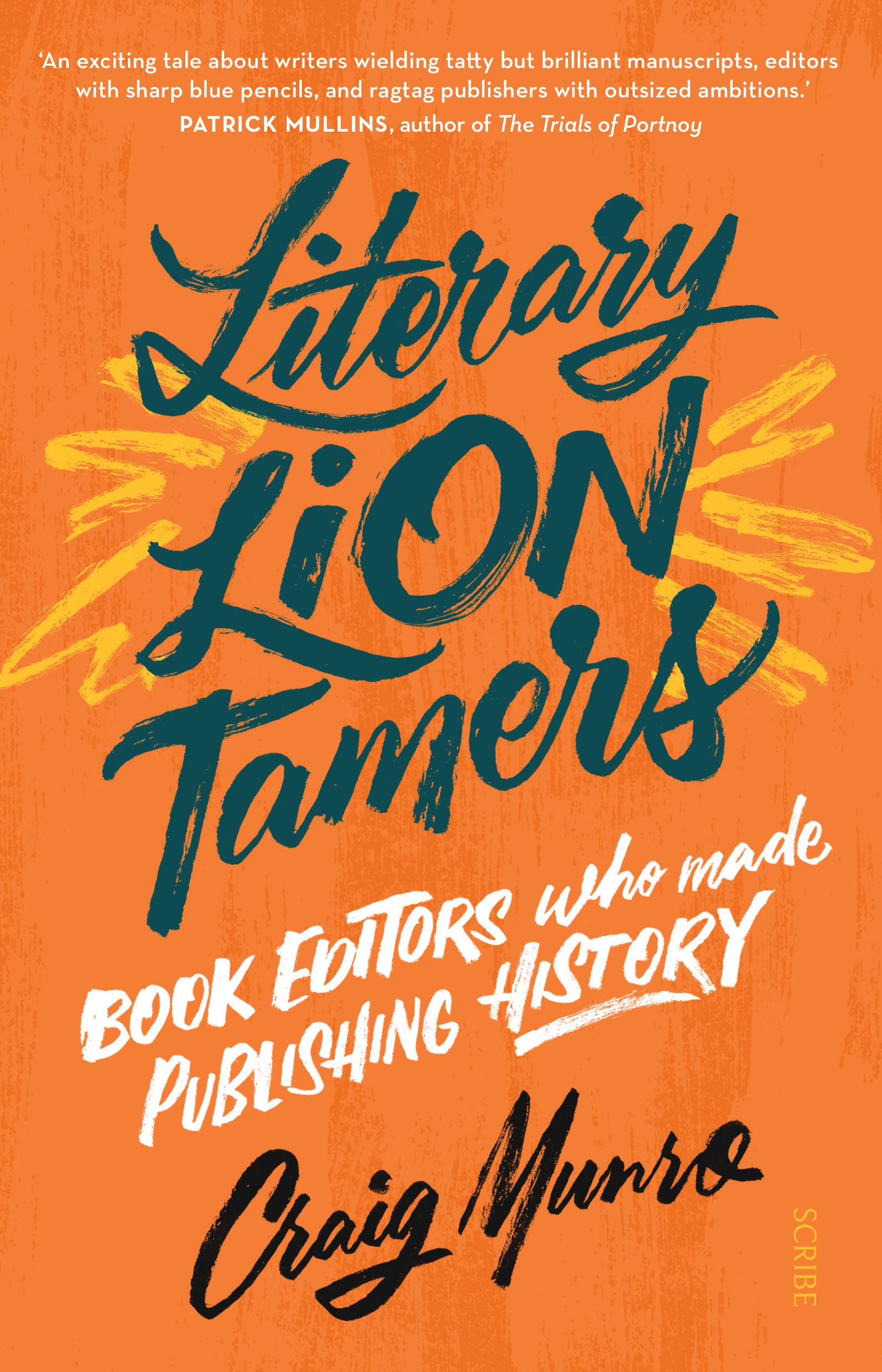
In this mix of memoir, biography and historiography, Craig Munro has used his journalistic and editorial background, forensic archival skills and interviews with primary and secondary sources to bring to life the work of some of the country’s greatest editors – characters he describes as ‘elusive, eccentric, and often quarrelsome’. Editors also tend to be very intelligent, highly educated, well- and widely read; with extensive life experience, enduring patience and holders of very strong opinions.
At the end of the 19th century, A G Stephens was the editor responsible for showcasing the talents of Steele Rudd (On Our Selection) and Joseph Furphy (Such Is Life). He took his opinions to egregious lengths, though, by substituting his own words for the writer’s (a cardinal editorial sin!). P R ‘Inky’ Stephensen followed and was involved with two authors reviled for their obscenity, D H Lawrence and Aleister Crowley. Inky’s talents were prodigious and his strong opinions were more political, but impecunity stifled his career. Beatrice Davis added compassion to the editorial traits, and was noted for her “invisible mending” editorial style. She (mostly) tamed the feral ‘lion’, Xavier Herbert (Capricornia), whose predilection for million-word manuscripts was legendary. Munro’s contemporary, Rosanne Fitzgibbon served as fiction editor at University of Queensland Press (UQP) for 16 years, working with her own sister, Marion Halligan, among notable others. This exchange with her sister sums up the writer/editor relationship: ‘Look Marion … I’m the editor. It’s my job to tinker. You’re the writer – it’s your job to ignore me!’
The book has a Queensland bias, perhaps because of Munro’s links to UQP (or perhaps because of the depth and wealth of talent?).
For anyone with the slightest interest in Australian literature, this book gives a wonderfully insightful glimpse behind the curtains of our publishing industry.
Reviewed by Bob Moore

0 Comments