


Everyone has heard that sneering and disparaging maxim about teachers: ‘Those who can, do; those who can’t, teach.’ I’ve often wondered if it’s an expression largely confined to the Anglosphere, where there is an unwarranted lack of respect – seldom seen in other parts of the world – for the vital work that good teachers do.
But I must confess to having wondered if that educational aphorism might be true when it comes to books about writing. Twenty years ago, most instruction books about writing were penned by people I’d never heard of. If they’re so great at writing, I thought – perhaps unfairly – then why aren’t any of them among the big-name authors that all of us have heard of?
That changed in 2000, however, when Stephen King published On Writing, his combination of memoir and writing advice. In the early 21st century that book stood out as one of the few books about writing created by someone who was not only a good teacher but who also had the ability to sell truckloads of books that exemplified their literary skill.
But in recent years, writing primers by big-name authors have been tumbling off the presses at an increasing rate. Elizabeth Gilbert, author of Eat, Pray, Love (which sold 10 million copies) published Big Magic late last year, and Australian author DBC Pierre, winner of the 2003 Booker Prize, has recently published Release the Bats: Writing your way out of it. Like King’s book, Release the Bats is also part memoir, part writing guide. And in May, popular Melbourne comedian Catherine Deveny published Use Your Words: A myth-busting, no-fear approach to writing.
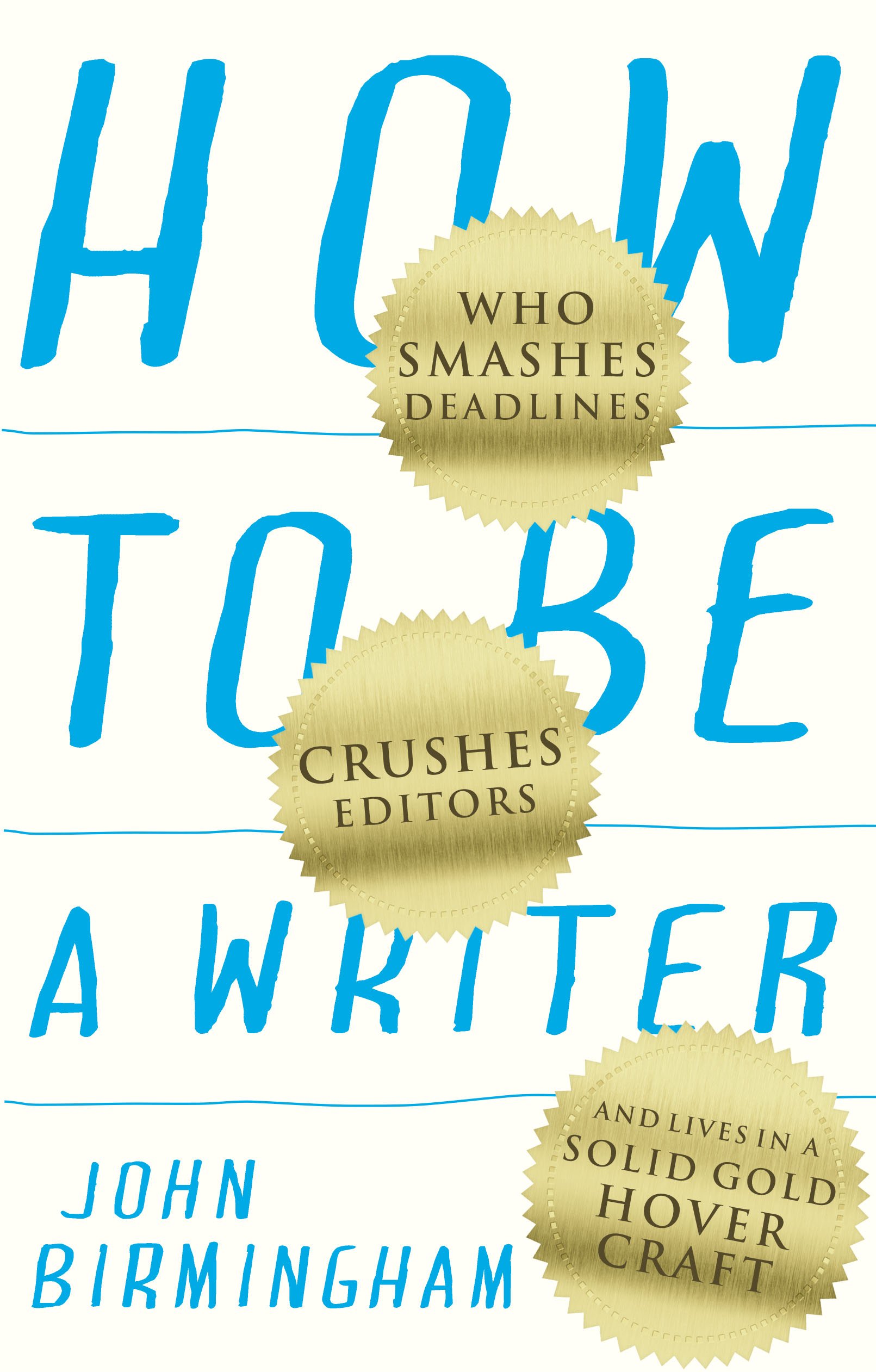
Now Australian writer John Birmingham has flung this book onto the growing pile of writing instruction manuals pumped out by the heavyweights in this subgenre. There is a great deal to learn, however, about being a writer and, wisely, very few books attempt to address every topic that should be discussed. Elizabeth Gilbert and Catherine Deveny, for example, tackle the topic of dealing with fear of writing.
John Birmingham, somewhat ambitiously, tries to cover just about every topic. There are chapters on how to be a freelancer, conduct an interview, write a column, write a book, deal with self-doubt, eliminate writer’s block, get published, use social media – and more – all packed into 240 breathless pages. The advice that Birmingham provides is good, but there’s not a lot of it on any one topic – certainly not as much as you’d find in similar books that address each of these issues in more depth.
There is one chapter, however, that is emblematic of the entire book. It’s titled ‘Finding your voice’. If there’s one thing that John Birmingham has as a writer, it’s a distinctive, authoritative, hilarious, hectoring and cussing voice. That chapter explicitly discusses how to find your voice as a writer, but the entire book teaches the reader – implicitly – about finding their voice. He frequently veers off from the essence of the point he is making, but these tangential discussions are very funny and inventive, and they allow Birmingham to showcase the contents of his wacky creativity.
But amid the flights of fancy there are plenty of helpful, no-nonsense bits of advice. He provides the tips that people such as Raymond Chandler, Don DeLillo and Haruki Murakami have used to make themselves produce a given number of words each day, and he discusses how various technologies – such as Noizio, Scrivener and voice recognition software – can make writing easier.
Reviewed by Tim Graham


0 Comments