



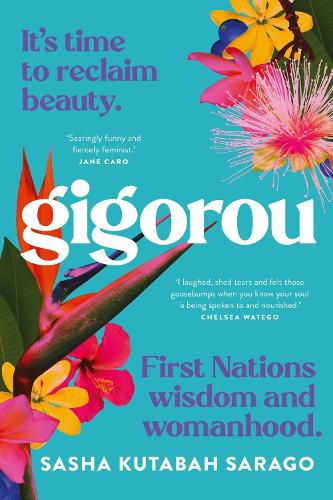
Gigorou’ (pronounced jig-goo-roo) means ‘beauty’ or ‘beautiful’ in Jirrbal, the language of Sasha Kutabah Sarago’s grandmother. Growing up, with an Aboriginal mother and African-American father, Sasha did not see herself represented anywhere and did not feel gigorou. Writing this book has enabled her to confront a past she’d hidden away and discover the strength to reclaim her Blak Femininity.
Sasha’s voice in this part memoir and part manifesto is fierce and funny. She worked in the beauty industry, first as an assistant in her mother’s beauty salon, and later as a Blak model. Being told ‘You’re too pretty to be Aboriginal’ inspired her TEDx talk ‘The (de)colonising of beauty’. Frustrated by the lack of diversity in fashion and media, she launched Ascension, Australia’s first digital lifestyle platform for women of colour. She shares her experiences, using her perspective as a First Nations woman to redefine beauty, femininity and ideals of womanhood.
Through the voices of her matriarchs, connecting with Country, learning about creation stories and the spirit of strong Indigenous women before her, Sasha finds healing and her authentic voice. As she writes: ‘Along with other Blak girls, I had to create a space for myself when there was none.’ The personal and the political are blended into a rich and rewarding read.
Reviewed by Melinda Woledge
 About the Author
 About the Author
Sasha Kutabah Sarago is a proud Wadjanbarra Yidinji, Jirrbal and African-American woman. Sasha’s traditional Country spans from Atherton Tablelands, Daintree to Tully, known as the Bama (Rainforest People) of Far North Queensland.
A former model, Sasha grew frustrated by the invisibility of multicultural women in fashion and media. In 2011, she founded Ascension, Australia’s first digital lifestyle platform for women of colour.
Sasha’s TEDx talk, ‘The (de)colonising of beauty’, was selected as TED.com 2021 Editor’s Choice and has fuelled her passion for having conversations around feminity and womanhood from a First Nations woman’s perspective.
Sasha says,‘I wrote Gigorou as a love letter to Black women and my younger self, but it’s also a reminder that social constructs are illusions waiting to be reimagined. Beauty is one of them.
‘I hope this book acts as a remedy for healing the wounds we hide so well — an invitation to find your way back to self through the wisdom of First Nations women and culture.’


0 Comments