


Most Australians grew up learning that this country’s wealth from wool was the result of John Macarthur importing Merino sheep for his farm near Parramatta, making him the ‘father’ of the wool industry.
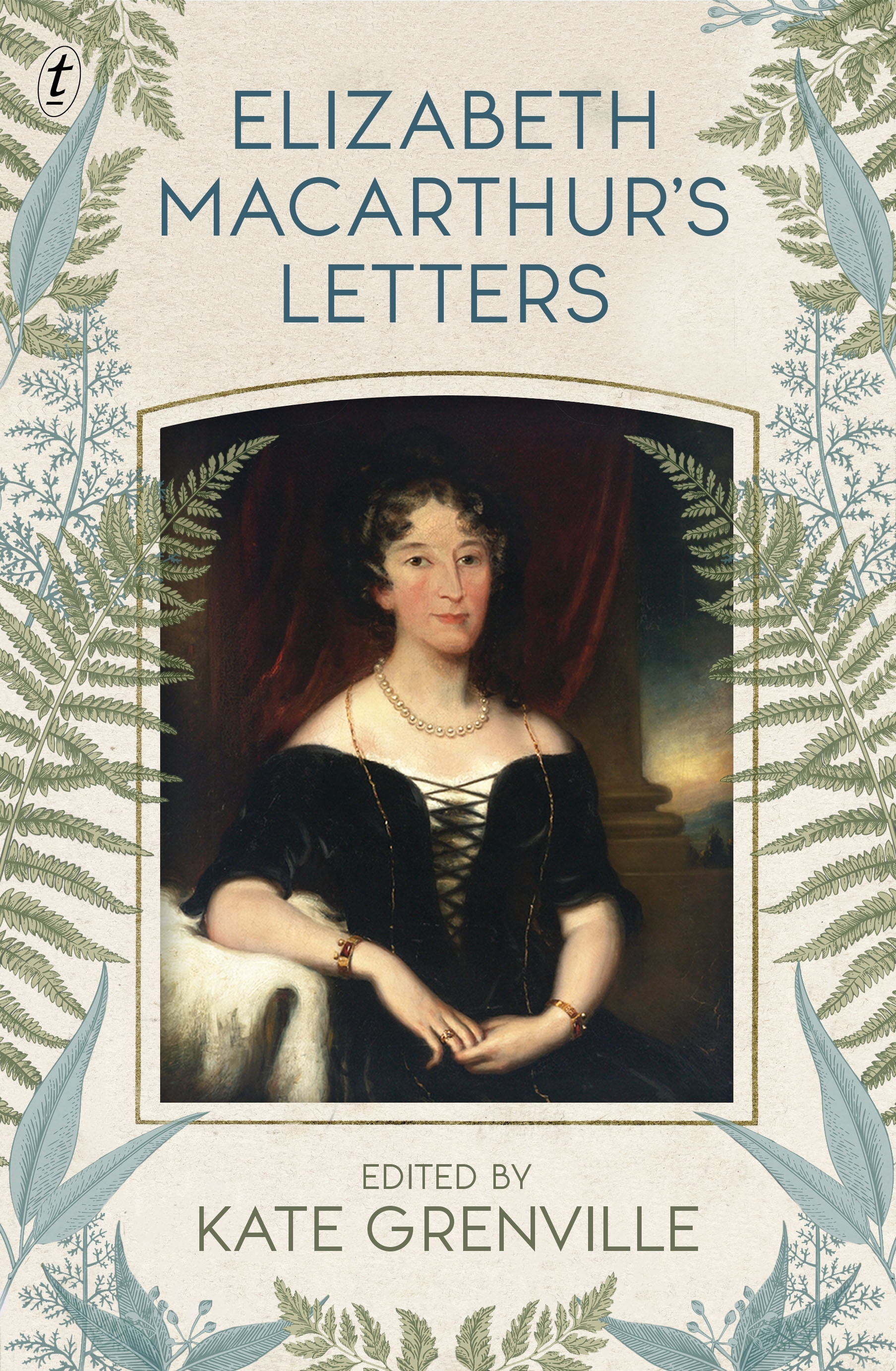
Grenville, on the other hand, believes that industry had a ‘mother’, Macarthur’s wife, Elizabeth, and her novel, A Room Made of Leaves, is a fictional account of Elizabeth’s life, using letters Elizabeth wrote as the skeleton for her story. At face value, those letters starting from 1790 to family and friends in England, seem innocuous enough, effusive in reference to John Macarthur, notoriously difficult, devious and disliked by people in the colony. He led a tumultuous and controversial life, dying insane in 1833.
Macarthur read his wife’s letters before they were sent as, once received in England, they were likely to be shared widely. Grenville writes that in editing 65 of Elizabeth’s letters, she kept the parts that expressed Elizabeth’s personality, thoughts, feelings, and attitudes, rather than her description of events. She believes that Elizabeth cleverly used wit and irony in her letters, with recipients reading between the lines to detect her real meaning, particularly about her marriage.
Sadly, there is no record of letters to her husband during the many years he spent in England fighting legal battles, while she administered their growing pastoral interests, including the sheep-breeding.
Every mother will weep with Elizabeth as each of her four sons was sent to England as small boys to be educated, with only two returning to the family enterprise.
This book should be read as a companion to A Room Made of Leaves. Enjoy the fiction, then get to know the real woman.
Reviewed by Jennifer Somerville
ABOUT THE AUTHOR
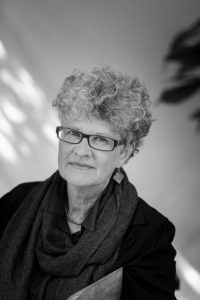 I’ve been writing with a view to being published since I was 16 – though it took me 12 years to see my first short story in print. Since then I’ve published sixteen books. Ten of them are fiction, three are books about the writing process, one is a biography (of my mother), one is a memoir (about the research and writing of The Secret River, my best-known book), and one of them is a science-y book about fragrance.
I’ve been lucky – many of these books have won prizes, three have been adapted for the screen, and one had sell-out runs at Adelaide and Edinburgh Festivals as a play. They’ve all been published around the world and all the novels have been translated into many languages.
I was born in 1950 and grew up in Sydney, Australia, earning an Arts degree from Sydney University. My first job was at Film Australia, editing documentary films. Then I went to Europe and the US for five years, working and studying (I did an MA in Creative Writing at the University of Colorado).
When I came back home I worked for several years at the Special Broadcasting Service as an editor of subtitles, then became a freelance writer, reviewer and teacher of Creative Writing. Several grants from the Australia Council let me go on writing between those part-time jobs.
A version of The Secret River was the thesis for a Doctorate of Creative Arts from the University of Technology Sydney, and I’ve also been privileged to be granted honorary doctorates from Sydney University, Macquarie University and the University of NSW, and an award for Lifetime Achievement in Literature from the Australia Council. I was honoured to receive the Order of Australia in 2018.
I’ve been very fortunate to have been able to spend my life doing what I love. I’m very grateful to a world of readers who are interested in the same things I am.
0 Comments