



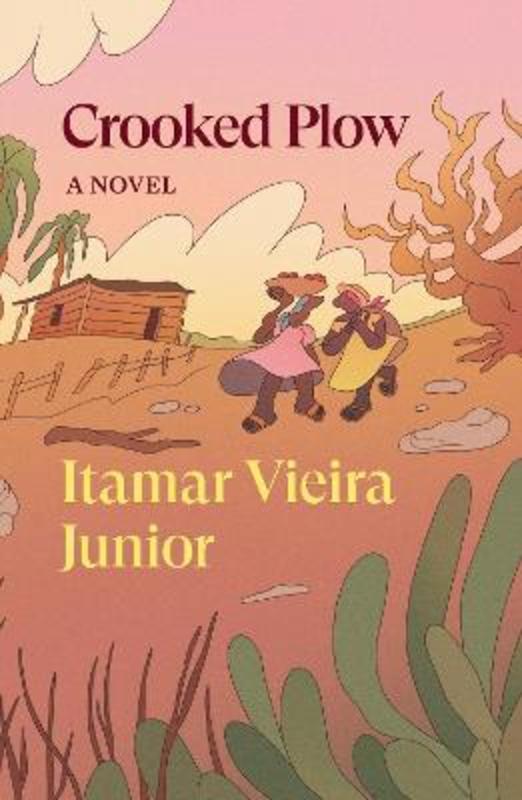
This South American novel is a timeless mix of social and magical realism. It’s set relatively recently, but the protagonist family lives a pre-modernity subsistence life. It’s told in three parts: the first two by sisters, Bibiana and Belonìsia, and the third by an encantada (spirit), Santa Rita the Fisherwoman.
Bibiana is the eldest of four children of mother, Salu, and father, Zeca. Zeca is a healer, invoking spirits in a blend of African ritual and Catholicism. They live on a plantation in Brazil, in an area called Água Negra (Black Water). The family are descendants of African slaves, but the punitive working conditions means little has changed with ‘freedom’.
As young children, Bibiana and Belonìsia play with a knife and both end up slicing their tongue – one of them slices it off completely – but the sisters are so close that when one is forever mute, the other speaks for her. Within this part, the reader has insights into Zeca’s healing through the Jarê rituals, although he’s unable to fully heal his daughters.
In Belonìsia’s narrative, Bibiana has moved away after marrying her sister’s boyfriend, Severo. Belonìsia marries Tobias after he charms her family with his manners, but once married, his true (abusive) character is exposed. Santa Rita is an omnipotent narrator and reveals details of the family history, including why that knife was in the sisters’ grandmother’s possession, and why it was wrapped in bloody rags.
The Blackness of the family allows the author to examine life in the post-slave era, whilst also narrating through a feminist and class-based lens. The narration in Crooked Plow seems simple, but the ideas explored are complex. The ability to achieve that mix is profound.
Reviewed by Bob Moore
ABOUT THE AUTHOR
 Itamar Vieira Junior is a Brazilian writer. He was born in Salvador, Bahia. He has a PhD in Ethnic and African Studies from the Federal University of Bahia. His main works include a short story collection titled A oração do carrasco [The executioner’s prayer] (2017), that was a finalist for the Prêmio Jabuti de Literatura. Torto Arado [Crooked Plow] won the Prêmio LeYa in 2018, the Prêmio Oceanos and the Prêmio Jabuti, both in 2020.



0 Comments