




Contrary to appearances, Afghanistan and the Westgo way back. Alexander the Great married the daughter of an Afghan warlord and Greeks ruled Bactria for the next 300 years. In the Middle Ages, the lands between the Punjab, Persia and the Turkic Central Asia were regularly invaded from all three directions. The result was a region that is linguistically and ethnically diverse and seldom at peace.
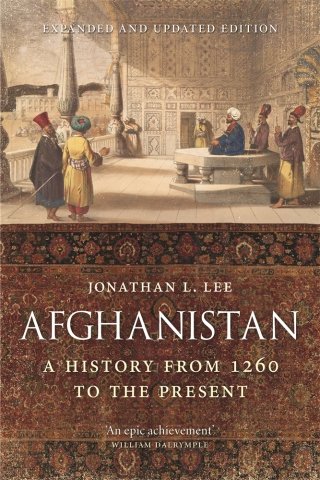
In Afghanistan, Jonathan L Lee has delivered an epic account of this complicated place from the 13th century until the recent past. This is a real service because most of us are completely ignorant of the reasons Afghanistan appears to be an intractable problem both for its inhabitants and neighbours. Indeed, if the reader ever had any doubt about the utility of history, this book should answer them. It is literally impossible to make sense of the contemporary country, which has been at war since the late 1970s, without knowing, for example, that the modern state was a by-product of the Russian-British ‘Great Game’ of the 19th century, which amalgamated Turkic speakers in the north with Pushtun speakers in the south and Persian speakers in the west.This is not to say that Afghans were passive in this process; they expelled the British twice in the 1800s and invaded the Punjab as recently as 1919.
Afghanistan is primarily a political history and the reader will have to take the incessant infighting between relatives with similar names slowly. Polygamy may have its uses but political stability is not one of them. It is a pity that Lee could not spend more time on social and economic themes but, as things stand, the book has enough heft to stun a donkey. The lack of good maps and the poor quality of the photos, however, is a real problem and detracts from what otherwise is a fascinating account of this complex and, for the foreseeable future, unhappy land.
Reviewed by Grant Hansen



0 Comments