




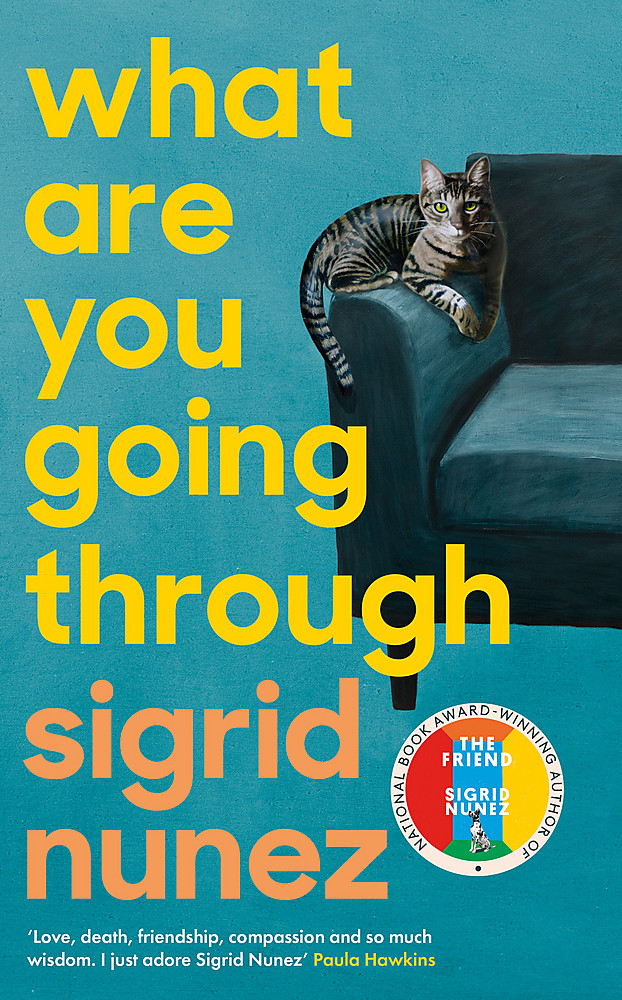
Reading Sigrid Nunez is like catching up with an old friend over coffee. You know the friend – the one who tells an interesting story with such charm and humour that the time with them passes so quickly.
There are no character names here, giving a sense of universality to the story. Our narrator is (like the author) a middle-aged writer.
Her friend, another writer, has been given a cancer diagnosis with a poor prognosis. After some initial success with chemo, the friend relapses.
At this point, the friend decides she would prefer to die on her own terms, but doesn’t want to do it alone, so asks our narrator to stay with her. A roller-coaster of emotion – rage and laughter – follows.
Although this friendship is the core of the novel, the narrator also relates other encounters with people in difficulty. She is an ‘ear’ for the troubled. But who is there for her?
The struggles she’s had in her life are alluded to but not unpacked. The conversations she has with the others are one-sided. People unload onto her but have no interest in her own story. For me, this is a telling indictment of our selfish, self-centred society.
The title is a quote from Simone Weil: ‘The love of our neighbour in all its fullness simply means being able to say, “What are you going through?’”. As our narrator notes, this is more meaningful in Weil’s native French: ‘Quel est ton tourment?’
Nunez is the quintessential storyteller. She uses this novel as a vehicle to pose questions about life, death, the future, and our relationships with each other.
If she’s not your old friend yet, it’s definitely time you made her acquaintance.
Reviewed by Bob Moore



0 Comments