




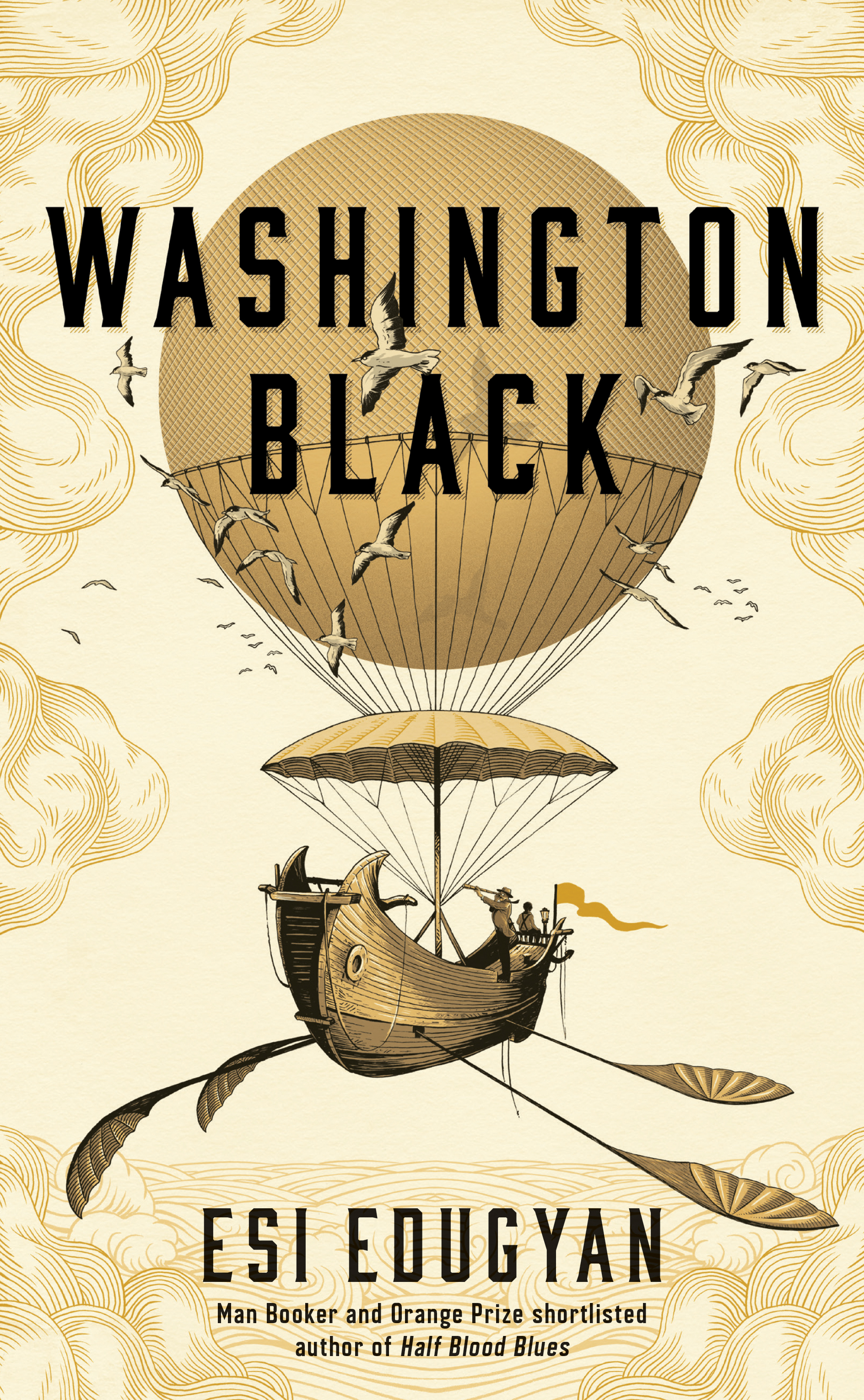
In 1830, Washington Black is an 11-year-old slave on a plantation in Barbados; he is fated to live out his life in misery and torment, his value that of his sweat in the sugarcane fields. But all that changes when he is selected by the brother of the plantation owner, the eccentric and sensitive Titch, who needs a young man of Washington’s weight and temperament to assist him with his scientific observations and experiments surrounding his pursuit of the perfect aerial machine.
After a series of misadventures, Titch and Washington are forced to flee the plantation, with Washington condemned as a runaway slave and Titch his enabler. They begin a journey from the Caribbean to North Virginia, to the frozen wastes of the Canadian Arctic and eventually the searing deserts of Morocco. Along the way, Washington demonstrates a talent and intellect that shows him to be an extraordinary young man.
This is a fine tale of adventure and potential, taking us from the absolute horror of a slave plantation to the refined halls of Victorian Exploration Societies. This is a time when mankind was making remarkable scientific discoveries, while continuing to enslave other people and treating them as less than farm animals (and a warning, the early scenes at the plantation are brutal and at times confronting). It is a time of contradiction, and a time of hope.
But what stops me from giving this novel five stars is that it is a very sad book. I appreciate that a book about a rescued slave was never going to be joyous, but there is a pervasive sadness that colours all of Washington’s achievements and opportunities.
Washington Black was shortlisted for the Man Booker Prize, and is a fine novel, for all it is missing is that spark of greatness.
Reviewed by Lesley West



0 Comments