



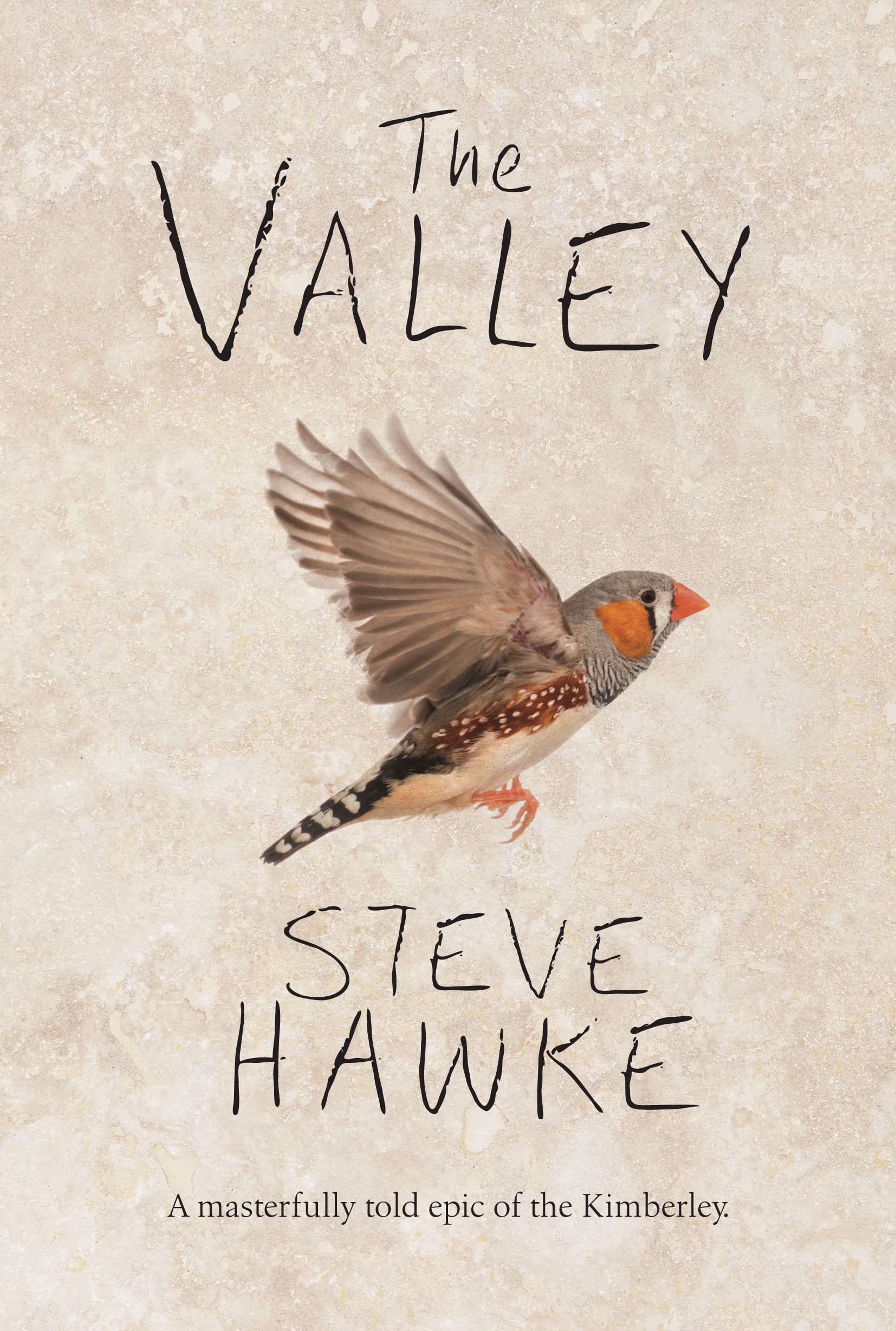
The Valley is Steve Hawke’s first novel for adults. It is set in the remote Kimberley region of Western Australia and traverses almost a century in time. The portentous opening scene is violent and bloody with a frontier flavour that is uniquely Australian.
The story pivots around an extended Australian family and gradually narrows its focus to two carefully drawn characters: Dancer, a young man born in Broome, and his grandfather, Two Bob. They are descended from a union between an Aboriginal woman, Bessie, and William (Billy) Noakes, a white man from the WA goldfields.
As Billy says, ‘It is a strange affair in this country, the business of names.’ Almost every character has an Indigenous name, a ‘white’ name, and several nicknames. Others are dependent on their familial relationships, a tradition rooted in Aboriginal custom. It’s confusing but enlightening, providing an insight into a culture that may be unfamiliar to many.
Despite Hawke’s opening disclaimer about The Valley being a work of historical fiction, there is something astonishingly truthful about this story. The characters, and the situations in which they find themselves, are disconcertingly real and they carry their flaws and failings openly. As individuals, they are frequently pitted against each other, and often against themselves. Oppositions are apparent throughout: between black and white, city and country, and the past and the future. All this unfolds under the cloud of a constrictive white Australian authority.
The Valley is something of a lament for the weakening of the bonds that connect people and for the secrets that divide them. Resolution comes only through a return to the sanctuary of the valley of the characters’ origin, a return to country.
In spite of moments of uncertainty in nomenclature (or perhaps even because of ), The Valley is extremely rewarding reading.
Reviewed by Gregory Dobbs



0 Comments