



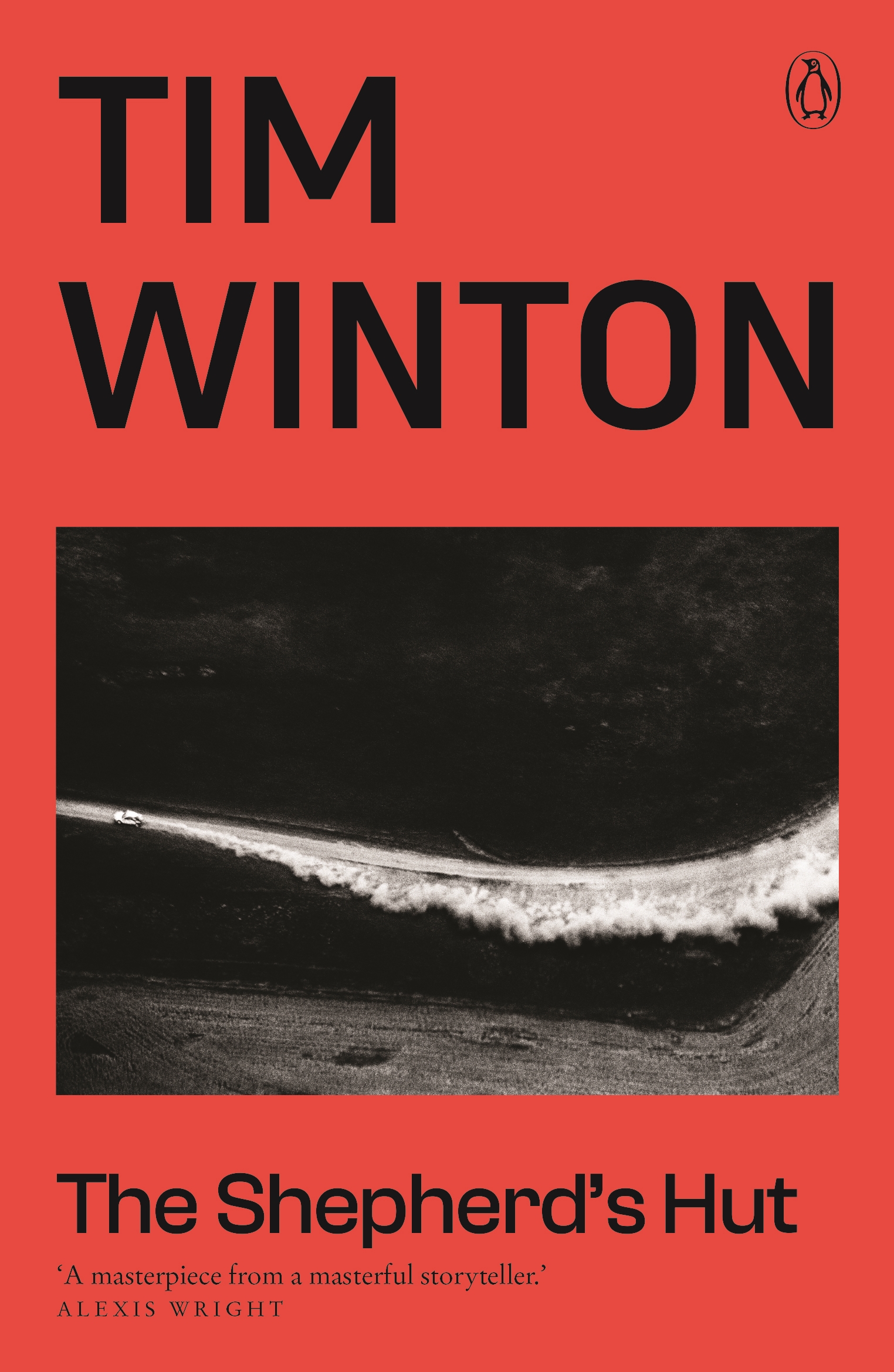
Jaxie Clackton sprints into the mulga after he finds his violent father crushed under the Hilux after his dodgy carjack gave way.
He’s carrying a five-litre Igloo water bottle, a .410 rifle, dried noodles and no grief. The only pain Jaxie feels after his father’s death is the swollen eye he’s nursing. His father punched him out cold into a crate of bones at the butchery where they both work; Jaxie has wished for years that his father would die.
So Jaxie leaves the tiny West Australian town of Monkton, hoping to lay low for a while before trekking up to Magnet, where he has a girl waiting for him.
The plan works well initially. But when he brings down a huge red roo with the rifle, he decides to hike to a dried lake to gather salt so he can preserve strips of meat. He makes it to the salt lake, but then shadows appear on the horizon. Jaxie stumbles across a mystery hidden in the orange dirt that turns deadly.
The strength of The Shepherd’s Hut is Jaxie Clackton’s voice. His crass, naive, churlish narration urges the story along with the rhythm of coarse poetry rooted squarely in Australian vernacular – his surroundings are ‘bumfuck nowhere’ and fossicking peewees are ‘game as Ned Kelly’.
A British critic reviewing Winton’s Breath wrote, ‘Australian English must be the most consistently inventive and creative arm of the language’. Using this language in The Shepherd’s Hut, Winton creates one of Australian literature’s most memorable recent characters, while unpacking manhood, faith and the determination to survive.
Reviewed by Angus Dalton



0 Comments