


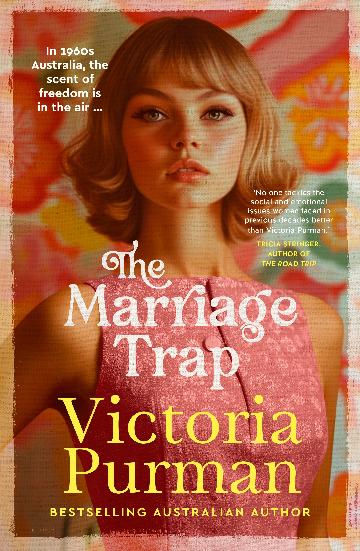
The Marriage Trap by Victoria Purman
Book Review | May 2026
Category: Fiction, Modern & contemporary fiction (post c 1945)
Publisher: HarperCollins Publishers Australia
ISBN: 9781867290636
RRP: $32.99
See book Details
This review is for subscribers only.
Subscribe now to unlock magazines, reviews and articles.
Reader Comments
1 Comment
Submit a Comment

(4/5)
The Marriage Trap is a historical fiction novel set in the 1960s in Adelaide, Australia, centering on the Langley family and the shifting expectations placed on women during a decade of social upheaval. The story explores puberty, sex, marriage, gender roles, the influence of the Catholic church, and the arrival of the contraceptive pill – an innovation that challenged entrenched cultural, medical, and religious expectations
The novel follows three generations of women – particularly Cathy and her younger sister Evelyn – as they confront the realities of womanhood in a restrictive era. Cathy resists the expectation that marriage will define her life, while broader societal forces (family, community, church, and medical authority) push back against female autonomy
The 1960s setting isn’t just background – it shapes every decision the characters make. The tension between tradition and change feels authentic and immediate, as do the impact of historical events such as the assassination of President Kennedy, The Beatles’ trip to Australia, the introduction of decimal currency, and more
The Marriage Trap is a thoughtful, emotionally engaging novel that blends personal stories with broader historical change. While it may not reinvent the genre, its Australian setting and focus on reproductive freedom give it a distinct and meaningful edge.
The novel tackles serious issues – gender inequality, reproductive rights, and societal pressure – with clarity, whilst highlighting “personal and moving insights” into the limited roles available to women at the time
By showing different ages and viewpoints within one family, the story highlights how attitudes evolve (or resist change). This layered approach adds emotional depth.
At its core, the book is about choice, or the lack of it, and how even small acts of resistance can have lasting consequences
In my opinion, stories about women’s liberation in the 1960s are common. Readers of similar novels (e.g. Lessons in Chemistry) may find some of the themes predictable, but I did enjoy this book.