



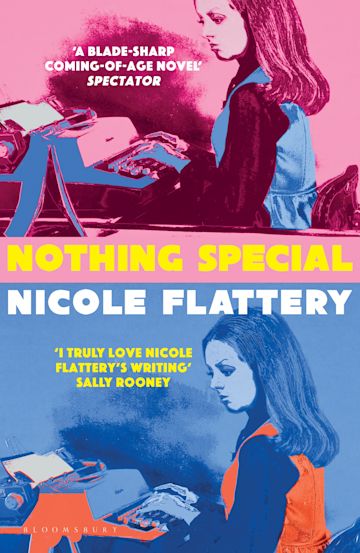
As the narrative begins, Mae is with her ageing mother. It’s apparent that they’ve reconciled after a long estrangement. A trivia question triggers Mae’s memories of her adolescence and the narrative swings between timeframes. Back in 1966, Mae has entered that agonising time between childhood and adulthood. School is pointless and the endless possibilities of New York are waiting. Mae’s mother barely acknowledges her. Her mother’s boyfriend, Mikey, is treated little better. He and Mae share a particular bond.
Mae has only one friend at school, Maud, but a falling out makes school even less inviting. A chance encounter on the escalators at Macy’s steers Mae towards a different world. Mae finds herself at the studio of Andy Warhol. The artist keeps to himself. Andy Warhol is a character written in silhouette. This is appropriate for someone seemingly more myth than reality. Mae sees him in the studio but has little contact.
Mae’s approached by another typist, Shelley, and given a special task: transcribing audio tapes for a book. The tapes are recorded interviews with Warhol’s friends and disclose deep secrets. Mae is enthralled, both by the tapes and Shelley’s immersion in her work. Not all is as it seems, though.
Flattery writes with a mixture of satire and ironic humour, matching the frenzy in Mae’s life with the narrative’s frenetic pacing. Mae is learning that life seems like an impromptu performance without either script or plan. You just make your mistakes and move forward. This coming-of-age story is utterly captivating.
Reviewed by Bob Moore



0 Comments