



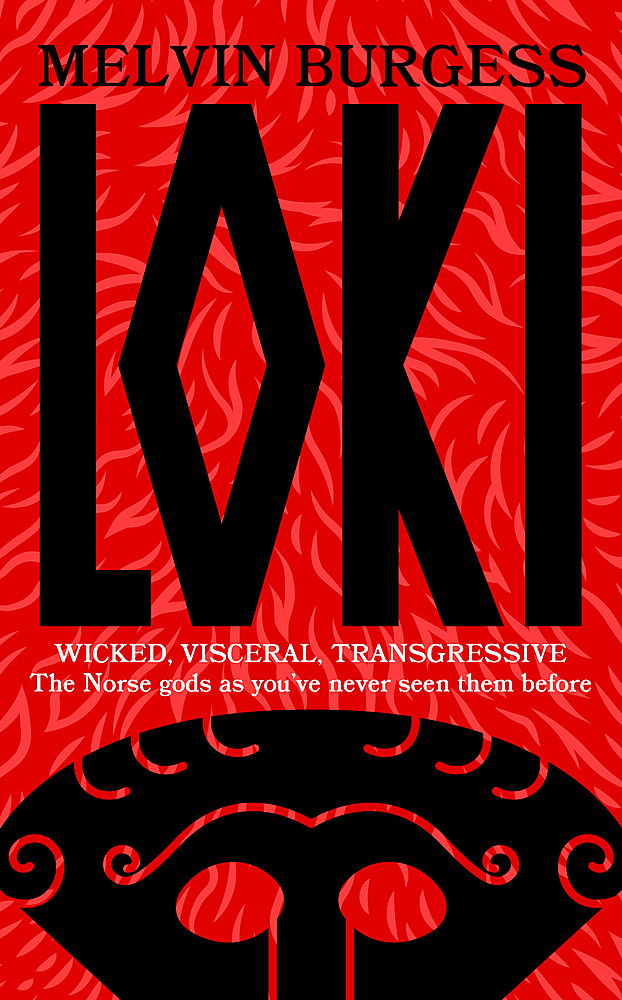
First the positives. Greek mythology has been having its moment in literature and it’s great to see Norse legends also getting attention. The character of Loki hasn’t been invisible, though. There’s the movie franchise and television series featuring this shape shifter and trickster. Here, the author has stayed true to Norse origins and kept names in their original form, rather than anglicising them to suit a broader audience. The narrative follows Loki from his – and the world’s – birth through his (mis)adventures with gods and mortals. Thor and Tyr are principal antagonists. Sadly, for me, that’s where the positivity ceases.
The reader is warned early enough that Loki, as the narrator, is an unreliable source. That shouldn’t concern the reader … except when Loki claims a ‘truth defence’. What is concerning, though, is the register of his narrative. While Loki can use flattery to wield influence with the gods, there’s no evidence of it being used towards his audience.
This book bears no resemblance to the studious work of Robert Graves, or the wit of Stephen Fry. It’s subversive, but not gender-disruptive like the books of Jennifer Saint or Madeline Miller. There’s a preponderance of scatological ‘humour’ relating to the creation myth of humans. Borrowing a similar etymological base, its tone is execrable.
The Young Adult (YA) fiction of Burgess is often described as ‘controversial’. In my opinion, adding coarseness and sexual imagery to what is still a YA sensibility isn’t the recipe for ‘adult’ fiction. Perhaps those fans of both Burgess’ fiction and the Marvel franchise will find this entertaining. I didn’t.
Reviewed by Bob Moore
FROM THE AUTHOR
 Melvin Burgess is a British writer of children’s fiction. He became famous in 1996 with the publication of Junk, about heroin-addicted teenagers on the streets of Bristol. In Britain, Junk became one of the best-known young adult books of the decade. Burgess won the annual Carnegie Medal from the Library Association, recognising the year’s best children’s book by a British author. For the 10th anniversary in 2007 it was named one of the top 10 Medal-winning works, selected by a panel to compose the ballot for a public election of the all-time favourite.

0 Comments