




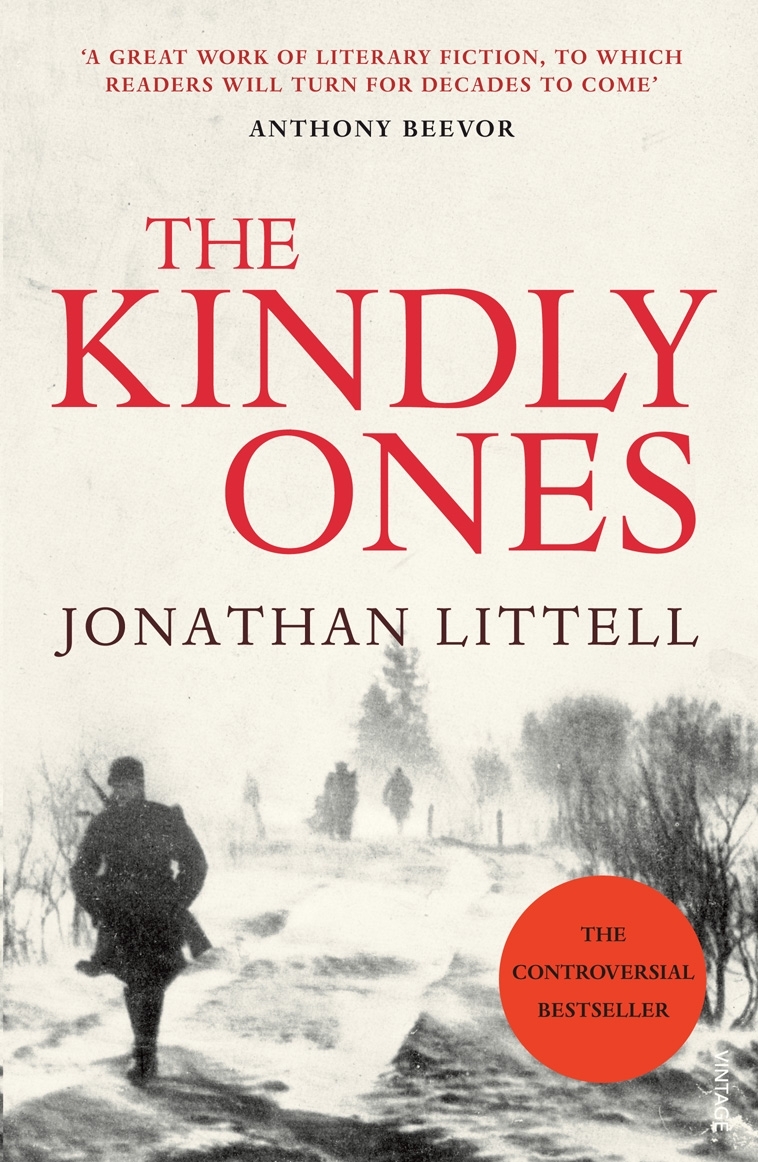
This extraordinary work created a furore when it was published back in 2006. It’s a war novel told from the perspective of an officer in the SS serving on the Eastern Front. Max Aue is a lawyer and convinced National Socialist who is assigned to one of the Einsatzgruppen that followed in the wake of the Wehrmacht’s invasion of Soviet Russia, executing tens of thousands of Jews as well as communist commissars, Gypsies and partisans.
In the course of 1941, Aue is involved in a series of horrendous massacres of Jewish men, women and children. But Aue is not a sadist (even though many of his colleagues are) and is not even much of an anti-Semite. He questions the rationality (but, significantly, not the morality) of the policy he is implementing. And yet he performs his work, including the murders, efficiently and without complaint. Here the reader may see the problem. Is it valid to use such a point of view? Is it permissible to humanise a mass murderer?
The answer is that if you want to understand how the Holocaust was possible you need to read a book like The Kindly Ones. I read Daniel Goldhagen’s Hitler’s Willing Executioners nearly 20 years ago and have long had a theoretical understanding of the fact that the Einsatzgruppen personnel were mainly conscripted German policeman and entirely unexceptional in their demographic and psychological profiles and, further, that participation in ‘Actions’ was not compulsory; men who chose not to participate were not punished and were allowed to transfer out. And yet so few refused. But it’s one thing to know this; it’s quite another to have the reality recreated and to see it through the point of view of a man who is, in many respects, fairly normal.
The Kindly Ones is a translation of the Greek euphemism for the Furies – Aue is a classicist – and this is not an easy read. But for anyone looking to understand where an ideology of hate can take a whole culture, it is essential and timely reading.
Reviewed by Grant Hansen



0 Comments