


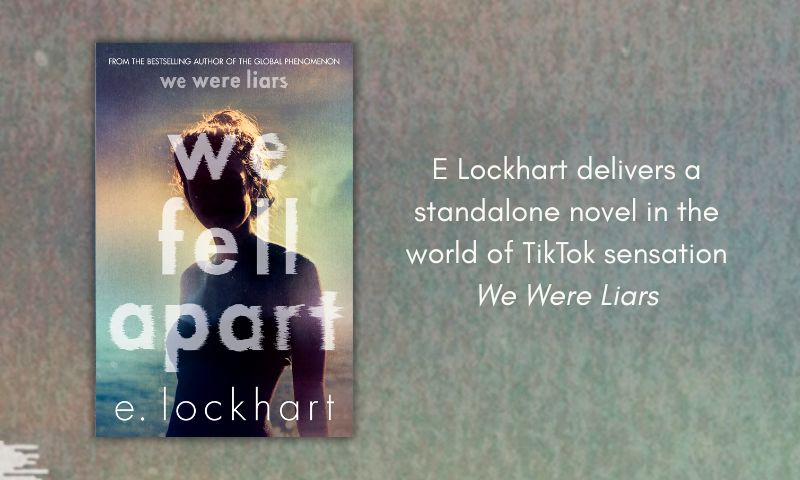
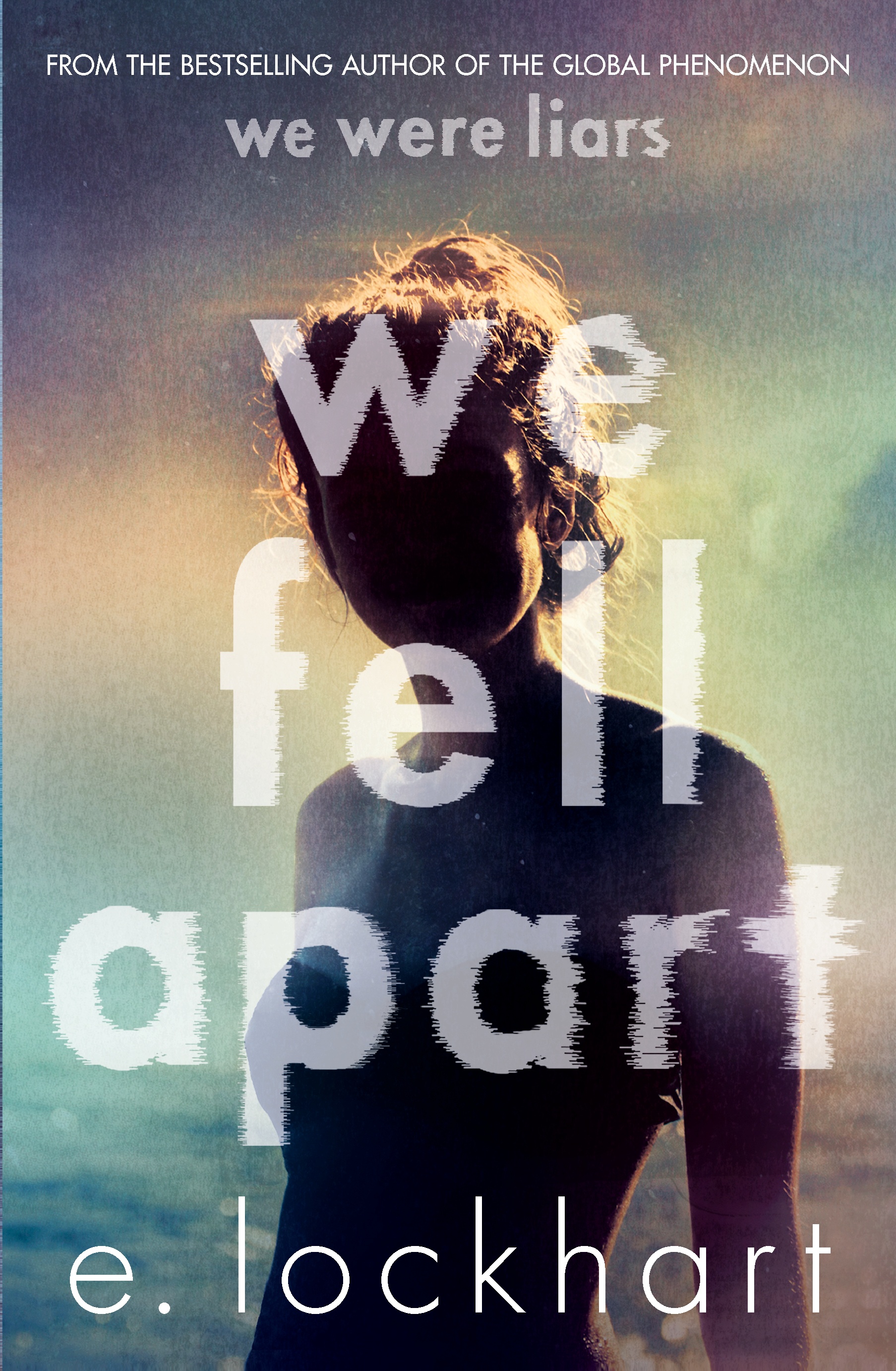
Bestselling author E LOCKHART delivers We Fell Apart, a standalone novel in the world of TikTok sensation We Were Liars, filled with her signature beachy gothic atmosphere, family intrigue, and high stakes romance. Read on for an extract.
PART ONE
Matilda
1
IT WAS A bad place to fall in love.
On the property called Hidden Beach, a wooden castle stood on a monstrous cliff. It was a place of
barbecues, sunblock, acoustic guitars, and midnight swims. Oil paint, intrusive briars. Hungry dogs.
Drawings on skin, terrible lies, and long afternoons at the edge of the sea.
The three boys who lived in the castle followed strange rules, fended for themselves, and became the whole world to each other, keeping their secrets locked in a tower. They were prisoners in an endless idyll.
There was something rotten there, like a bowl of beautiful berries gone putrid in the heat.
I was 18, a cold cup of tea, unwanted.
I had an arsenal of weapons.
I was the bringer of madness.
WHEN HE FIRST began building the castle on the cliff, my father’s friends travelled to see him. People slept in half-constructed towers and outbuildings. They even slept in tents on the lawn. They cooked clams in bonfires on the beach and threw themselves into the ocean waves on hungover mornings. The idea was that they’d live apart from the rest of the world, free of obligations and conventional beliefs.
Some of those friends didn’t leave for years. They took up lives in the towers and the pool house. They played guitar, wrote poetry, took photographs, and wove tapestries. They took drugs and raised children. And they modelled for my father. He spent his days with paint-brush in hand, capturing the faces and bodies of his friends, the frenzy of the sea at his feet.
That’s all over now.
2
MY NAME IS Matilda Avalon Klein. I am the only child of Isadora Hirschel Klein.
My mother escaped her parents pretty young. They told her she was worthless and she disagreed. She spoke to them as little as possible when they were alive. It was better to keep away, and now they’re gone.
She and I have always been a family of two.
If I asked about a dad, Isadora told me we were better off without him and left it at that. The details never seemed important.
Then, midway through the summer after I graduate high school, my father introduces himself by email:
Matilda,
This is Kingsley Cello. I am an artist. I am your father.
I know I have never been in your life, but I’d like to change that.
There is a painting I want to give you. Please come see me at Hidden Beach for a visit.
I never even knew my father’s name until today. And maybe I should hate this guy Kingsley for never being around, for whatever he did to Isadora. But instead, his stilted note makes the world begin to hum.
Think of it like: You unlock a secret level you never even imagined was in a game. It’s an invitation to go in an unexpected direction. Today, I am invited to a hidden beach. Waiting there for me is the father I never thought I’d meet.
When I search for him online, I realise the level I’ve unlocked is massive. Kingsley Cello is just about as famous as a living painter gets. There are hundreds of hits: articles in fancy-sounding art magazines and reviews of solo exhibits at major museums.
Here are questions the search engine pops up when I look for his name:
What is Kingsley Cello best known for? Controversial neoclassical paintings. (I have no clue what that even means.)
What is important about Kingsley Cello? The artist’s dark vision and fairytale interpretations have influenced many other artists.
What was the scandal about Kingsley Cello? In his 2012 Whitney Museum show, Cello’s extremely violent painting, Prince of Denmark, enraged critics.
Where does Kingsley Cello live? The reclusive artist does not disclose his place of residence.
I search dollar value of Kingsley Cello paintings.
They average two million dollars.
3
I TEXT MY mother: I got this email from Kingsley Cello.
She texts back right away: Hm.
I wait, but she doesn’t write more. Hm what? I ask, after a few minutes.
Not a great guy.
What kind of not great? I press.
Just not. Why is he reaching out?
What’s he like?
Strange, she writes. Obsessive. Wounded.
He’s my father, I write back.
No answer from Isadora.
Is he my father? I write. He says he’s my father.
No answer.
HELLO IS HE MY FATHER BECAUSE HE SAYS HE IS.
Hold on, she texts. I’m at a fruit stand.
YOUR FRUIT IS NOT IMPORTANT RIGHT NOW JUST TYPE YES OR NO.
Yes. Then she adds another text: I didn’t think he knew where I was. And another. Did he ask about me?
I ignore her and read some more about Kingsley online. The art magazine articles are filled with phrases like grandly sordid imagination and the enfant terrible of 21st-century neoclassicism. The story from Wikipedia is that Cello burst onto the art scene in what was probably his late 20s. (He gives different birth dates to nearly every interviewer.) He never admits to attending art school and first attracted attention with a New York pop-up exhibition in a warehouse space rented for him by an anonymous patron.
His early paintings were considered audacious. They show women (and occasionally men) laughing. Some figures are in baths or showers. Some are watching television or cooking dinner or doing some other mundane activity. None of them wear clothes. The articles chronicle his rise to fame as a critical darling, but later he became a controversial figure. He started making work with classical literature and fairytale references. Some people say Kings-ley ‘eroticises suffering’ and others think his work is ‘juvenile and needlessly violent.’
He never brings journalists to his studio and seems to do all his interviews sitting on park benches in different cities, mostly managing not to reveal much about himself at all. He says he’s American but was raised in Italy by a strict and horrific grandmother. He also says that he grew up in a hardscrabble town in the Midwest.
And that he spent his youth in a Swedish tuberculosis sanatorium.
And that he was raised by queer fishermen in Alaska.
I flip through some of his most famous paintings online. Turbulent seas, burned forests, monsters, nudes, people in contemporary clothing confronting fairytale creatures, castles crumbling, animals transforming into people. They’re beautiful and disturbing at the same time.
Then I’m looking at a painting of my mother.
ABOUT THE AUTHOR
 E. Lockhart is the author of the #1 New York Times bestseller We Were Liars and its prequel, Family of Liars. She also invented a superhero for DC Comics. Her books include Whistle: A New Gotham City Hero and Again Again. The Disreputable History of Frankie Landau-Banks was a National Book Award finalist and a Printz Honor Book. Genuine Fraud was a New York Times bestseller and a finalist for the L.A. Times Book Prize.

0 Comments