


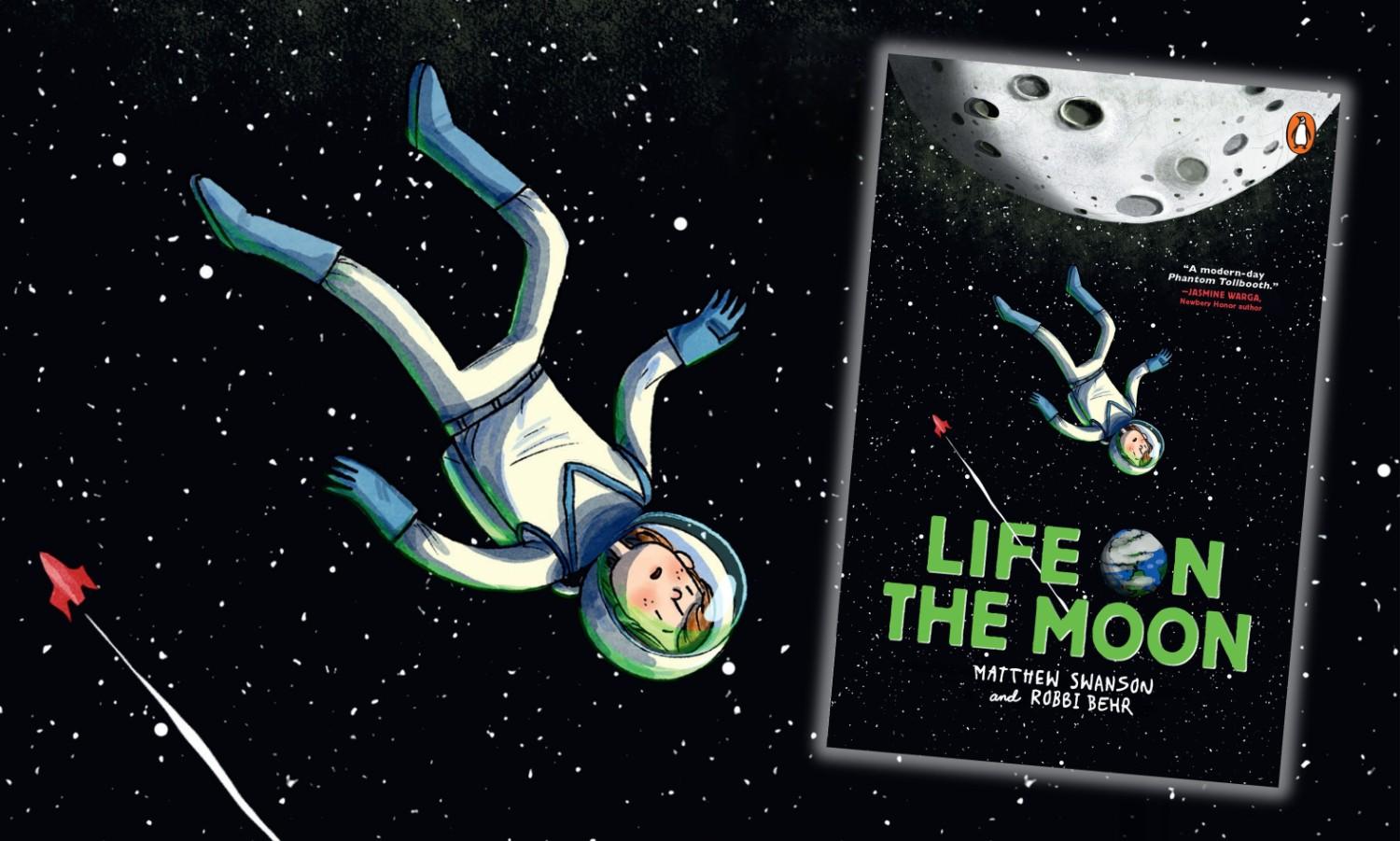
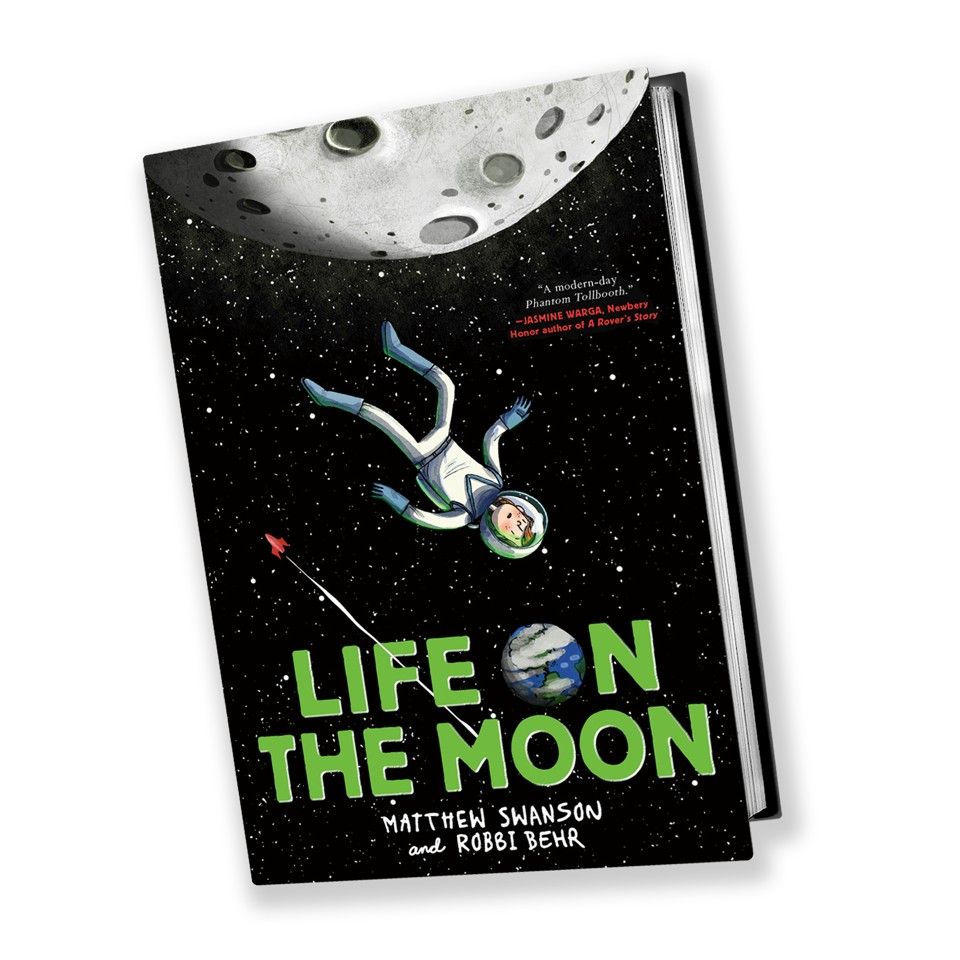
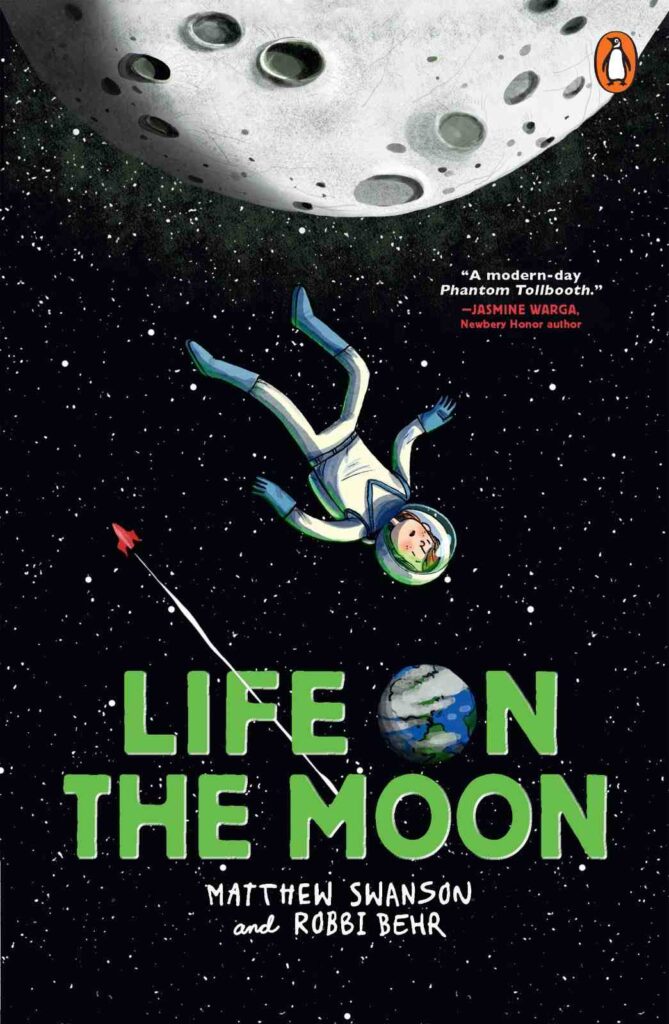
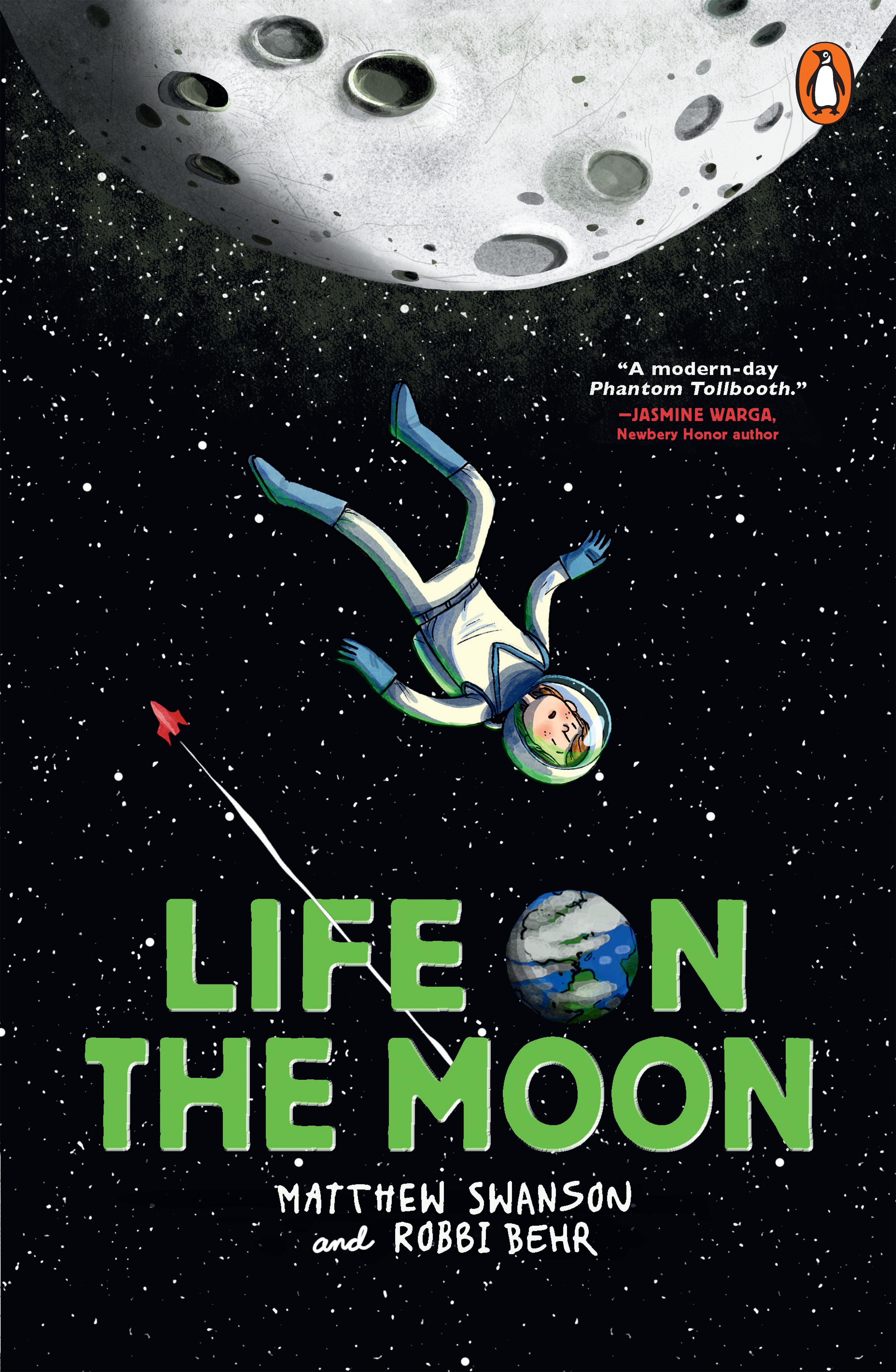
Life on the Moon by MATTHEW SWANSON and ROBBI BEHR is an enthralling tale of a young boy sent to live on the moon, and the courage it takes to speak the truth nobody wants to believe. Read on for a Q&A with the writing/illustrating duo.
ABOUT THE BOOK
The first rule of life on the moon is: There is no life on the moon.
The second rule is: Don’t ask questions.
12-year-old Leo gets a once-in-a-lifetime opportunity to join the very first Moon colony. He’s excited to be part of the top-secret mission, but things quickly go off the rails. Right after his family lands on the Moon, Leo’s dad is called off on an urgent mission from which he never returns. The authorities claim the mission never existed, and Leo’s dad is accused of desertion.
Leo goes looking for his dad and discovers far more than he bargained for. Everyone in the colony insists there’s NO life on the Moon. But Leo’s explorations reveal a landscape brimming with extraordinary creatures—with baffling behaviors and beliefs.
Leo’s big question is: why keep Moon life a secret? Who stands to gain? And how can he find a way to save his new Moon friends before the lie becomes a reality?
MEET MATTHEW SWANSON AND ROBBI BEHR
What inspired you to write Life on the Moon?
M: Honestly, I have no idea. I was lying in bed one night, just typing to see what might happen, and a funny sort of conversation began. It wasn’t clear who was talking, but they were definitely talking past each other.
R: Did you have any sort of plan?
M: None. But as I kept writing, I figured out that a boy named Leo was talking to a moon creature – a Valrooten named Mitchell. That’s why they weren’t understanding each other. They were from completely different worlds. The misunderstandings were funny, which I liked. But then I had to retroactively figure out what deeper ideas I was wondering about by exploring the tensions that led to the jokes. So I guess Life On the Moon was inspired by the humour that comes from misunderstanding.
R: Funny is good.
M: I like thinking in humour.
R: That’s a weird way to put it. (using robot voice) ‘I like thinking in humour. I am robot.’
M: I’m also inspired when Robbi makes fun of me.
R: (laughing) That’s what inspires me.
M: Because then I feel reflexive shame and get to channel it into narrative.
R: Honestly, I feel like it’s so hard to say what inspires anything.
M: I mean, I like to write, I like good sentences, and I like good jokes. I think all my stories spring from that.
How did you create the moon colony and its rules and environment?
 M: I needed to create a context in which my jokes and sentences would make sense. This book absolutely invented itself from the inside out. After I wrote that initial conversation between Leo and Mitchell, I had to figure out where and how they met (the Moon), and where the conversation would lead them (total disaster).
R: I think that the first part of that answer was the best. This book is secretly just a platform for your jokes.
M: Yes, but the jokes are the icing on a cake. I started with the icing and had to bake a cake beneath it.
R: I fully support starting with the icing.
What challenges does Leo face during his search for his father, and how does he change throughout the story?
M: Well, there’s a monster called the Hortle that’s trying to eat him. And there is a mean man who’s trying to arrest him. As for how Leo changes… Along the way, he becomes a lot more open-minded. If this book is about anything. It’s about the dangers of making assumptions and leaping to conclusions.
R: Leo is challenged by assuming his own worldview is the correct worldview. His assumptions change – and he changes – because he actually gets to know the creatures that he’s been making assumptions about.
M: He starts out by thinking he wants to destroy the Hortle. Because he thinks he’s saving his friends.
R: But then he goes through a lot of self-reflection to figure out how things actually work on the moon, and that’s why he’s our hero.
M: I’m touched that you’re spending so much energy defending Leo, Robbi, because Leo is a projection of me. I feel loved and cared for in your analysis.
R: I know that if you went to the moon, you would earnestly try to do the right thing, but that it would be a total disaster.
M: I would step on everyone. I would eat all their foods and pollute their water supply.
R: It would not be good. Please stay here on Earth.
What was the most fun or surprising part of building the moon’s world and its creatures?
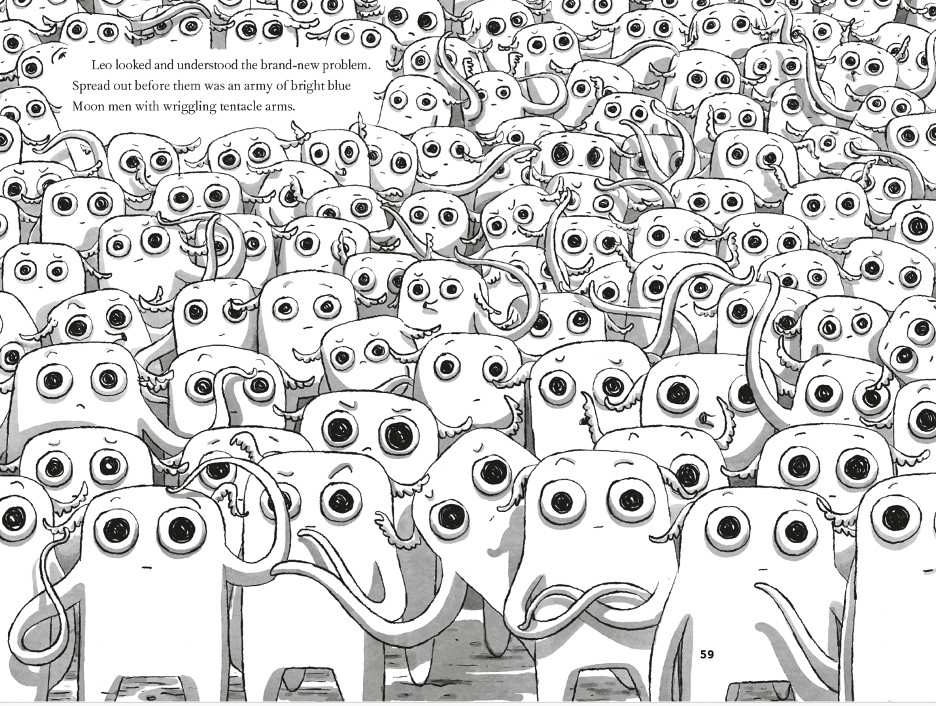
M: I loved coming up with the different voices for the different creatures, making them come alive by figuring out how they talk and think. To me, voice is the most fun and compelling part of writing. I’m not usually big on describing things. Which has been fine so far, because most of our books have been about human beings in classrooms, and most of our readers already know what these look like. But for Life On the Moon, I had to more clearly imagine and describe what the world would look like.
R: Yes, you were in rare form for this book! You actually described the creatures. Usually, I have to make things up entirely.
M: In our picture book Everywhere, Wonder, I didn’t even mention that there was a character. It was just a series of narrative observations, and Robbi had to create the character and the story through illustration.
R: Your original version of the Valrootens had six legs, and I was like, ‘Can we please not have so many legs?’
M: Robbi’s super lazy.
R: (laughing) Just drawing hordes of Valrootens, each with six legs, was not…It was not on my bingo card, sorry.
M: Please note, reader, that the art has been compromised because of Robbi’s failure to perform at the highest levels of her profession and craft.
R: Yep. This is what happens. This is the benefit of living with and being married to your writer.
M: That’s true! If I lived somewhere else—
R: You could just be like, ‘Nope, they have six legs’ and I would be forced to draw six legs on each one of those suckers.
What message or ideas do you hope readers will take away from Life on the Moon?
M: I want readers to see how important it is to keep an open mind.
R: Also: Admit you’re wrong when you’re wrong, man! It seems like a lesson that none of us are willing to learn at the moment.
M: I guess the other point is that protecting things you love sometimes requires personal sacrifice.
R: That is true. I didn’t know you were so deep, Matthew.
M: I didn’t either, Robbi! This is why I love doing interviews. I always learn something new about us. I am, apparently, earnest and deep, and you don’t like drawing legs.
R: No sir.
M: Reader, we hope you will enjoy reading (and eating?) this accidental cake of ours.
R: I’ve heard the icing is hilarious!
ABOUT THE AUTHORS
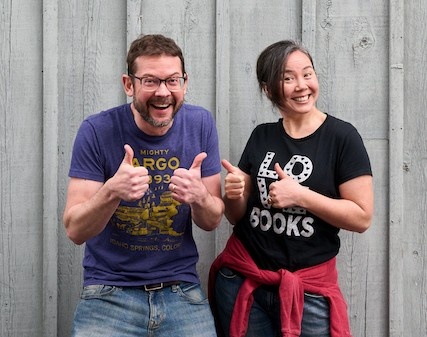 Matthew Swanson and Robbi Behr are husband/wife, author/illustrator creators of illustrated middle grade novels and picture books—including the ‘Cookie Chronicles‘ series, the ‘Real McCoys‘ trilogy, and the illustrated novel Life On the Moon. They are the co-founders of Busload of Books, a literacy nonprofit that brings free books and author/illustrator visits to students and teachers in Title I schools across the country. Most of the time, they live on the Eastern Shore of Maryland with their four kids and two dogs. Each June and July they run a commercial salmon fishing operation in Bristol Bay, Alaska.
Visit Matthew Swanson and Robbi Behr’s website here.
Read more about Life on the Moon on the publisher’s website here.

0 Comments