


The Lost Letters of Rose Carey is a duel timeline historical romance which has been rated as a five star read by Good Reading readers.
We chatted with the author about her inspirations and the process of writing a second book.
 ABOUT THE BOOK
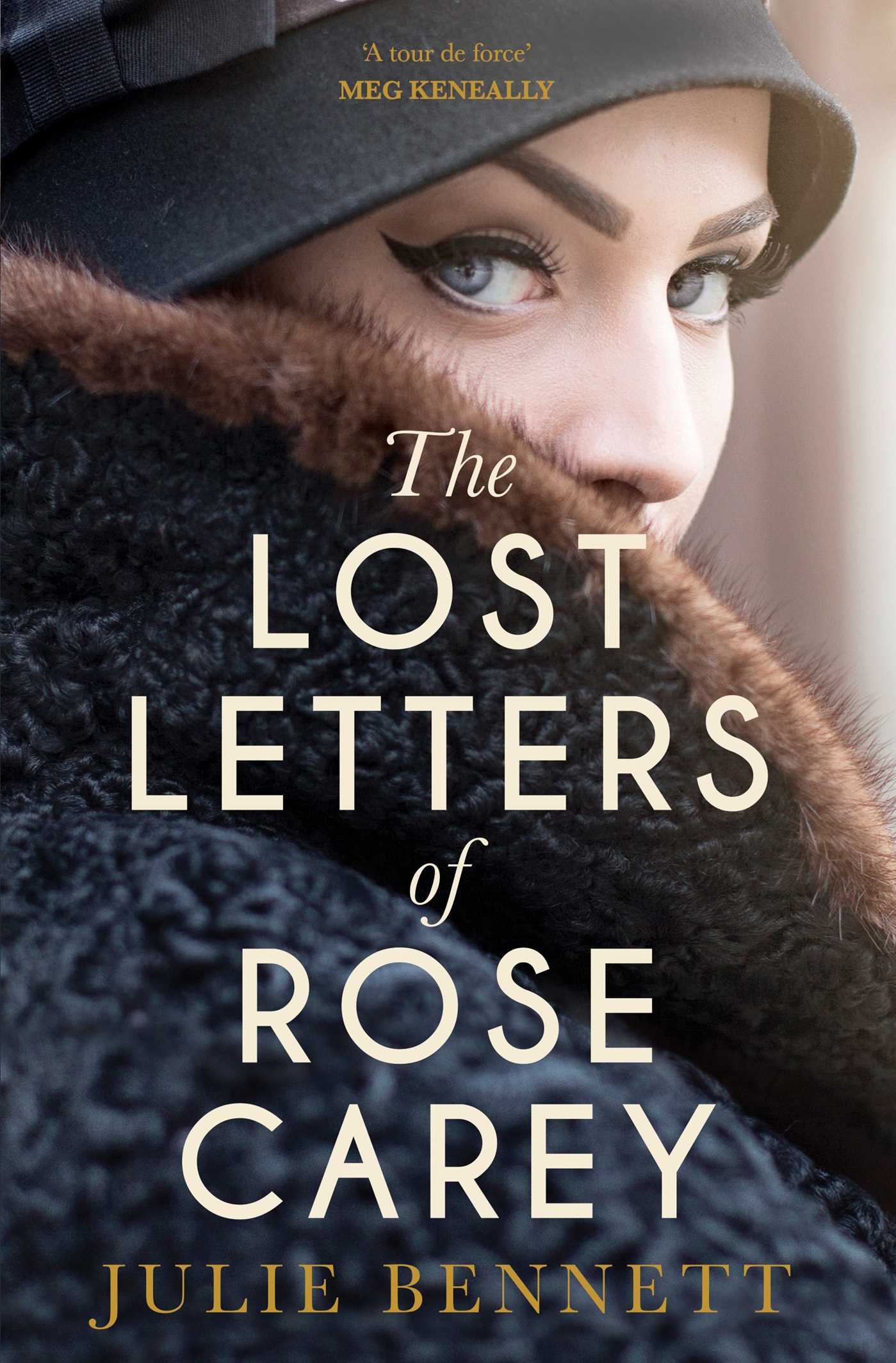 ABOUT THE BOOK
BLUE MOUNTAINS, 2024: Working on a documentary at the historic Carrington Hotel, videographer Emma Quinn discovers a box of handwritten letters belonging to Rose Carey, water dancer and golden girl of the silent film era. Intrigued, Emma begins to read through them, slowly uncovering a deadly secret.
SYDNEY, 1923: Rose Carey has faced enough scandal to last a lifetime. After an accident and near-death experience, the threat of bankruptcy, and rumours of her romantic entanglements, Rose decides to take matters into her own hands and propose to her business manager, Walter. A respectable marriage will redeem her reputation and give her the good publicity she needs – problems solved. But she doesn’t account for the unexpected feelings brewing between her and Walter, or for the possibility that the accident wasn’t so accidental after all …
When she suffers another brush with death, Rose realises that someone close to her wants her out of the way. Who in her close-knit circle has the most to gain? Can she trust anyone, other than herself?
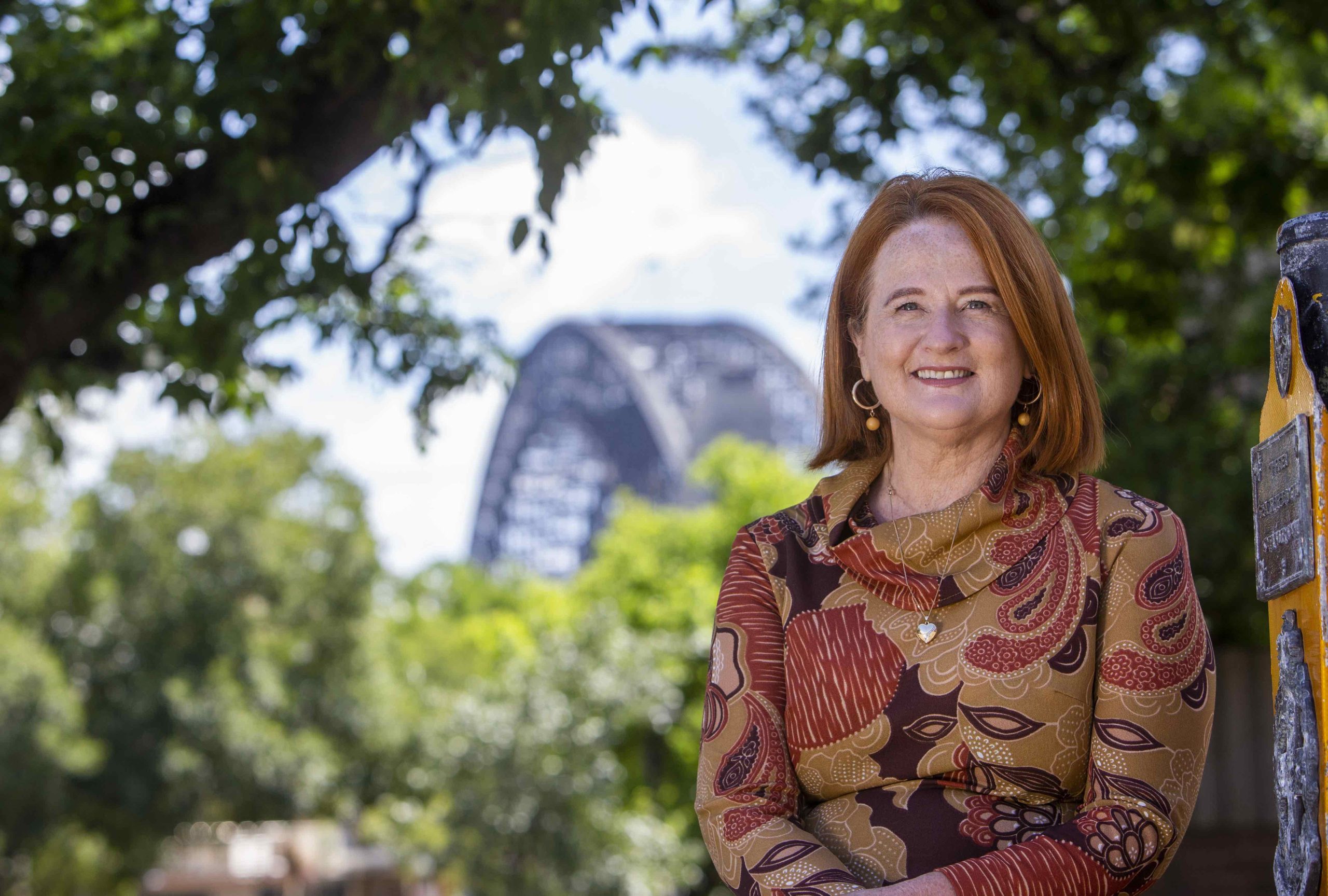
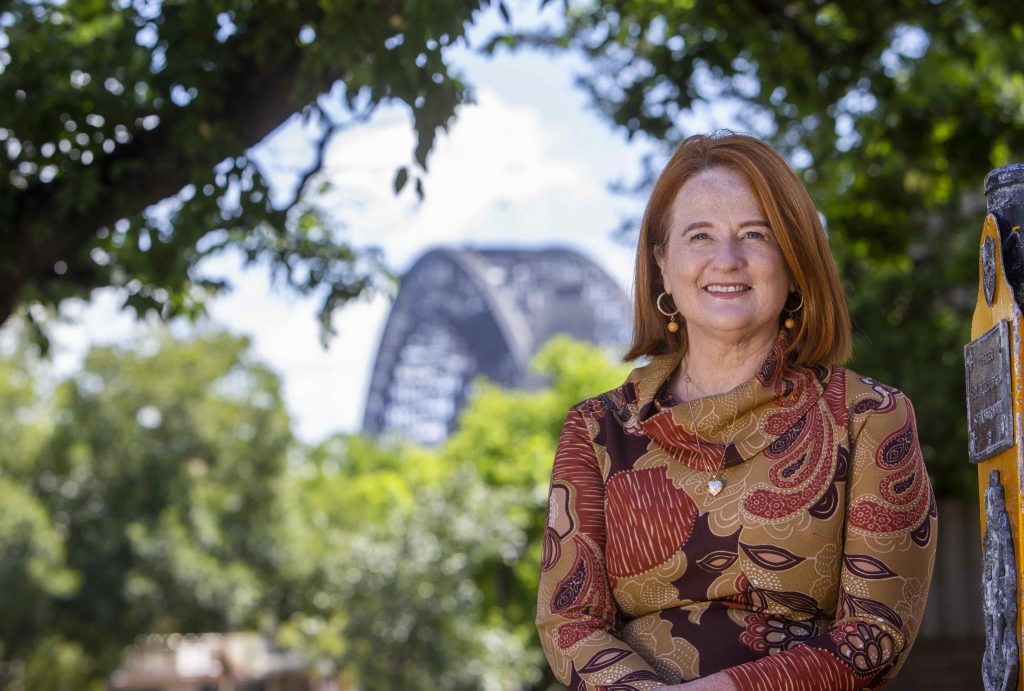
MEET JULIE BENNETT
 How did the idea for your latest novel come about?
I love the Arts, particularly the performing arts and I knew from almost the beginning that I wanted to write about a performer, just as I had in my debut novel, The Understudy. I was also intrigued by the 1920s, so for inspiration I looked at who was doing interesting things in that time period – and that’s where I found Australian women in the early days of film: Lottie Lyell, the McDonagh sisters, Louise Lovely and of course Annette. I read up on them all and they were all remarkable, but Annette intrigued me the most. She wasn’t just an international movie star, she’d also been a champion swimmer, author, and a kind of early fitness guru.
I also wanted to tie the story to the present, to show that although we might live eons apart (well, 100 years) we share similar experiences, passions, and challenges.
Your novel is inspired by the life of Annette Kellerman – in what ways did her life help shape or inform any of the scenes or characters in this novel?
Annette was intriguing for so many reasons. She was daring and sassy, bold and brave. She was also not afraid of talking herself up. I love that she believed her own PR! She was also very busy, she had her hand in so many pies. Her busyness was one of the things that inspired me and helped inform Rose.
What was one of the most interesting things you learned about Annette Kellerman during your research?
Pretty much everything! But mostly the things she did to promote herself. It was bold of her, given the times. I think it’s also interesting that she wasn’t really a ‘flapper’ or a party girl, but actually quite ‘wholesome’, so in some ways she was different to Rose. She didn’t drink or host scandalous events. She was a vegetarian and what we might think of as a naturist.
How did the process of writing this book compare to that of your debut?
Chalk and cheese. There is so much you don’t know when you write your first novel and there is a lot of angst involved. You learn so much about yourself, your characters, and the process of writing – things you thought you already knew. I think I even said on a social media post something like, ‘Boy, you sure learn a lot about writing your first novel when you write your first novel!’
I took a much more planned approach to writing Lost Letters. I mapped the whole book – not every minute detail, but important things about the plot. I knew from the very beginning what would happen, and I kept writing to those points. It sounds like I plotted a lot, but I still don’t think of myself as a plotter. I built the bones I suppose and then I fleshed it out.
One thing I didn’t expect when taking this approach was that I would fall in love with my characters – I thought I’d feel more distant from them than I did from the characters in my first novel. But I love the characters in Lost Letters just as much – and, as weird as it probably sounds, I miss them.
What can you tell us about Rose and Emma and how you developed their characters over the course of the novel?
Emma just came to me. I felt like I had met her before – perhaps she is a composite of people I’ve met in my past. The sensitive, quiet ones. The worriers. The ones who don’t always know what to say or how to say it. The ones who are often misunderstood because they stand back a bit. She came to me fully formed. I don’t know how or why, she just did. I loved her from the very start.
Although Rose was inspired by Annette, she also came to me as her own person. She has a similar boldness about her, but I think a bit more self-awareness. As I was writing her, I knew I wanted to create a character readers could not just admire but also warm to; someone they could identify with.
The narrative jumps between Emma and Rose’s perspectives – why did you choose to tell the story like this?
I like to write dual narratives because I like to show that on a fundamental level, we have much in common, no matter what era we belong to. The problems confronting Emma and Rose are very different, but I hope I created empathy for both.
Rose’s story is set in 1920s Sydney – what kind of research did you undertake to capture this time and place?
Loads. I think I started by reading about people in early Australian film. I also read a marvellous book about The Astor in Macquarie Street, edited by Dr Jan Roberts. The Astor is an apartment building in Sydney. It opened a bit late in 1923 to include in my novel, but Dr. Roberts’ book included information about daily life at The Astor in the 1920s, which provided great insights.
Of course, I read everything I could lay my hands on about Annette, including a book she wrote on how to swim. But I also read loads of other books about film, theatre, history, architecture, you just devour stuff when you start to research. Trove and Papers Past (NZ) were invaluable, as they always are, and it was great to be able to view snippets of film and other memorabilia via the National Film and Sound Archive website. Tiny details take on great importance. I even joined a vintage Chevrolet Facebook group because I wanted to know about steering wheels in the 1920s . Everyone is so helpful, it’s such a blessing.
When I’m researching, I have my head in the internet for what seems like ages. Then I’ll go to places to see things for myself.
I went to the Sydney Town Hall, which features in the book. I was so fortunate to have the Assistant Curator walk me through this spectacular Australian building. You can just imagine ladies in their 1920s cocktail dresses dancing on those glorious floors.
I walked along Macquarie Street and Philip Lane behind it, and across the road into the Botanic Gardens and imagined what it was like back then. I just wanted to try to immerse myself in the times.
Seeing snippets of film helped visualise the times, but perhaps even more evocative was listening to things, for example the music of the era, interviews, the sound of traffic in the background of film from the 1920s, things like that.
For Emma’s story, I visited the Blue Mountains again and stayed a night in a traditional room at The Carrington Hotel in Katoomba. What a wonderful building and in my opinion, so authentically restored. It was very easy to imagine what it was like in its earlier days.
I love this part of the research, and I think lots of historical fiction writers probably do very similar things. I also sometimes go back to revisit various places as I work through edits, just to make sure I have captured the essence of the scene.
How did you develop the central mystery in this novel? And what role did the letters play in creating intrigue and suspense?
Well, I wrote the outline of the mystery first. Someone like Rose would have been a superstar in her day and unfortunately, superstars are often harassed and hounded.
The letters were key to developing intrigue and suspense. I hope readers can tell from them that something has gone very, very wrong. They contain a desperate plea for forgiveness and a longing for a wrong to be righted. I hope the letters make readers want to get to the heart of what has happened and why.
Can you share any of your writing habits or routines that help with your creative process?
This time, I put down a big picture plan, then I thought of things I could include and expanded on it. I certainly had lots of coloured post-it notes! In this case I had one colour for Rose’s story and another for Emma’s. Then I divided them into chapters and thought more about what sort of action might propel the story along.
When I was ready to write the actual chapters I had a pretty good idea where it would go, but it still sometimes felt like a mountain.
I aim to write chapters of about 3,000 words – that’s about the natural length for me. In the editing phase I chop them up a bit. I think it makes the book more digestible to have chapters of irregular lengths.
To write a 3,000 word chapter I let myself ‘get away with’ writing around 2,500 words at a time. I know that the first draft will be mostly about action and I have to leave room to put details in later – things like the colour of someone’s dress, the touch of someone’s skin, the smell of their perfume.
Like every other writer I have my good and bad times. Bad times are when you struggle to write a single word. On those days, I force myself to write something, even if it’s just 250 words.
So, my advice would be, if you want to write a novel, keep reading and keep writing. When you sit back down to write after a break, pick up where you left off. Don’t review anything more than a couple of pages to get back into the swing of it. Keep moving that story forward. There will be a time to make it better later.
Finally, I’d like to end by sending my biggest thanks to readers. Thank you for taking the time to read my novels and thank you for the messages of support you send me via my socials. I really appreciate every word of encouragement and couldn’t keep doing what I do without you.
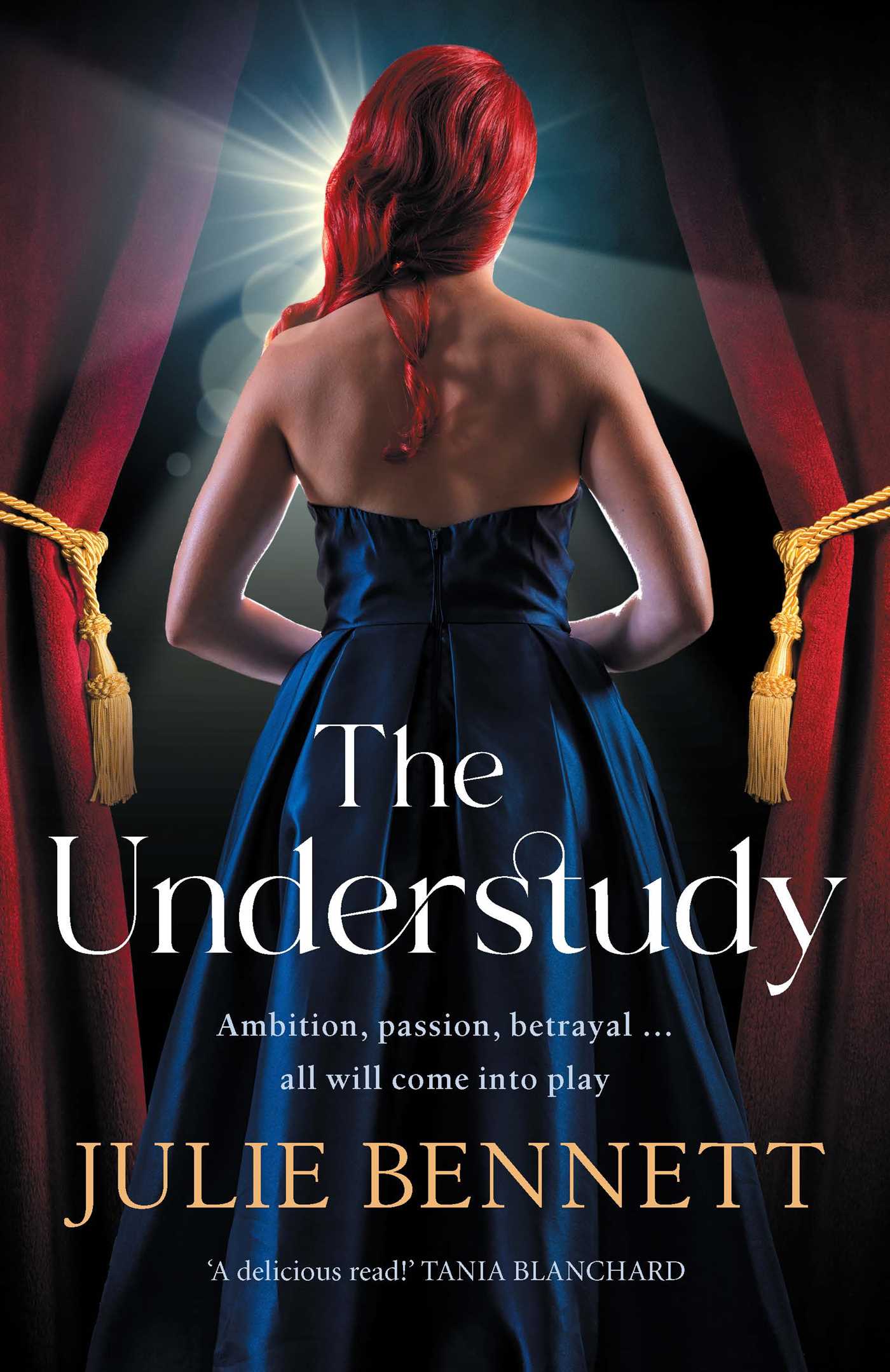 READ AN INTERVIEW WITH JULIE BENNETT ABOUT HER BOOK, THE UNDERSTUDY
ABOUT THE AUTHOR
Julie Bennett fell in love with words at a very young age and soon after leaving school began a career in libraries. In her late twenties she decided to follow her dream to write for a living and, after graduating university, became a journalist. In 2004 she launched a public relations company, which she still manages today. J
ulie lives with her wonderful husband, Bruce and their gorgeous kelpie cross cattle dog, Riley, within walking distance of the Sydney Opera House where she performed as a child extra back in 1973, the year it opened. The Lost Letters of Rose Carey is Julie’s second novel. Her debut The Understudy was published in 2022.
(5/5)
Sydney 1923 and the Blue Mountains 100 years later. These are the evocative locations for this dual timeline novel by Julie Bennett. Historical romance blends seamlessly with modern fiction, where the two lead female characters, Rose – 1923 and Emma – 2024 are strong and relatable .The character of Rose is based on Australia’s very own Annette Kellerman, champion swimmer, diver, filmstar and trailblazer of her time. Rose’s very successful career looks to be crashing down around her after a series of tumultuous events. Is it simply bad luck? The present day Emma meanwhile is dealing with her own set of issues, including unsuccessful rounds of IVF with her wife and all its complicated challenges. Through her work Emma finds an old box of film and memorabilia belonging to Rose, and thus the connection begins to unfold. Mystery, drama, passion and intrigue abound in this cleverly told and superbly researched novel. All of this is intertwined with a wonderful story of relationships, their connections and re-connections. With several twists and unexpected turns, I was totally ‘hooked’ right to the very last page.
(5/5)
This was a fabulous read and it had me in its grip until the very last page. Usually there is one timeline in a dual timeline novel that is more interesting than the other but, in this case, I was just as impatient to get back to each story and see what was going on. I love the way everything tied together and that while I had a few ideas about who and what, that I was left guessing until the end. The author did a great job of building these characters and their stories and I’m looking forward to reading her previous novel now I’ve read this one.
(5/5)
I have given ‘The Lost Letters of Rose Carey’ a five star review. The reason for this was being unable to put the book down. Once you start you need to know more. This is not ordinarily my genre but I thoroughly enjoyed the book.
I would highly recommend this book. Julie Bennett’s retelling is amazing. I also love how it swaps from Emma the photographer to Rose. Very captivating indeed.
(5/5)
The story was truly captivating and inspiring!
An excellent read for a historical fiction inspired by the life of 1920s Australian film icon Annette Kellerman.
I did enjoy reading the book and I highly recommend it to readers who love history.
(5/5)
THE LOST LETTERS OF ROSE CAREY immersed me in 1920 and, conversely, 2024 Australia. It was written in the first person from the viewpoints of two women living very different lives, and also included the letters referenced in the title. I really liked how it swapped between the stories of Emma in 2024 and Rose in 1923, and the way the letters were introduced to the reader. A few small clues were included throughout – enough to keep you wanting to discover more. I kept telling myself ‘just one more page’, as Emma would tell herself ‘just one more letter’ and in the end this kept me reading until after midnight as I had to find out what happened.
The story starts with videographer Emma finding a crate of old film reels and letters that seem to belong to a silent film star from the 1920’s, Rose Carey. She researches what she can of Rose and begins to read the letters, which is somewhat of an escape from her ‘real life’ stresses of IVF and how that is affecting her relationship.
This then introduces us to the story of silent film star Rose Carey and her life – and what an interesting life that is. After suffering from some near death experiences, that were staged to seem like accidents, it appears that someone may be trying to kill Rose, but who? Being written in the first person is a great way to know her inner thoughts and experiences.
And then there are the letters which are used as a great device to learn more about what has happened, and to drop little clues into the story as more letters are revealed.
I really liked this book and would highly recommend it to those who like a bit of mystery, a bit of romance, and a great story with intriguing and interesting characters. And although I didn’t want the story to finish, the ending was very fitting.
(5/5)
What a read! Without any spoilers, Julie Bennett’s The Lost Letters of Rose Carey tells the stories of two women, Emma and Rose, who are from different eras and navigate the complexities and challenges of emotions, relationships, and miscommunication.
The storytelling from both Emma’s and Rose’s POVs is incredibly natural. Both characters were so realistic that I felt like I was catching up with friends and listening to them share details about their lives.
Each side character also had such complex personalities, and each displayed a different perspective—even opposing the perspectives of Emma and Rose—and responded and reacted uniquely toward the circumstances that arose in their lives. Emma and Rose also encounter situations where they struggle to understand others’ actions and feelings, as well as their own. Every character was nuanced and human, rather than pigeonholed as a hero or villain.
The Lost Letters of Rose Carey captures how perspectives, priorities, attitudes, and misunderstandings impact the state of our and others’ lives.
Bennett demonstrates exemplary skills in worldbuilding, crafting vivid and evocative imagery where each setting guarantees poetic licence and splendour.
I highly recommend this book to anyone who enjoys mystery, drama, and romance. It was truly an astounding read.
(5/5)
A crate of old letters, photographs and a canister of silent film reels is found by Emma Quinn in a storage room at the famous Carrington Hotel in the Blue Mountains. When she sees that they are being disposed of she is so intrigued by them that she takes them home to Sydney. These letters written in 1923 set Emma on a path that leads to a one hundred year old mystery. On examining the letters and film they appear to be written by Rose Carey, an Australian silent movie queen in Hollywood.
The story begins slowly entwining Emma’s present day life with that of Rose. At the same time, Emma is having her own problems with her partner and her work and takes her mind off these by trying to research the story of Rose. Gradually it becomes clear that the letters she is slowly reading are taking us on a trip that is far from ordinary. Are the accidents that seem to be following Rose really just bad luck? Is someone close to her betraying her? Do they want her dead?
As the story progressed I found it difficult to stop reading and became totally immersed in the glamorous and exotic fashions of the 1920s silent film era. The second half of the book lead to an unexpected ending.
Thank you Good Reading for the opportunity to read a preview copy from #TheLostLettersofRoseCarey @simonschusterau.
(5/5)
I have enormously enjoyed this book. Beautifully written, keeping me on the edge of my seat, with many OMG moments. I loved the characters and development of the story, both through Emma and Rose’s points of view and the letters. The way that certain bits of information were withheld in the story, allowing readers to speculate, then having them answered in the letters just pushed me to keep reading, to find out more. There were plot twists throughout the novel that I did not see coming, and I am not ashamed to say there were a lot of shocked gasps. This book was absolutely captivating, and I could not put it down. I am usually a fantasy reader, but I am so glad that I have gotten the chance to read it, as it has become one of my fast favourites.
(4/5)
how did rose Carey die?
(4/5)
I enjoyed the book, however I much preferred the story of Emma and Lauren and loved their characters, than that of Rose’s character.
The journey of Emma and her partner in their quest to start a family and the stress it can put on a relationship was real and relatable.
I did like how Emma found the old reels and the letters, starting analysing the and tried to bring Rose to life.
However I was disappointed in the story of Rose, I felt it was very long and dragged out, it took too long to get to the point with not much of a build up until page 264 when she thinks someone is trying to kill her and that her husband is having an affair.
So from page 264 to page 353 was fabulous, loved that.
Genealogy – My Mum has been researching her family tree for over 20 years, she would love a find like what was found in Love, Glamour and Betrayal
(4/5)
2024, Emma Quinn, a videographer and her wife Lauren are going through IVF to start a family, the book explores the stress this puts on their marriage whilst juggling careers. Emma also finds a trunk in the historic Carrington Hotel whilst filming a documentary. She decides to take it home instead of sending it to landfill and discovers the past of an Australian silent movie star, Rose Carey. She is obsessed in finding out everything she can about her.
1923, Rose Carey, a silent movie star and her manager Walter Ryan have just finished filming in New Zealand and have arrived back in Sydney, Australia. Rose comes to the realisation that her Hollywood days are coming to an end and wants to plan a specular event. Walter tells her they are facing bankruptcy, but she is determined to proceed with the event anyway. Disaster strikes again and Rose can’t ignore the odd things that are happening around her. Is someone deliberately, sabotaging her success or even trying to kill her? Who can Rose trust?
I thoroughly enjoyed this dual timeline story set in Sydney, one hundred years apart we get to know Emma and Rose as Emma uncovers Rose’s story through letters that she discovers in the truck she saved from The Carrington Hotel in The Blue Mountains, it’s an intriguing tale of love, secrets, and mystery. I also loved the LGBTIQ character, as a lesbian myself it was nice to read a story like this in the mainstream media.
(4/5)
The Lost Letters of Rose Carey was a delight to read with a dual perspective, one hundred years apart, of Rose Carey herself in 1923 and Emma Quinn in 2024. Following both women’s highs and lows as they navigate their lives, this is a story that will have you turning the pages to find out how their lives unfold in matters of love, secrets and triumphs. Beginning with Emma finding a mysterious box in a famous hotel in the Blue Mountains, Emma becomes fascinated with the woman who she believes the box belongs to, none other than 1920s famous silent film actress Rose Carey. While she tries to navigate her personal struggles with her wife and their infertility issues, she delves further into the letters, photographs and silent film left behind in this box.
1923, Rose Carey has her own struggles coming to terms with the film industry moving to sound, so she decides to plan an extravagant production to cement her as the star that she is. However, after a car accident and another tragedy strikes Rose, she believes someone is out to get her, but who? You will be completely enraptured and surprised by the twists and turns these two women face.
(4/5)
If you love reading historical fiction, love a good mystery, and love a book that has a splash of real life, then pop this onto your tbr wishlist.
I do love reading historical fiction books, and when this arrived last week, I just had to dive in.
What I really enjoyed about this book was Rose Carey and her fight to stay relevant within the silent movie era. As time is moving quickly towards movies with sound, Rose is excitedly pursuing her idea of a theatrical live show. Showcasing her talents as a swimmer and as an actress. But not all dreams transpire without a cost, and the cost that Rose has to pay is beyond anything she could have foreseen.
The imagery of yesteryear and the mysteries within this book are written in such a way as to transport the reader back to a time without non-stop entertainment.
The chapter’s move between now and 1923/24 and highlights the moments of tragedy, love, loss, and emotion.
The now focuses on Emma and her desire to learn all she can about the connection between her and the mysterious owner of a camera found with reels, pictures, and letters showcasing Rose Carey.
As Emma’s happy life with her wife Lauren seems to be slipping away, she is drawn to the letters. Everything is drawing to an ending that surprised me as I went one way, and the book went another. It’s a wonderfully written story of mystery, love, and our fascination with all things yesteryear.
This is easily a 4 star read for me.
A big thank you to the team at @goodreadingmag and @simonschusterau, who sent this to me. 🥰🥰🥰
(4/5)
Fans of historical fiction inspired by real people from history will devour this latest release by Julie Bennett. There is so much within this novel to enjoy – film history, intrigue, suspense, romance, family drama. Told with a dual narrative, we move back and forth between 2024 and 1923. This story is atmospheric in both setting and style. The surprise twist at the end was a very clever way to bring the two timelines together and knit the story as one. I particularly enjoyed the 2024 storyline, so often in a dual timeline, the contemporary story is a pale shadow of the historical one, but not so in this case. Highly recommended.
(3/5)
An engaging page-turner, this novel illuminates some fascinating history: showbiz and film in 1920s Sydney, early flight, and Australia’s efforts to send athletes to the 1924 Paris Olympics.
It’s told from alternating points of view: Emma, a Sydney videographer in 2024 navigating infertility with her wife; and Rose, an Australian film-star and swimmer whose star is fading in 1923. Bennett poignantly conveys both women’s challenges.
It’s risky using the first person and present tense for both narratives, with added complexity as Emma reads letters from Rose’s time. Bennett pulls it off, although the two narrative voices could have been more distinct.
She deftly constructs a series of mysteries and twists. I predicted some outcomes well before they were revealed – but that can be satisfying!
I found Emma self-involved and unlikeable for most of the novel. Bennett spells out her eventual self-insight heavy-handedly, unnecessarily keen to ram home her protagonist’s redemption. I prefer to draw such inferences myself.
My strongest criticism, though, concerns plausibility. Some outrageous coincidences and too-neat resolutions had my eyes rolling.
Nevertheless, if you can suspend disbelief and enjoy a pacy, often glamorous tale – equal parts historical fiction, murder mystery and family drama – you’re in for a treat.
(3/5)
My uncorrected ARC included a note from the author, telling us that she was inspired by the life of Annette Kellerman, which places the story in our minds.
There are three distinct strands to this novel: Emma Quinn, living in present-day Sydney (2024), dealing with relationships, IVF disappointments, and dissociation from her professional life; Rose Carey, living a century ago (1923) dealing with a series of mishaps and judgemental press, and impatient to move on to her next challenge; and the letters themselves providing the backstory, creating a diversionary mystery linking the timeline and characters together.
Our author tackles some controversial topics—IVF, same-sex relationships, marriages of convenience, the role of influencers, and climate change—using different time periods to contrast how these concerns play out.
This novel contains wonderful descriptions of place and time—you will want to visit the old hotels in the Blue Mountains, book tours of Sydney’s historic houses and trendy suburbs, and visit the coffee shops and bars of yesterday and today.
The denouement is delightful and satisfying, but this reader found the technical journey frustrating. Some of the pressure points were too easy to predict, given the “background” of the main protagonists. Please overlook these and go with the flow and premise of the story—perhaps these hiccups will be ironed out by the time you read it.
(3/5)
I enjoyed the contrast and alternating perspective between current day setting and the historical setting back in 1923.
I found that I was more able to connect with the historical character, Rose, who to me was a more interesting character and whose personality was well conveyed by the author.
Having stayed at the hotel in the Blue Mountains where some of the story is set gave me additional context for the setting which I enjoyed.
I found the writing a little one dimensional however and the mystery element of the story didn’t keep me as enthralled or engaged as much as I would have liked for this style of story.
(2/5)
Normally I enjoy a novel that jumps backwards and forwards in time as long as there is some sort of link in the narrative. The link(s) in ‘The Lost Letters of Rose Carey’ were tenuous for far too long.
I was drawn immediately into the intense relationship between Emma and Lauren as they navigated their IVF journey and their same-sex marriage. There were times when I wanted to skip Rose’s story so that I could continue to hear the voice of Emma. There were times when I resented the intrusion of Rose and her letters.
I felt as if I were reading two books: the story of Rose and Belle had an interesting, if somewhat predictable twist, and I found the sex scenes and the underlying theme of gay relationships to be well written and evocative. However, for me, Rose and Emma’s stories should have ended differently. I wanted more!