




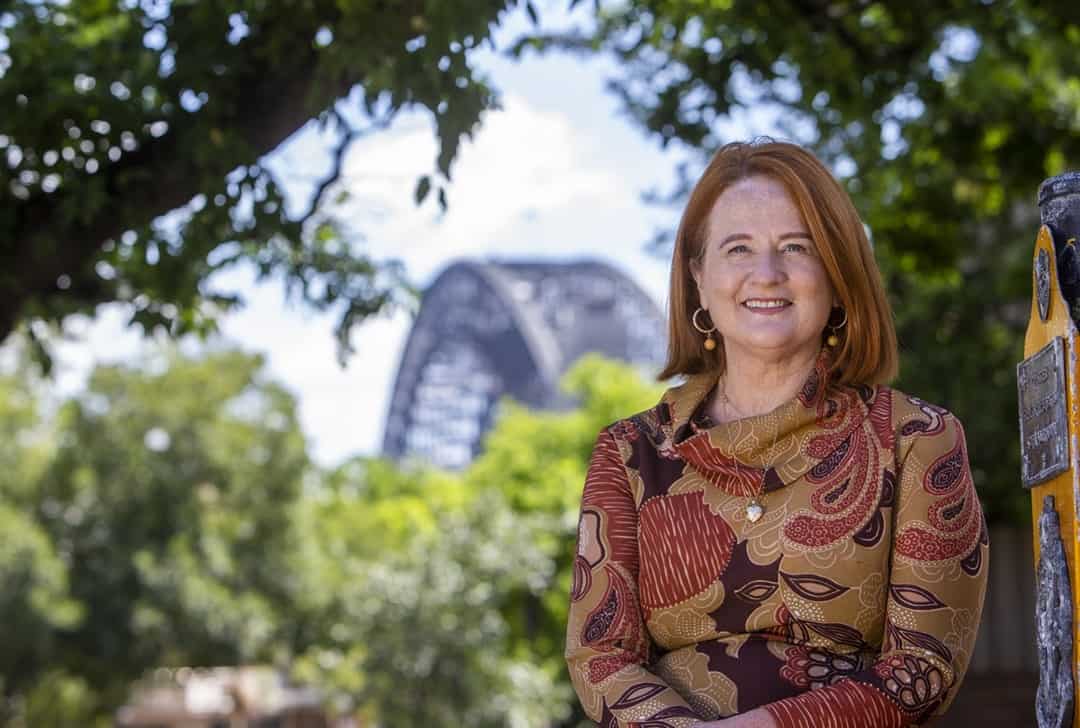
The Understudy is a suspenseful and dramatic debut novel by author JULIE BENNETT set during the opening of the Sydney Opera House in 1973. As AKINA HANSEN writes, it’s an exciting exploration of love, ambition and betrayal.
In October 1973, Australia saw the completion of one of its biggest cultural icons of the 20th century, the Sydney Opera House.
Despite its status today as a leading institution of arts and culture, it was met with intense scrutiny leading up to its grand opening. From the start of its construction in 1959, the press surrounding it was largely negative. With both the budget and building time frame far exceeding initial estimates.
Yet, as soon as its first production was held, public sentiment quickly changed. The bold sets, the bright costumes, and the spectacular vibrato of the singers captivated its audience members. Today the Sydney Opera House is the biggest tourist destination in Australia. It has more than 8.2 million visitors a year and holds more than 2000 shows a year.
Bennett’s debut novel, The Understudy, is set during this historic period and follows aspiring opera singer, Sophie. She is the understudy for the role of Ciao Ciao San in Puccini’s Italian opera, Madama Butterfly, during the opening season of the Sydney Opera House in 1973.
Julie was inspired by her father’s own 30-year career as a permanent cast member of what was then called the Australian Opera Company (now Opera Australia). Her own stint as a child extra in the 1973 stage production of War and Peace has also acted as an inspiration.
The novel provides insight into the politics, management, and effort behind the production and sets of these elaborate operas. Her father’s long career as a tenor in the chorus, allowed Julie to observe the ‘the hard work’ involved behind the scenes. ‘You could be doing four or five or six performances a week’. Ultimately, she hopes that The Understudy will allow her readers to ‘understand the dedication of the people who are involved, [and] the work involved in training, practising and protecting the voice.’
The Understudy is centred around the disappearance of the female lead soloist, Margaret Gardiner, two days before opening night. When Margaret fails to appear, her understudy Sophie takes over and ultimately mesmerises the audience with her stellar performance. However, despite her initial success on stage, she quickly falls under suspicion for Margaret’s disappearance and as a consequence her world and ambitions begin to unravel.
Julie shows us a world of intense stakes and rivalry which is set on a historical Australian backdrop. The novel alternates between Sophie’s life in the 1970s and Margaret’s in the 1950s. This narrative device allows us to see the parallels between Sophie’s and Margaret’s characters. Both women are ambitious and have dreams of becoming world-class opera singer. Yet Julie notes an important distinction between the two women that is ultimately representative of the eras they grew up in: ‘I think the difference between [Margaret] and Sophie is, Sophie won’t let it cost her things. She’s prepared to do whatever it takes. So, she’s set her mind to saying, “I’m getting what I want.”’
The 1970s is marked by the Women’s Liberation Movement that was spurred on by issues surrounding bodily autonomy – such as reproductive rights, sexual freedom, and raising awareness around harassment and violence against women.
The Understudy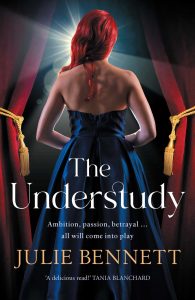 is set on this backdrop of shifting social and cultural attitudes. Julie shares that her mother who was a young woman in the ’70s helped her capture this period: ‘My mother always said to me, you can be whatever you want, and do what you know. If you set yourself the goals you want to achieve in life, you can do it and don’t let anyone stop you.’
The essence of this cultural shift is captured through Sophie, who unashamedly embraces her ambition and sexuality. When she begins a relationship with Armando Cecchi, the male lead of Madama Butterfly and an international opera star, she sees their relationship as both an opportunity to advance her career prospects and an opportunity to explore her sexual desires.
Julie notes that, ‘Sophie and Armando are young and in love and life is exciting, and their worlds are just beginning to open up, particularly Sophie’s, and they’re beginning to experience all that life can offer them.’
Sophie’s ambition and sexual autonomy is characteristic of the ’70s movement. This cultural shift is particularly apparent in popular culture, with Julie noting that: ‘I recently saw a one woman show about Helen Reddy … And it just grabbed me again.
‘I’m not a woman of the ’70s. I was a child in the ’70s. So, when I saw it, it gives you goosebumps, that song … I think what it did was tell women that it’s okay to want what you want and to go for it,’ Julie says.
Through alternating between Margaret’s life in the ’50s and Sophies in the ’70s, the novel highlights the disparity in opportunities for women during these eras and the various social expectations that were placed on them. When Margaret’s family leave the city of London for a rural town in NSW, Margaret struggles to accept her new home. She continues to dream of a life outside of the limited opportunities in her area. We witness her resolve to become a world-class singer, however this dream ultimately comes at the expense of her own wellbeing.
Through these characters Julie places emphasis on the importance of making the most of our opportunities. ‘We really have to live the life we want to live … It’s just crazy if we don’t. So, what I guess I’m saying is, what inspires me to write about women is – I hope that that’s what women do; I hope that’s what women learn to do. Because we can, and we should, and at the end of our days, let’s say we lived our lives, we loved our lives.’
Similar to her characters’ pursuit of their dreams, Julie also found her path to realising her writing aspirations:
‘I was always sort of scribbling as a child. But then life kind of gets in the way and you tell yourself, well, I need to get a job and I need to have a family and all that sort of stuff. And then one day I just woke up and said if not now, then when?’
In the autumn of 2015, Julie attended Fiona McIntosh’s masterclass and began working on her debut novel, The Understudy.
‘My goal when I write fiction is to entertain. And I think that’s reflective of the background that I come from. The entertainment is a broad spectrum, because you can see, even with the operas and the diversity of issues that opera touches on, that it’s not all about singing and dancing and having a great time, it’s about exploring what makes a life worth living,’ Julie says.
The Understudy is an exciting debut novel that provides insight into a significant period of Australian history. Today our arts industries have been especially hard done by in the pandemic. So, this novel is a particularly timely reminder of the fulfilment and joy that the arts bring to our lives.
As Julie importantly notes about the performing arts, literature and music: ‘Without those things, well where’s the joy? Where’s the passion? Where’s the drama? Where’s the theatre? Where are those beautiful things that make life great? So, please go and see the music, ballet, opera, drama, theatre. Go and see those things and appreciate our artists because, God, don’t we have some fantastic artists in this country!’


0 Comments