


For many adults, mathematics is a subject that refuses to stay in the past. PETER HODGE is often struck by how eagerly people – some longtime devotees, others once traumatised by the very sight of a quadratic – return to the world of numbers with fresh curiosity.
Whether driven by the demands of new study, the desire to settle an old score, or the unexpected pull of ideas encountered through art, science or philosophy, countless readers find themselves drawn back to mathematics later in life. And more often than not, it is a beautifully crafted book that lights the way.
As a high school teacher of mathematics, I am frequently delighted by adults who engage him in conversation, wishing to express their interest and passion for the subject. Many of them, of course, were always good at mathematics. Their mature age return to mathematics is very much the rekindling of an old love.
For others, however, mathematics was never a strength and possibly even a source of terrible trauma throughout their school years. And so, what draws them back years later, seemingly like a moth to the proverbial flame?
It might be a course they hope to undertake that demands a higher level of mathematical competency. Less utilitarian is the settling of an old score – to prove to themselves they can indeed master the concepts. Sometimes, there’s a need to exercise part of the brain, neglected for too long.
 But frequently, it is via other pursuits – such as science, art and philosophy – that an unexpected fascination with perhaps the most abstract field of knowledge arises. The 2019 M C Escher exhibition at the National Gallery of Victoria, for example, drew huge crowds. Very often though, it’s a well-written book, that leads from one to the other.
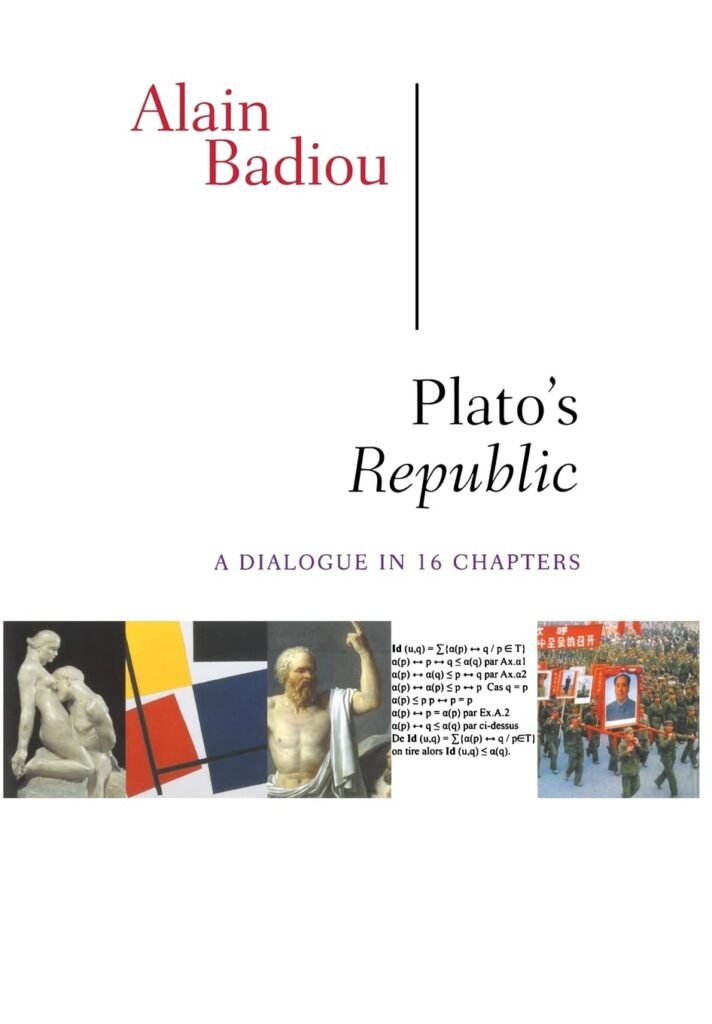
Consider Alain Badiou’s The Republic of Plato (2012). Like the author of the original, Badiou employs mathematical arguments here and there to support his claims. While this is not among my favourite books concerned at least in part with mathematics, it is revealing in how it demonstrates the potential of mathematical logic to shed light on complex philosophical dilemmas.
So, what are my favourite books on mathematics?
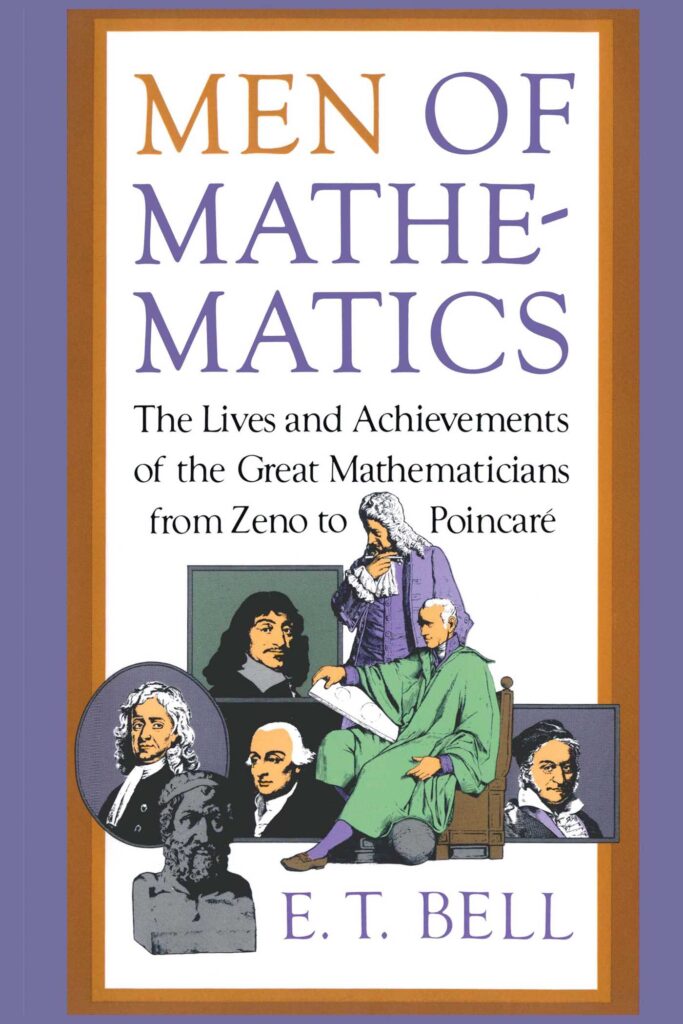 There is nowhere better to start than Eric Temple Bell’s Men of Mathematics (1937). Forgive the dated title, because this classic work is too good to consign to the dustbin of literature. I first encountered it at university researching the life of Carl Friedrich Gauss. The latter was a child prodigy, as were most of Bell’s subjects.
I came to learn that the biographies of most famous mathematicians were anything but dull. Aged only 22, Évariste Galois was killed in a duel. Antoine Lavoisier was executed in The Terror phase of the French Revolution. As the story goes Archimedes used an array of mirrors to set enemy ships on fire. Ultimately, he was killed by a Roman soldier as the siege of Syracuse came to an end.
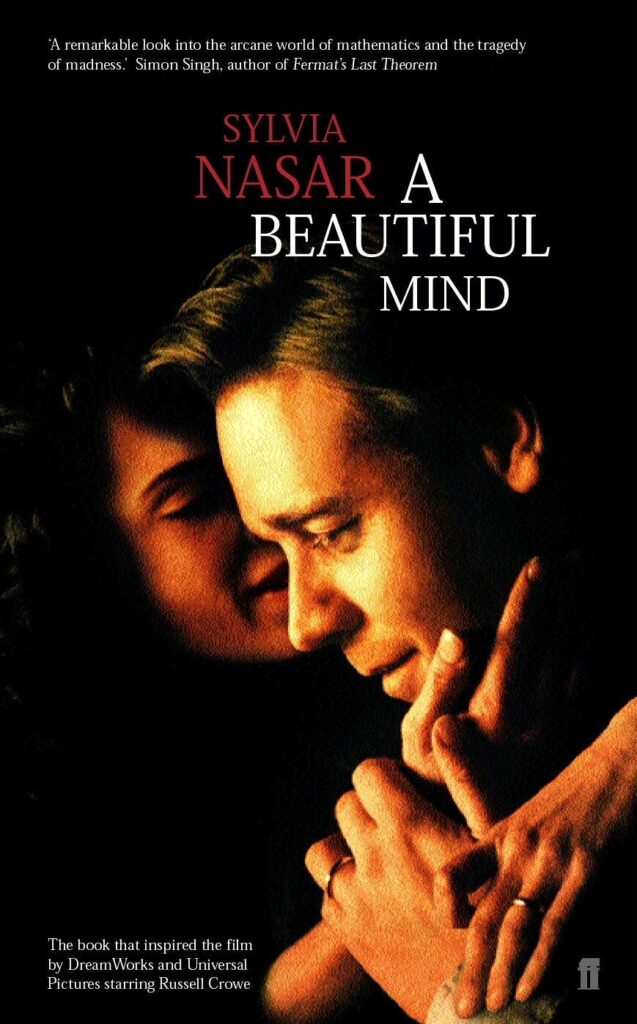 It was not uncommon for mathematicians to live hard and die young. Many had completed their most important work by the time they turned thirty. Others lived on the edge of madness and it is little wonder given the abstract rabbit-holes they descend into. A Beautiful Mind, the John Nash story, was a biography written by Sylvia Nasar (1998) before it became a film. Nash was a genius who battled schizophrenia.
More recently, much has been written about the late Alexander Grothendieck who, after a celebrated career, became a recluse in 1970. He was consumed by unconventional mystical beliefs towards the end of his life. Researchers are scouring his papers for groundbreaking mathematical insights he was uniquely capable of producing. His story will be the subject of a wonderful book one day.
 Some of the best books on mathematics weave history and biography with the concepts. One of the best is The Drunkard’s Walk: How randomness rules our lives by Leonard Mlodinow (2008). When teaching Probability, I often tell my students about Blaise Pascal who was fascinated by games of chance. After bequeathing his famous triangle and a great deal more to the world, Pascal discovered religion. He took to wearing ‘an iron belt with points on the inside so that he was in constant discomfort and pushed the belt’s spikes into his flesh whenever he found himself in danger of feeling happy’. I have Mlodinow to thank for that anecdote.
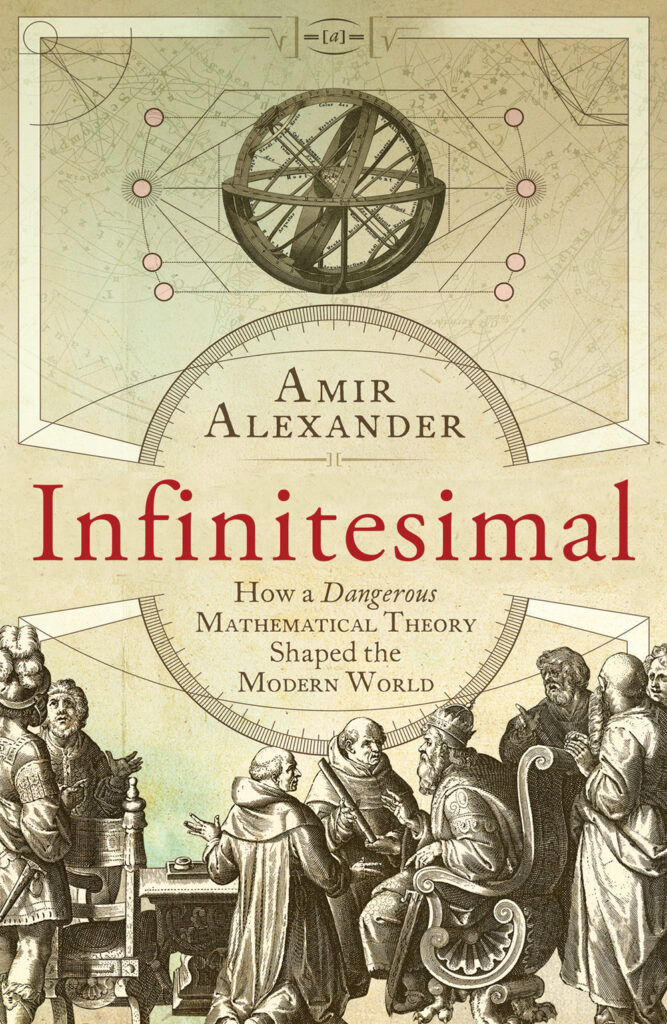 In a similar vein is Infinitesimal by Amir Alexander (2015). Students are sometimes shocked to learn that, like advocating for a heliocentric solar system, one could be burnt at the stake for the heresy of claiming a quantity can be infinitely small. Differential and integral calculus would change the world, arguably as much or more than any leap in understanding, before or after, and despite the efforts of the Catholic Church to ban the idea that underpinned it.
In a letter to Robert Hooke – although famously arrogant – Isaac Newton wrote: ‘If I have seen further, it is by standing on the shoulders of giants.’ By exploring the body of work that preceded Principia, Alexander shows readers that Newton and his great rival Gottfried Leibniz really did make the final push to establish calculus. Almost everyone has heard of Isaac Newton. Who knows about the work of Bonaventura Cavalieri and John Wallis?
Is God a Mathematician? by Mario Livio (2009) is a real favourite. Wow, a whole book focused on one of the most interesting philosophical questions about mathematics: is it discovered or created? Has the mathematics always been there, just waiting for us to find it? Or, rather, is it an entirely abstract body of knowledge that would never have existed without the brilliant humans who constructed it. Proponents of ‘discovery’ point to the otherwise unlikely success of mathematics in describing the natural world.
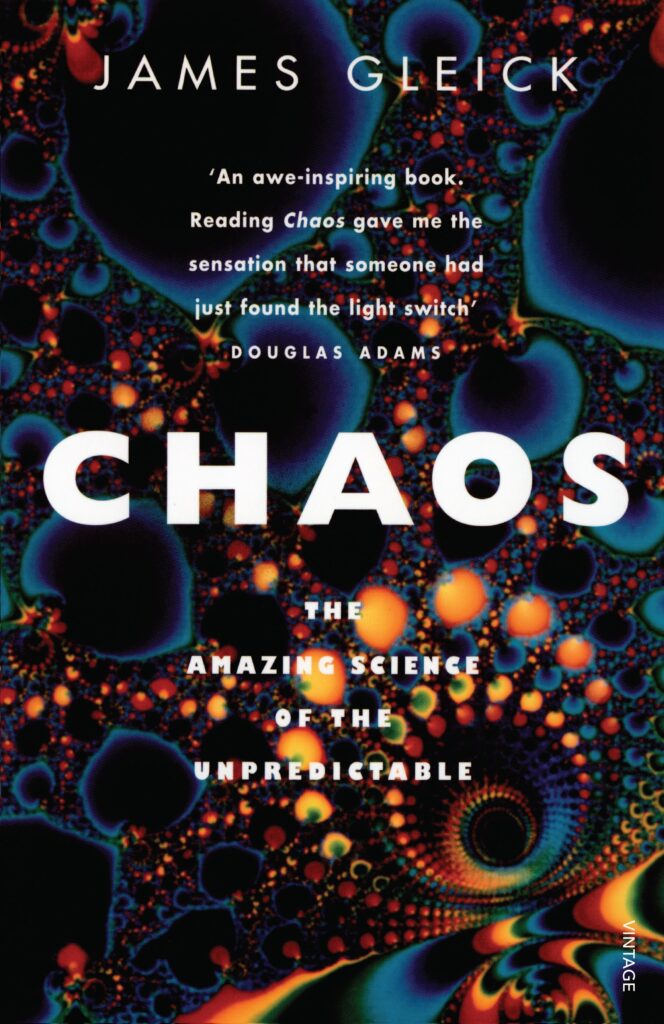 But mathematical models typically struggle to capture the full complexity of their subjects. Consider long-range weather forecasts. Most agencies are reluctant to predict more than ten days ahead. Chaos by James Gleick (1987) explores the search for hidden order within apparently chaotic systems like our weather. Readers also learn about the incredible world of fractals. One can zoom in continually on a Mandelbrot Set to reveal new but self-similar universes. I bought this book in New Delhi towards the end of a long trip and didn’t need another one.
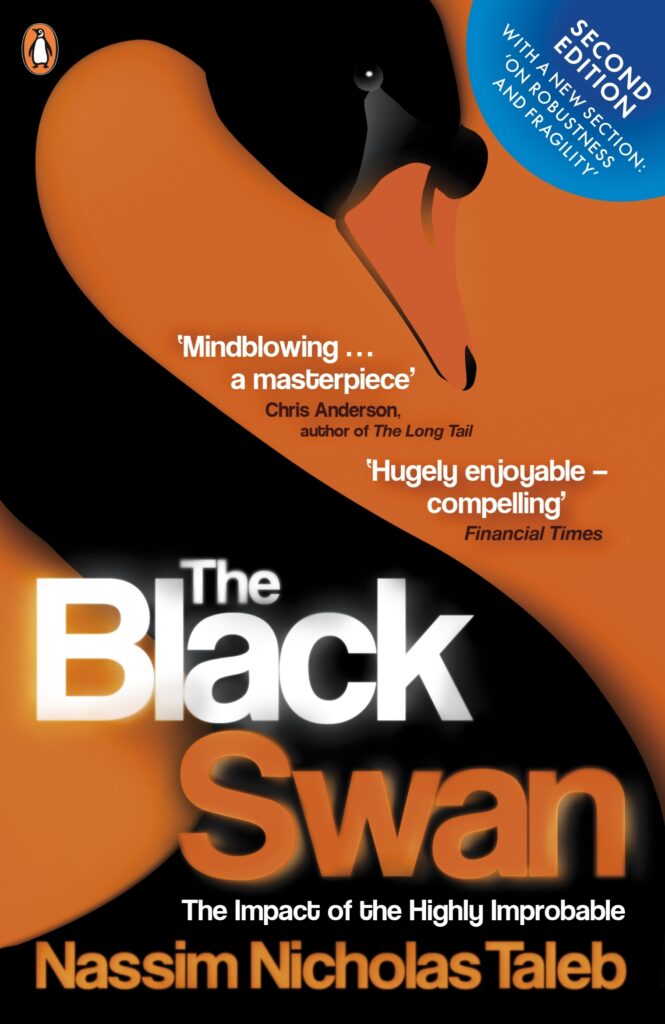 I haven’t enjoyed all Nassim Taleb’s books, but The Black Swan (2007) is definitely worth the effort. His ‘black swans’ are rare, randomly occurring but high impact events like the Boxing Day tsunami. Taleb explores the mistakes in reasoning that lead humans to underestimate risk. It is one of the most insightful and engaging books, related to mathematics, you are likely to read.
 I confess to being a little tired of compendiums of fun puzzles and quirky facts about mathematics – which I sometimes get as Christmas presents. The subject is interesting in and of itself, it doesn’t need bells and whistles to attract me. Rather, the development of mathematics, how it lives in our minds, and how it relates to so many aspects of our world, is endlessly fascinating.
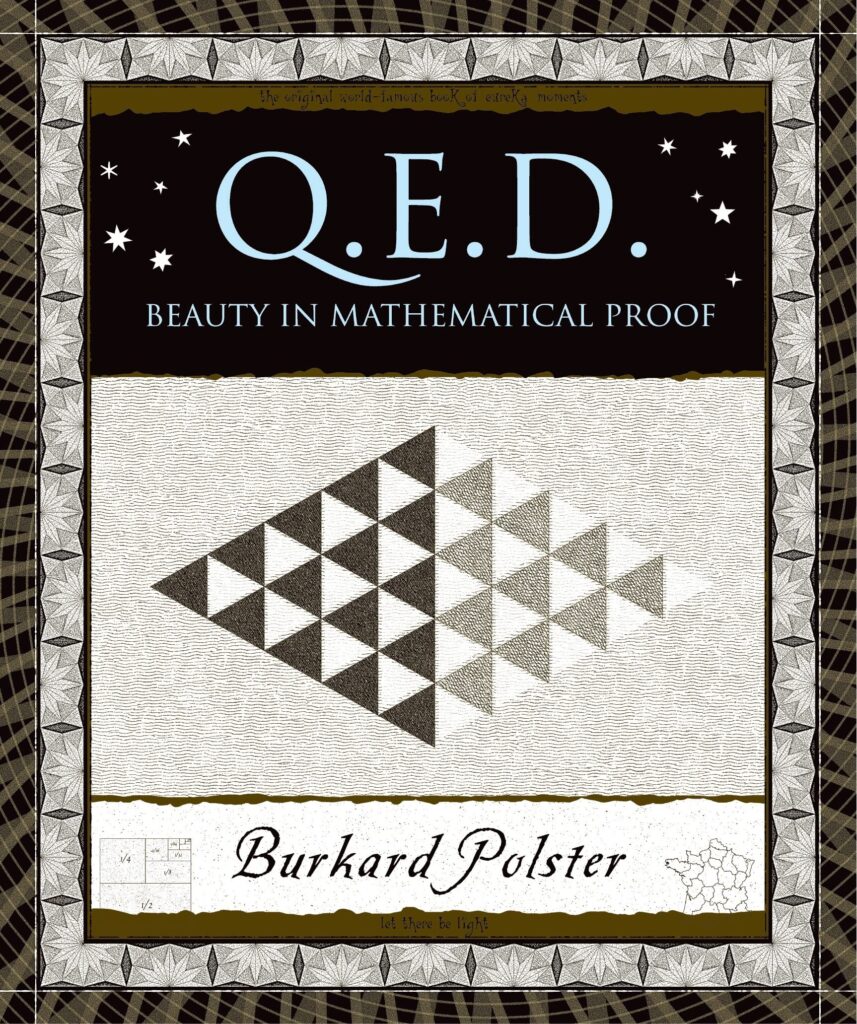
 Having said that, sometimes it is puzzles that provide a bridge to deeper engagement with mathematics, especially for those who have been out of the game for a while. I am reminded of friends who made a habit of completing the Maslanka Puzzles in The Guardian every week. Start there then you might end up reaching for The Stanford Mathematics Problem Book by George Polya and Jeremy Kilpatrick (1974) or perhaps Burkhard Polster’s Q.E.D. (2004).
The latter is an easily digestible and beautifully illustrated book concerned with mathematical proof. Don’t be surprised if you find explanations for rules – the surface area of a sphere formula, for example – your teacher might have ducked when you first encountered them at school.
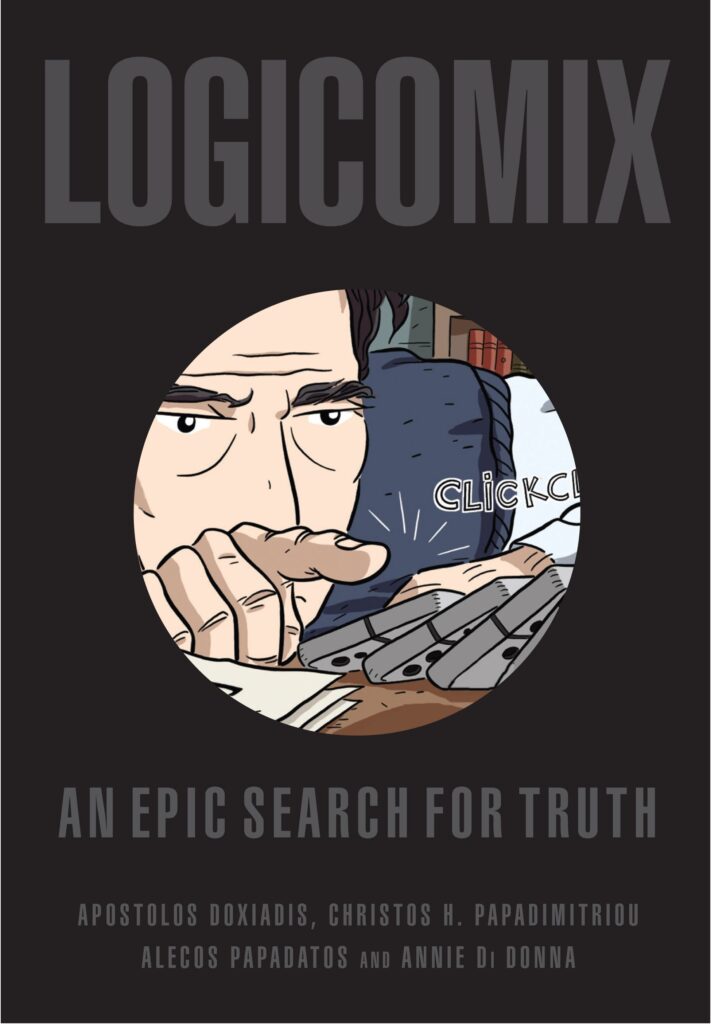 Something completely different but equally capable of setting readers on a mathematical journey is the graphic novel Logicomix (2008) by Apostolos Doxiadis and Christos Papadimitriou. This brilliant book is essentially the Bertrand Russell story. Together with Alfred North Whitehead, Russell wrote the famously impenetrable Principia Mathematica (1910), in which the finding that 1 + 1 = 2 arrives on page 379!
A feature of Logicomix is the depiction of the famous ‘barber paradox’. That is, if a town barber shaves all those, and only those who do not shave themselves, then does the barber shave himself? I’ll leave you with that one to ponder.
What unites many of these works is their readability and accessibility, revealing the wonderful world of mathematics to new generations of admirers. This includes many who left school grateful that – aside from the simplest applications – they would never need to think about mathematics ever again.
Peter Hodge is the author of Fly Boy: Ace Pilot: A life cut short

0 Comments