


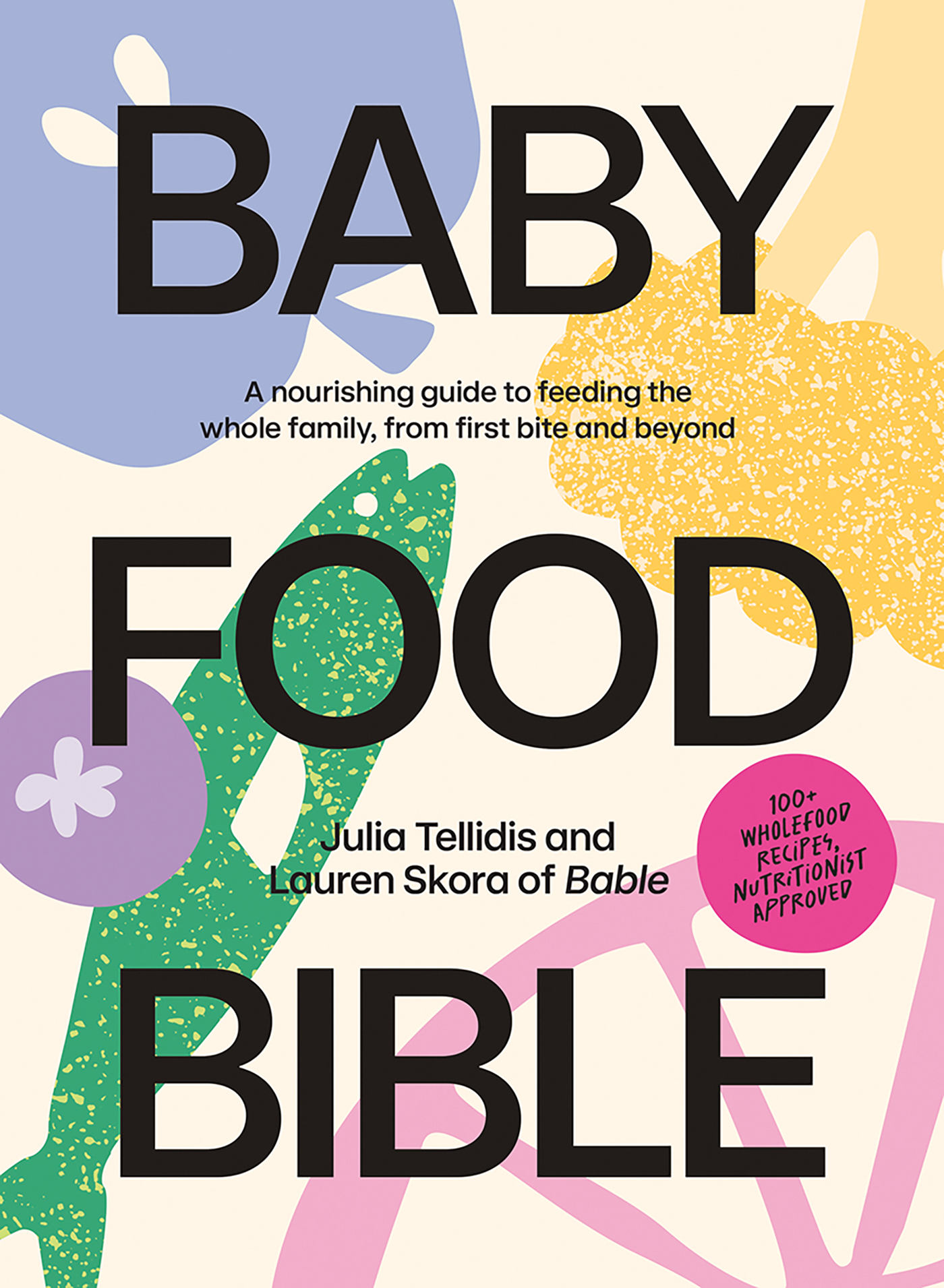
Baby Food Bible is a recipe book featuring more than 100 nutritionist approved meals and snacks for your little one, from first bite and beyond. Written by a qualified nutritionist and a baby nutrition consultant, Julia Tellidis and Lauren Skora, the recipes in this book have been carefully considered to support your little one through key developmental milestones, while also providing easy and balanced meals for the whole family to enjoy.
Read on to see what makes a balanced plate for your baby.
ABOUT THE BOOK
Starting with the basics, this book will teach you how to begin your baby’s food journey with a mix of purees and advice for baby-led weaning. Explainers are provided along the way, covering food safety, choking and how to safely introduce common allergens to your baby’s diet. You’ll be guided on how to create a balanced plate with the essential nutrients your child needs for developmental milestones.
Starting from the very beginning, Baby Food Bible will teach you how to introduce solids to your baby’s diet with a mix of purees and advice for baby-led weaning. Explainers are provided along the way, covering food safety, choking and how to safely introduce common allergens. From breakfast to pram pleasers, lunchboxes, easy dinners and even sweets, this book will show you how to create adventurous eaters from the very beginning, while also ensuring you can still get those greens into even the fussiest of kids.
A BALANCED PLATE
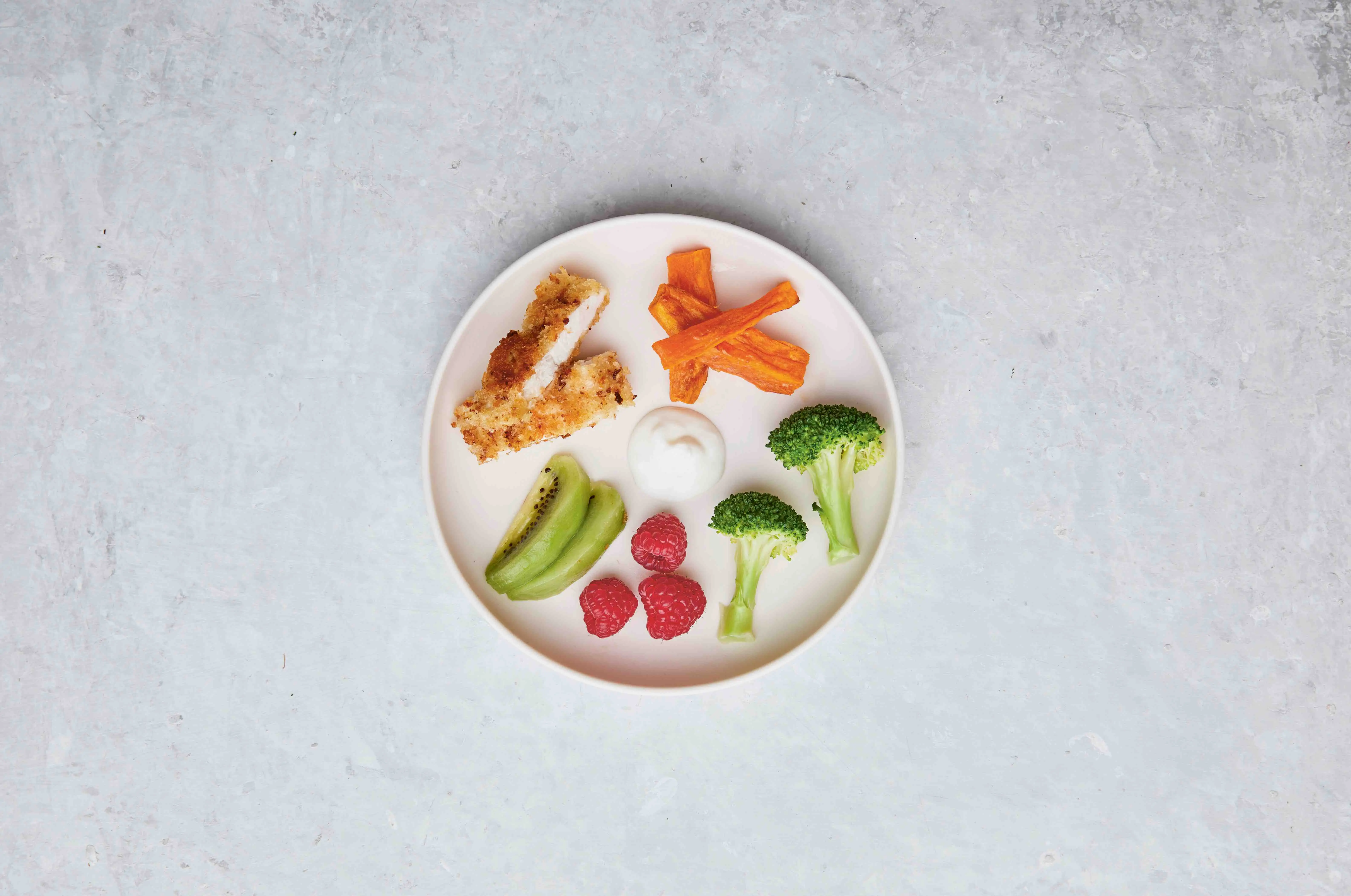
Understanding what makes up a balanced plate is an incredibly valuable tool to support you when feeding your little one. A balanced plate is made up of macronutrients, which are the nutrients we need in large doses, including carbohydrates, protein and healthy fats, and micronutrients, which are the vitamins and minerals required in small doses.
Carbohydrates are the body’s energy boosters, giving your little one the fuel they need to grow and play. Protein helps to build and strengthen little bodies. And let’s not forget about the healthy fats! They play a vital role in keeping your little one satiated while also helping to regulate important hormones in the body.
Finding the right ratio of these macronutrients is what makes a balanced meal, keeping your little one’s blood sugars stable and their tummy fuller for longer.
AIM FOR 1/4 OF THE PLATE TO BE SLOW-BURNING CARBOHYDRATES OR WHOLEGRAINS
+ Oats, quinoa, basmati or brown rice, barley, lentils, chickpeas, white beans, kidney beans, buckwheat, good-quality wholegrain breads, wholemeal pasta, wholegrain couscous, sweet potatoes and potatoes, pumpkin (squash), peas
and corn.
AIM FOR 1/2 OF THE PLATE TO BE NON-STARCHY VEGGIES AND FRUIT
+ Veggies such as broccoli, cauliflower, cabbage, eggplant (aubergine), mushrooms, zucchini (courgette), green beans, tomatoes, cucumbers, asparagus, spinach, kale, capsicums (bell peppers), brussels sprouts, mushrooms and onion.
+ Fruit such as berries, kiwi fruit, melons, oranges, apples, pears, mangoes, grapes, apricots, peaches and plums.
AIM FOR 1/4 OF THE PLATE TO BE GOOD-QUALITY PROTEINS
+ Animal proteins such as red meat, chicken, turkey and eggs, white fish, wild salmon, sardines, mackerel, tuna, prawns (shrimp), cheese and yoghurt.
+ Plant-based sources such as tempeh, tofu, beans, edamame, chickpeas, nuts, nut butters, seeds and quinoa.
USE HEALTHY FATS IN MODERATION
+ Try to include avocado, cheese, nuts and nut butters, seeds (hemp seeds, chia seeds, linseed (flax seed), tahini), linseed (flax seed) oil, eggs, coconut oil, milk, ghee, grass-fed butter, extra-virgin olive oil, oily fish, hummus and yoghurt.
Aiming for a variety of these key nutrients will help broaden your little one’s palate and, most importantly, will support a flourishing gut.
***********
ABOUT THE AUTHORS
Julia Tellidis holds a certificate in health coaching, an Advanced Diploma of Nutritional Therapeutics and a Graduate Diploma of Human Nutrition. She is passionate about holistic health and the food as medicine philosophy.
After she had her first child, George, she felt compelled to use her knowledge and learnings to educate other new parents. Jules’ goal for The Baby Food Bibleis to help all parents feel empowered about making better nutritional decisions in the crucial first years of their child’s life.
Lauren Skoda became a published author at 23, first focusing on the fields of fashion, design, and creative direction. However, when she became a mother to her daughter, Frankie, the experience of introducing solids sparked a curiosity in baby nutrition, leading Lauren to study with us at OBN.
Using her background in design, writing, and publishing, Lauren co-founded Bable; a digital destination for nutritious, family-friendly recipes and information about starting solids. This was the foundation for writing Baby Food Bible, a valuable resource for families seeking guidance as they approach this transitional phase with their little ones.


0 Comments