




HOLLIE AZZOPARDI is the host of the podcast Soul Talk. As well as being a stay-at-home mum, she works as a sought-after model, freelance writer and speaker.
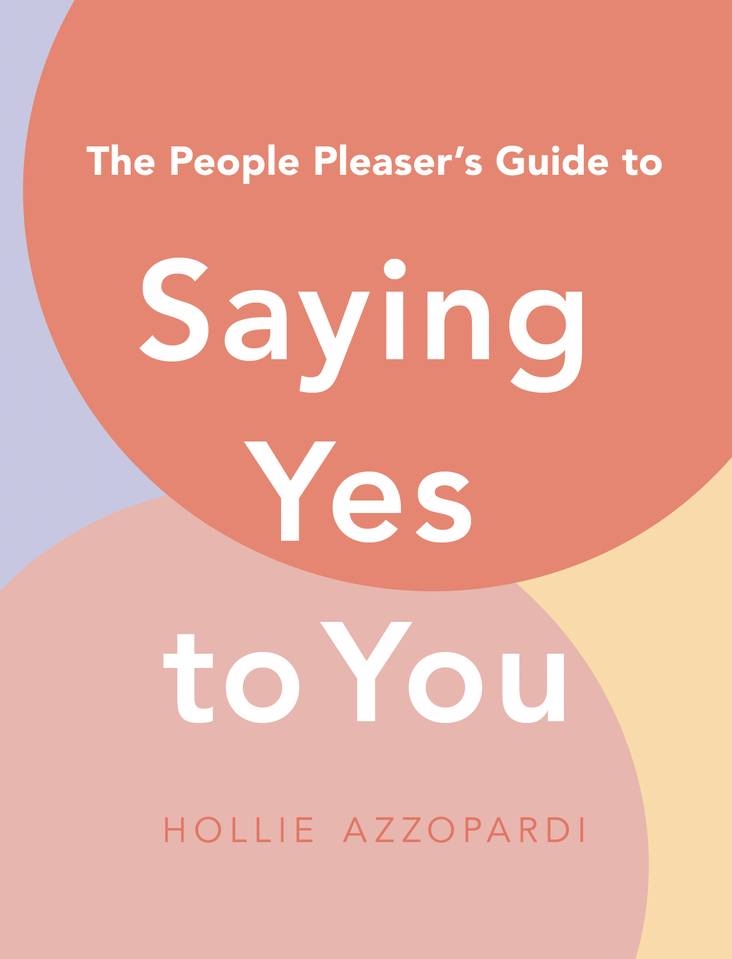
Her book, The People Pleaser’s Guide to Saying Yes to You, is a crash course in getting to the root of your people-pleasing tendencies.
Read on for an extract …
We all know the fight‑and‑flight response, that back in caveman days we were wired to react quickly to any imposing, life‑threatening danger (like a sabre‑toothed tiger approaching) and our bodies instantly pushed us to fight or run away to safety – or perhaps freeze or fawn. This is an in‑built biological response to keep us safe. To keep us alive.
When someone has experienced decades of trauma, abuse and/or physical illness, they are far more inclined to be operating from one of these responses as a baseline, all of the time, no matter the intensity of the incoming ‘stressor’. Emails. Texts that need a reply. That FaceTime with your friend later today. A back‑to‑back day as a stay‑at‑home mum, where the stressors literally DO NOT STOP from the second you open your eyes (am I right?).
So while there isn’t any sabre‑toothed tiger coming for us, it absolutely feels like there is. For me, especially after we were evacuated from our home last year, I often lie awake at night, waiting to hear any sound that could be classified as ‘danger’. I am in a whole new world of hypervigilance, and a bubble bath or sauna at the end of the day is absolutely not enough to help me out of it.
As Dr Scherina Alli shared, ‘We have to start to listen to our body! This means paying attention to how we feel when we encounter stress, when we come face to face with conflict, when we’re triggered. What is our body telling us – do we feel panic?
Do we shut down? Are we reactive? Do we become aggressive? All very important emotions to feel so we can re‑learn our body.’
I was never going to be one of ‘those wellness people’ who wore a biometric tracker. To be honest, I didn’t take much interest in products like the Whoop, or the Oura ring (biometric tracking devices worn to collate and share your personalised health and recovery markers). They were for the athletes, or at least the people who trained regularly. And just to be very clear, I am neither of the above.
It wasn’t until I purchased a Whoop for my husband, Trent, for Christmas – following the strong recommendation from my friend Britt – that I started to notice how valuable this awareness of health data could be for someone like me. I started to become curious about sleep quality and depth, what created high stress levels in me versus someone else, and that ever‑elusive HRV (heart rate variability). Within three weeks of Trent wearing his, I had purchased my own. And not because I was all of a sudden going to start training for a marathon. I just wanted to get an understanding of my baseline nervous system.
What WAS making me stressed? How was my HRV performing?
It’s important to note this lingo was all very new to me. If you mentioned HRV to me even six months ago, I’d think you were talking about a type of car. I was genuinely none the wiser and hadn’t expected to look at any data because ‘that’s not who I am’. I trust my body and listen to her cues; I don’t need a tracker to tell me when I’m stressed.
But what this data illuminated for me is that my nervous system baseline was actually far lower than I had anticipated.
While, yes, the fog of postpartum days had lifted and so – comparatively speaking – I felt much better than I had the previous couple of years, my markers were all showing signs of heightened stress levels, chronic inflammation and PTSD.
My HRV on a very good day (at the time of writing) sits at 29/30 (as a comparison, my relatively untraumatised husband sits at an average of 110).
My resting heart rate (RHR) sits between 75–80 bpm (again, chill husband sits at around 55).
It’s been three solid months of tracking this data and quantifying what my body is telling me. And while I feel better than I have in a long time, my body is still fighting chronic stress, inflammation and trauma. I was in denial about how bad my heath actually was until I saw the data.
According to Whoop, HRV is a measure of time between heartbeats, and is an indicator of the body’s autonomic nervous system, which is made up of the sympathetic and parasympathetic systems.13 The sympathetic response is what I refer to above, when talking about fight‑or‑flight. For someone like me, this is easy to access; I’m there all the time. I’m great in a crisis because my system is constantly on high alert. I’ve called emergency services in moments of crisis more times than I can count – when a colleague passed out in my arms after donating blood, when my teacher at school had a heart attack in front of the class (I actually ran away on that occasion – cue ‘flight’ response – but to get help, no less), when I was one of the first on the scene of a car accident. The sympathetic response is what has us jumping into action. And anyone who has experienced trauma or abuse will likely understand it when I say that it feels like this is just a baseline operating system.
The parasympathetic nervous system, on the other hand, is responsible for what is known as ‘rest and digest’. Pretty self‑explanatory, right? If only it were as simple to embody. I struggle to even enter this state. My body thrives in a sympathetic response because of the 30‑plus years I’ve had to stay on my toes for safety’s sake. To literally keep safe, I’ve had to constantly be scanning my environments for ‘danger’. My body also has NFI what it actually means to rest and digest. This is the response that lowers heart rate, blood pressure and respiration rate, and supports digestion.14 To be a healthy functioning human with a regulated nervous system, we require both systems.
This is why HRV tracking is such a game‑changer. Because in only three months of tracking my own, it has become very clear that my parasympathetic nervous system needs some love. Actually, scrap that – it needs a complete overhaul.
My life needs a complete overhaul.
My hopes for really homing in on this area of my life? That I will start to actually feel well again. That eventually I’ll be able to get through the day without the need for a nap, or without waking three times a night. That I’ll have more energy to give my growing little family. That my first response to any given situation won’t be that of panic or stress. That I’ll walk slower, breathe deeper and smile wider. This overhaul isn’t just about an increase in metrics. It’s about an increase in my capacity to live a full, beautiful and thriving life on my own terms – without being dictated to by what has happened to me in the past.

ABOUT THE AUTHOR
Bestselling author of The People Pleaser’s Guide to Putting Yourself First and host of the podcast Soul Talk, Hollie Azzopardi is a leading Australian voice in personal and spiritual development.
As well as being a stay-at-home mum, she works as a sought-after model, freelance writer and speaker. In her spare time, Hollie is an active participant in community theatre and loves a warm cacao, a good book and spending time with her husband, daughter and bulldog baby, Lola.
Visit Hollie Azzopardi’s website


0 Comments