


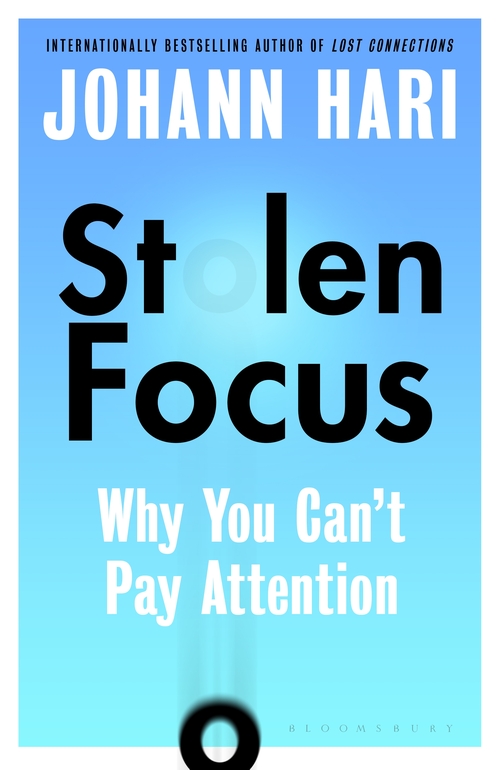
It would be easy to blame the apparent universal decline in attention spans on technology, and particularly the internet. Like many easy answers to complicated problems, it turns out to be too simplistic. In this mix of memoir and investigative journalism, Hari notes that ‘collective attention spans have been decreasing’ over the last 130 years – well before the distractions of social media. Technology is no innocent, though.
Hari was so disturbed at his own lack of focus that he went to Provincetown, a small community on the northern tip of Cape Cod, to digitally detox. He spent three months calming down and slowing the pace of his life. He read books printed on paper, slept, exercised, conversed and ate well … and wondered why it had taken him so long to do so.
From the experiences of those three months he tabulated 12 causes of loss of focus.
Technology, of course, does feature heavily, from increases in speed, switching and filtering, through to the manipulative ‘surveillance capitalism’ of big tech companies. Also among the causes are decreases in creativity, sustained reading and physical exercise, along with poor diets.
Hari notes the differences between reading a paper page and a social media screen: books are long and complex, while a social media page is short and simplistic. The addictive nature of technology and artificial light disrupt sleep. Whistleblowers from big tech companies (scarily!) describe how their employers manipulate users in order to boost profit. Hari wonders how to use technology less slavishly and how to corral big tech.
The 12 causes are well argued, but the remedies aren’t easy. He still struggles with tech addiction … what hope for the rest of us, then?
Reviewed by Bob Moore



0 Comments