



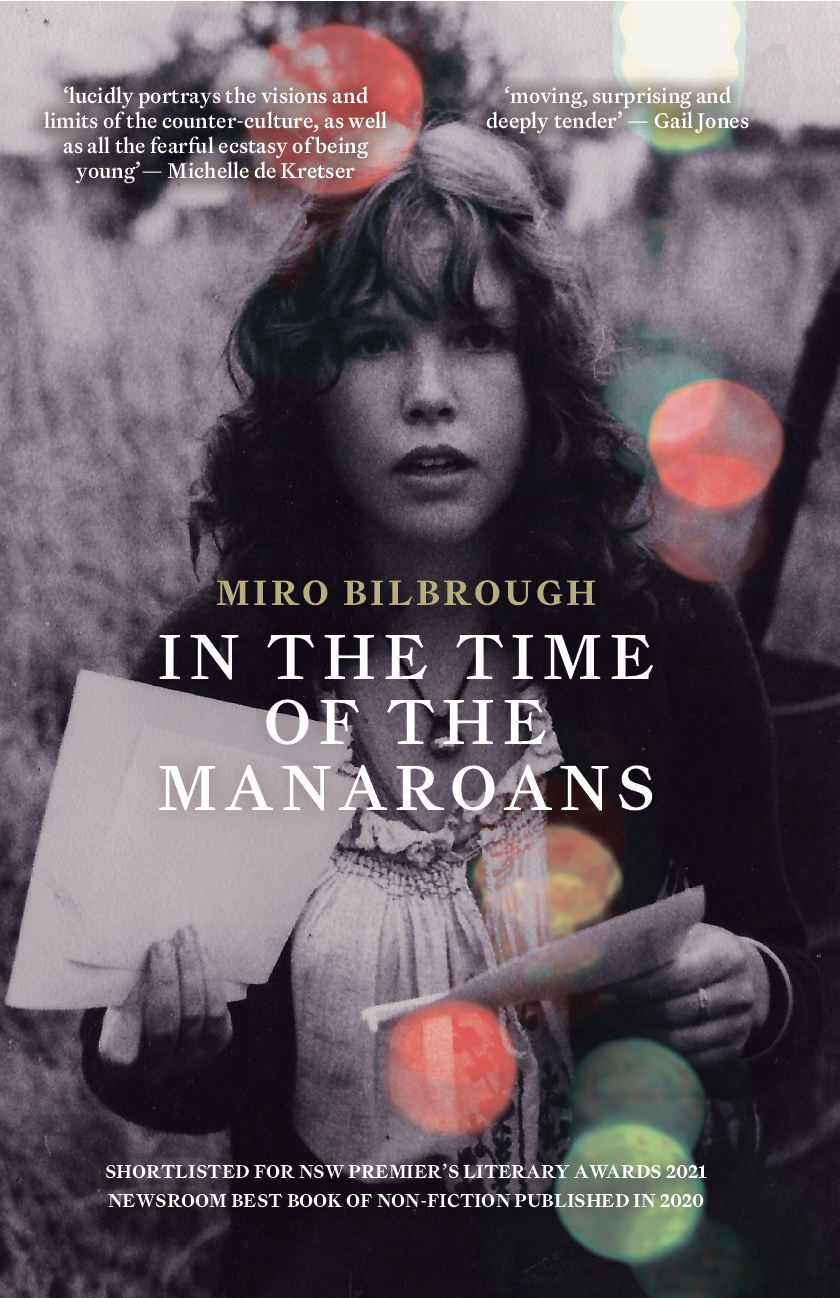
The narrative begins in 1968: a time of wholesale change; of the protest movements and a desire by many to drop out of society and tune in to their own consciousness. Maranoa is a hippy commune in NZ where Bilbrough spent part of her youth. Miro’s parents immersed themselves and their children in this alternative lifestyle. Bilbrough’s story is of an independence forged from necessity: from the abandonment by her mother and the loose, but still loving, parenting from her father.
There is a disturbing absence of love from her mother towards Miro. She’s sent to live with her grandmother, Margaret, at age seven. Seven years later, after falling out with her, Miro goes to live with her father at the ‘Floodhouse’, so named because of its precarious position near Te Hoiere, a river in the north of South Island NZ. Conditions are less than basic. She and her younger sister exist in an ‘unhappy approximation of a family’, surrounded by a moving feast of characters – some helpful, some predatory.
Despite these deprivations Miro excels. She receives a scholarship to Nelson Girls’ School and seems to trigger maternal instincts in her teachers. Readers will urge her to accept their offers, but she rejects them, returning to live with her father on the Maranoa commune. The lifestyle is great in theory, however, ‘Collectivism is a hazy ideal that none quite know how to enact’. She speaks candidly of the roller-coaster of her sexual awakening. Underlining her independence, Bilbrough manages to steer herself into a successful career in the arts.
The writing is poetic, intelligent and rich in imagery, and although it’s not written as such, it’s a story of survival.
Reviewed by Bob Moore


0 Comments