



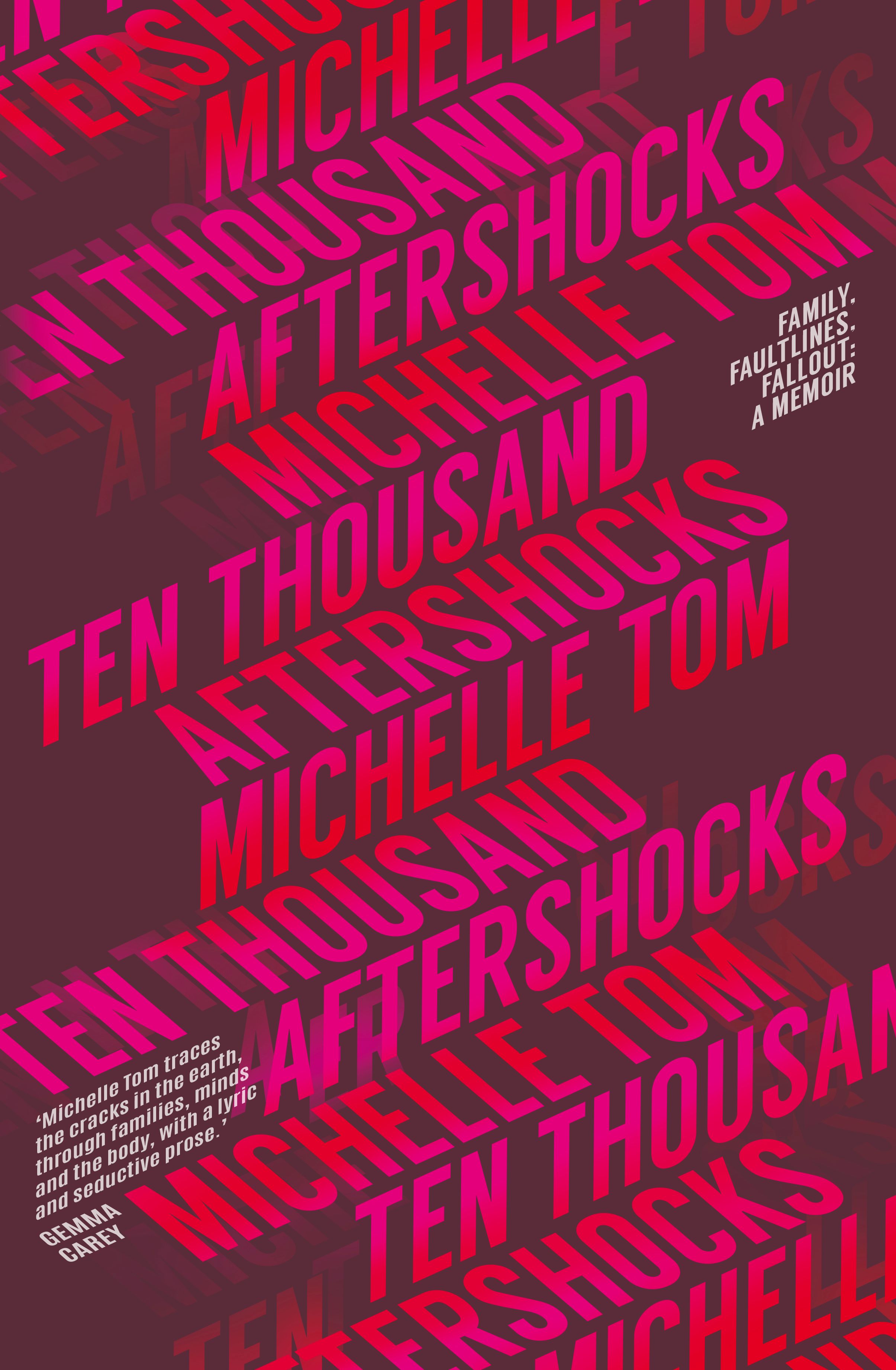
This memoir could be hugely depressing, as it describes generational trauma and a dysfunctional family in New Zealand, but its superb writing lifts it into the sunlight. While Tom’s book may affect some readers negatively, particularly those with a similar experience to her, people who can read it with dispassionate interest will find it enthralling.
To tell that story she aligns her family history to the Christchurch earthquakes of 2010 and 2011, and the subsequent aftershocks.
She pays tribute to a writing friend who, upon hearing about Tom’s life events, commented that the sudden death of Tom’s father was ‘like an earthquake in the family’. That remark was the inspiration behind tying together Tom’s chequered family relationships with the physical and psychological aftershocks of living through the Christchurch earthquakes.
Chapters randomly weave between the late 1960s and 2021. This might be initially off-putting, but that is what an individual’s memory does, and it explains how events 30 years ago can influence the way a person lives now.
While her descriptions resonated of life with parents who fought, while apparently loving each other; a father who seemed to be a good man but was occasionally violent; and a mother who was charming, but totally self-absorbed and capable of casual, devastating rejection, it was the descriptions of Tom’s own trauma before, during and after the earthquakes that hit home hardest.
Her family moved to Australia after the 2011 earthquake destroyed their home. Living in Melbourne however was difficult, particularly when Tom and her family heard about the fires of 2009 in the Kinglake area north of the city.
Returning to New Zealand when her sister died brought muscle memory of those aftershocks; but Tom finally finds peace and strength in her own existence and immediate family circle when she relinquishes ties to the person who had made her miserable for most of her life.
Reviewed by Jennifer Somerville


0 Comments