


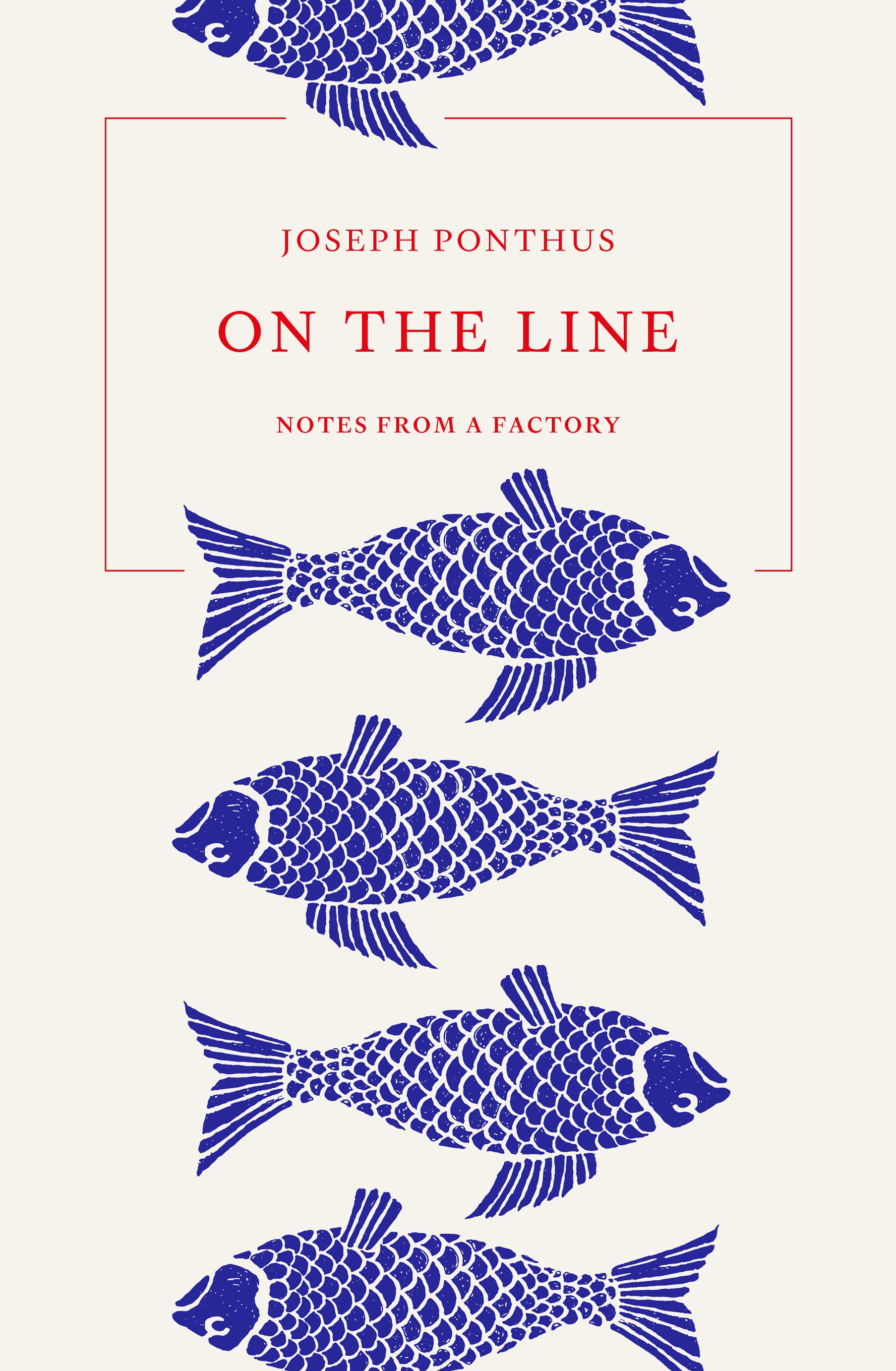
The pairing of poetry with a production line seems particularly counterintuitive. Yet, having done so, Joseph Ponthus has managed to elevate the mundane to the sublime. This verse novel, already a bestseller in France, describes the frustration of a man unable to find work in the teaching and social work professions for which he trained. Instead, he finds himself as a casual labourer in a variety of factories. It’s as if he’s caught in a Cartesian mind-body duality experiment, having to use his body rather than his brain. Only the money and love of his woman and pup, Pok Pok, sustain him.
He works in a seafood factory before being sent to an abattoir. The work is monotonous and back-breaking. He reeks of animal waste. He is poorly paid and mentally and physically exhausted. The poetry he produces is a contrast of high art to low-paid drudgery.
Ponthus can see parallels with the trench warfare of WWI. Both are relentless and mindless with trauma and black-humoured camaraderie. There’s also blood and gore: ‘Every night I know the slaughterhouse will follow me/into my nightmares’. Repetition, matching the monotony of the factory, is cleverly used as a literary device.
Ponthus name-checks the French literary greats. In the endless boredom of the work, he alludes to the famous Proust book with oblique humour: ‘Lost time / Dear Marcel I’ve found what you were looking for’. And (Irish) irony while in a queue at the employment service: his reading matter is Waiting for Godot.
The translator, Stephanie Smee, deserves special mention. Differences in lexical stress can render poetic language and rhythm pancake-flat. Not here: style, pacing and humour remain.
Read – and reread – this to cherish the cosmic joy in the everyday.
Reviewed by Bob Moore



0 Comments