



Since C D Rowley’s The Destruction of Aboriginal Society and Henry Reynold’s The Other Side of the Frontier, the regional history of conflict between European settlers and Indigenous Australians has developed into a well-established, albeit contested, genre in Australian historical writing.
That contest has from time to time got pretty willing, witness Keith Windschuttle’s The Fabrication of Aboriginal History, and what is at stake, at least from the conservative perspective, seems to be a particular conception of Australian identity and contemporary rights.
Notwithstanding that, it is fair to say the academic consensus is that European settlement throughout Australia was characterised by conflict, which can accurately be described as warfare. See the introduction to Henry Reynold’s Fate of a Free People for a balanced summary of the debate.
In this regard, the difference between warfare and police actions is fairly clear. Police are not supposed to kill their enemy, except in self-defence. In contrast, warfare is characterised by an explicit permission to inflict lethal force on whomsoever is considered the enemy.
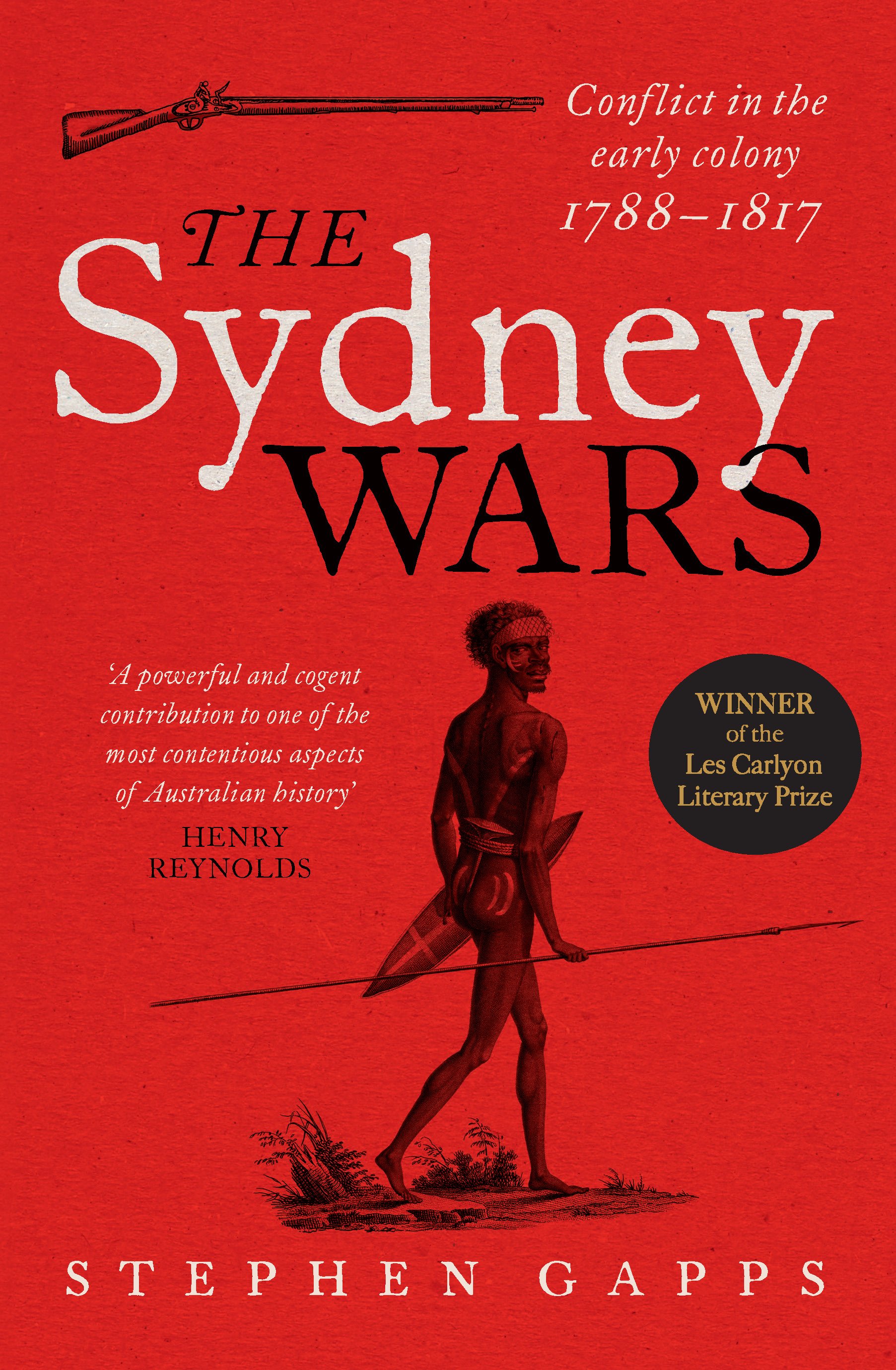
In The Sydney Wars, Stephen Gapps demonstrates that from the very earliest times, and under even an enlightened and humane governor such as Phillip, the colonial government was prepared to use lethal force to contain perceived threats from the Indigenous population.
Thus in 1790, following the murder of Phillip’s gamekeeper by Pemulwuy, two substantial expeditions were sent out under Watkin Tench, across the Cooks River and Wolli Creek, with the express purpose of killing Indigenous people by way of reprisal.
This was the first such expedition and set the pattern for future conflict, though increasingly the Colonial inclination was to retaliate first.
Gapps mines the numerous early diaries, contemporary newspapers and Government correspondence to closely document conflict in the period 1788 to about 1820. As is usual in this genre there is an attempt to document every instance of conflict and arrive at an accurate casualty rate.
What emerges is a complex picture involving both episodes of extreme violence and attempts at co-existence.
Gapps is clearly familiar with the work of Paul Irish, whose Hidden in Plain Sight argues that after the closure of the frontier a significant (about 100 persons) Aboriginal presence continued in Sydney throughout the first half of the 19th century. The Sydney Wars is a useful contribution to what will no doubt be an ongoing field of scholarship.
Reviewed by Grant Hansen



0 Comments