


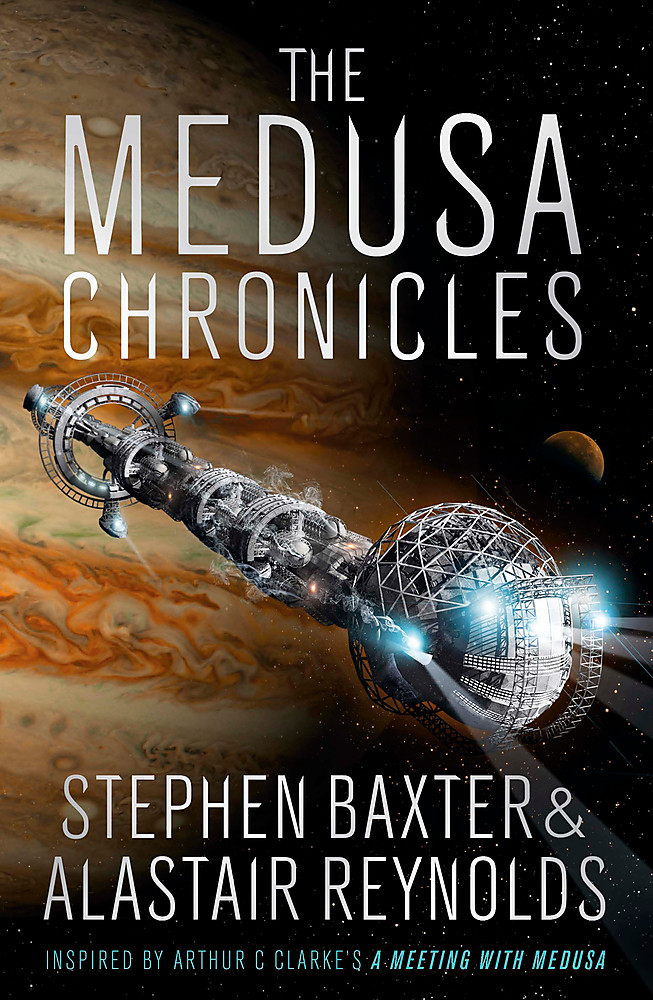
Based on Arthur C Clarke’s novella A Meeting with Medusa, The Medusa Chronicles extends the story of Commander Howard Falcon, who was critically injured in a dirigible crash in the 2080s and has been rebuilt by medical technology as part human, part machine – the first true cyborg.
The world of The Medusa Chronicles has a timeline both like and unlike ours: in the story, humankind didn’t land on the moon until 1971, Robert F Kennedy beat Nixon for the presidency, and chimpanzees have been genetically enhanced into superchimps (or simps) and have formed an independent nation.
Now Falcon will bear witness across centuries to the evolution of not only humanity but also its clashes with – and exploitation of – newer intelligences, including the alarmingly ascendant Machine culture. This novel is an entertaining space opera, but it’s also a deeply thought-provoking tale. Falcon’s character is used to examine the oft-visited sci-fi trope of what exactly defines a human. Falcon acts as both an archetype of a human– machine amalgamation and as an observer as he transitions across the centuries from a human body to a form of pure thought to … who knows what?
Part way through this book I put it aside and re-read A Meeting with Medusa to reacquaint myself with the precursor story, which was immensely helpful in adding context. This tale is deeply rooted in its homage to Clarke but stands firmly on its own two feet as an insightful, albeit somewhat despairing, view of humanity’s evolution.
Reviewed by Leslie Lightfoot


0 Comments