



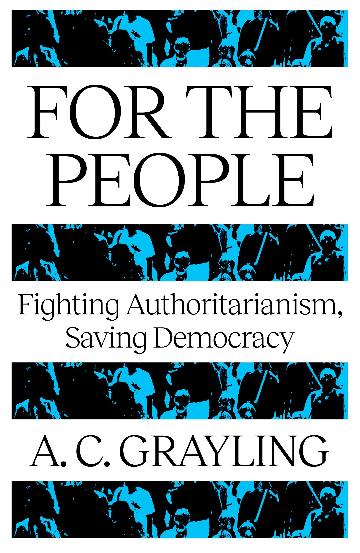
The challenge for a book of this nature is telling the reader something they don’t already know. For good reasons, the health of western democracies is an important and much analysed topic. It is also a subject that this prolific writer has visited previously. Grayling describes the architecture of democracy and the problems besetting it, in particular the failure of elected representatives to deliver for their constituents and the corrosive influence of big money on politics. Even greater than the problems associated with traditional media is mis- and dis-information spread via social media, often created by hostile foreign actors.
The alternatives to our democratic systems are no better, Grayling argues. Improved standards of living, in countries such as China, have come at the cost of a significant loss of personal liberties. Grayling’s consideration of the ‘truer’ form of democracy claimed by China and other authoritarian states – remember the German Democratic Republic – is fascinating.
What does a well-functioning democracy look like? Grayling prefers a proportional electoral system. Nations should develop an adaptable ‘constitution that explicitly directs the activities of government’ to better satisfy the will and needs of citizens. He suggests ‘independent but regulated anti-misinformation “middleware” facilities should be available’, noting that perhaps ‘this should be a condition of allowing online platforms such as Meta and X to operate’.
But how do we get there, especially when powerful interests are pushing in the opposite direction? On this, Grayling has little to say. Possibly I expect too much. Despite the lack of a road map to stronger democracies, For the People is a good addition to a rapidly expanding genre.
Reviewed by Peter Hodge
ABOUT THE AUTHOR
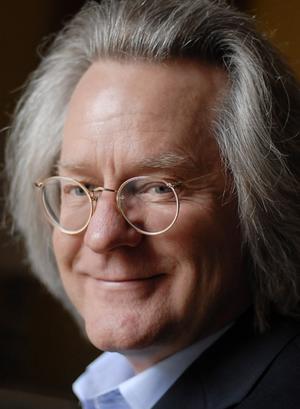 A. C. Grayling is the Founder and Principal of the New College of the Humanities at Northeastern University, London, and its Professor of Philosophy. Among his many books are The God Argument, Democracy and Its Crisis, The History of Philosophy, The Good State and The Frontiers of Knowledge. He has been a regular contributor to The Times, Guardian, Financial Times, Independent on Sunday, Economist, New Statesman, Prospect and New European. He appears frequently on radio and TV, including Newsnight and CNN News. He lives in London.



0 Comments