


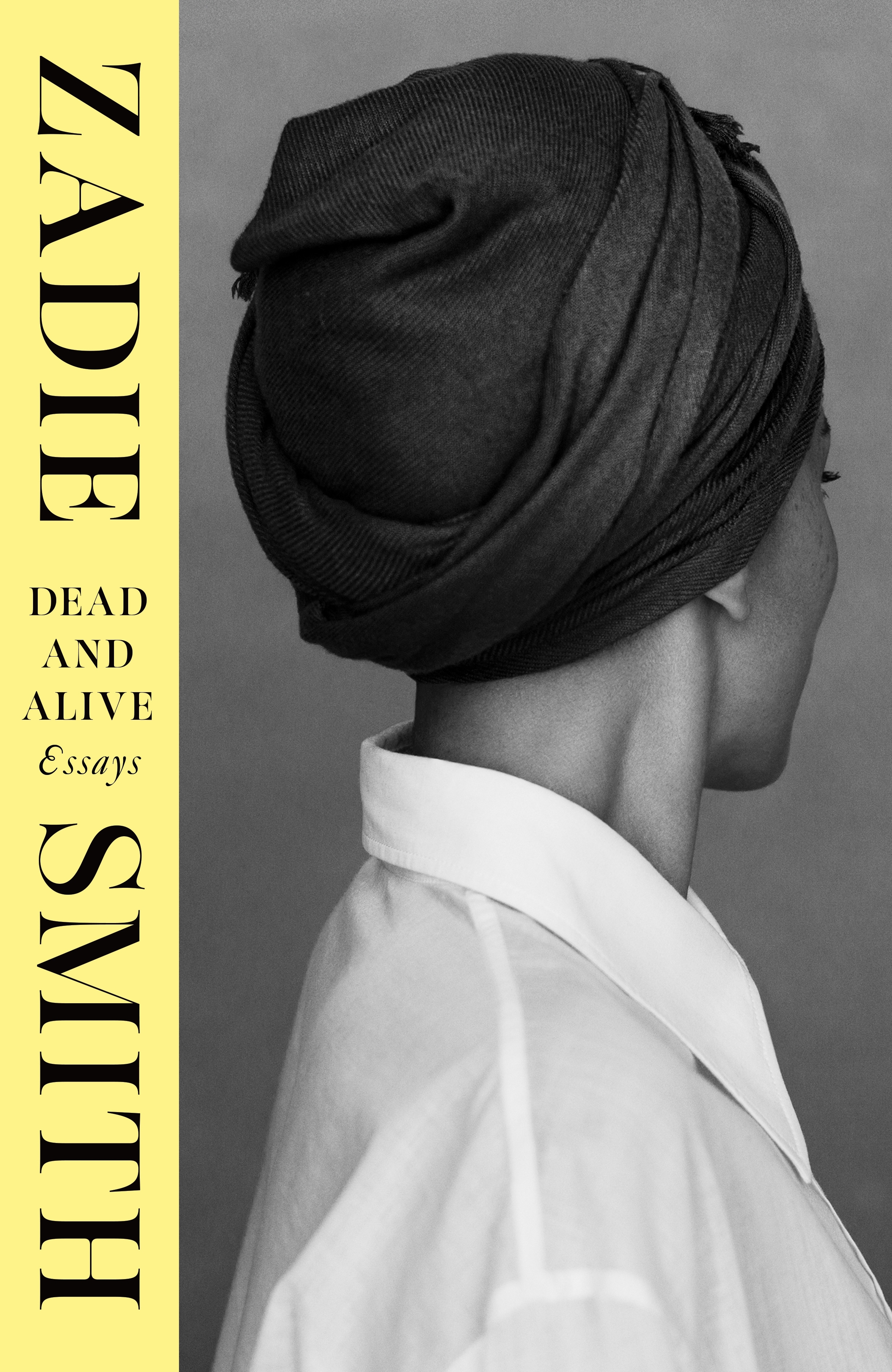
This is a magnificent collection of Smith’s essays, grouped into five parts, with between four and nine pieces each. The title suggests binaries, but really implies possibilities. There are no weak entries hidden at the back of the book. There are also updates to older essays via footnotes/ which are fascinating and often very funny.
The first part, ‘Eyeballing’, focuses on her penchant for visual art. In ‘European Family’, the lead-off essay, an unnamed, entitled man asks and answers his own question of Smith. Her bemusement at his casual disregard is itself a commentary on gendered power. This continues in the second piece concerning Celia Paul – an artist in her own right, not simply Lucian Freud’s muse. Part two, ‘Considering’, begins with the excellent ‘Fascinated to Presume: In Defence of Fiction’. Her immersion in fiction allows her to inhabit the personas of disparate characters. The third part, ‘Reconsidering’, focuses on history and politics. Again, the lead essay is brilliant. ‘Black England’ discusses Gretchen Girzina’s book of the same name, detailing Black lives in Georgian England. Smith also disabuses the notion that race relations are better now. Part four, ‘Mourning’, relates to obituaries written for departed friends and mentors. Especially poignant is her obit for Hilary Mantel. The concluding part, ‘Confessing’, is more self-reflective and concerns her own writing and/or teaching.
Every essay highlights Smith’s curiosity, humility, and intelligence. Her primary focus in each is clarity, which she achieves effortlessly. She’s comfortable in her own skin, as evidenced by the concluding three sentences to ‘Shibboleths’, where she invites the reader to supply their own reductive interpretation of her.
Reviewed by Bob Moore
ABOUT THE AUTHOR
 Zadie Smith is the author of the novels White Teeth, The Autograph Man, On Beauty, NW, Swing Time and The Fraud; as well as a novella, The Embassy of Cambodia; four collections of essays, Changing My Mind, Feel Free, Intimations and Dead and Alive; a collection of short stories, Grand Union; and the play, The Wife of Willesden, adapted from Chaucer.
She is also the editor of The Book of Other People. Zadie Smith was born in north-west London, where she still lives.
Read more about Zadie’s work HERE.
0 Comments