


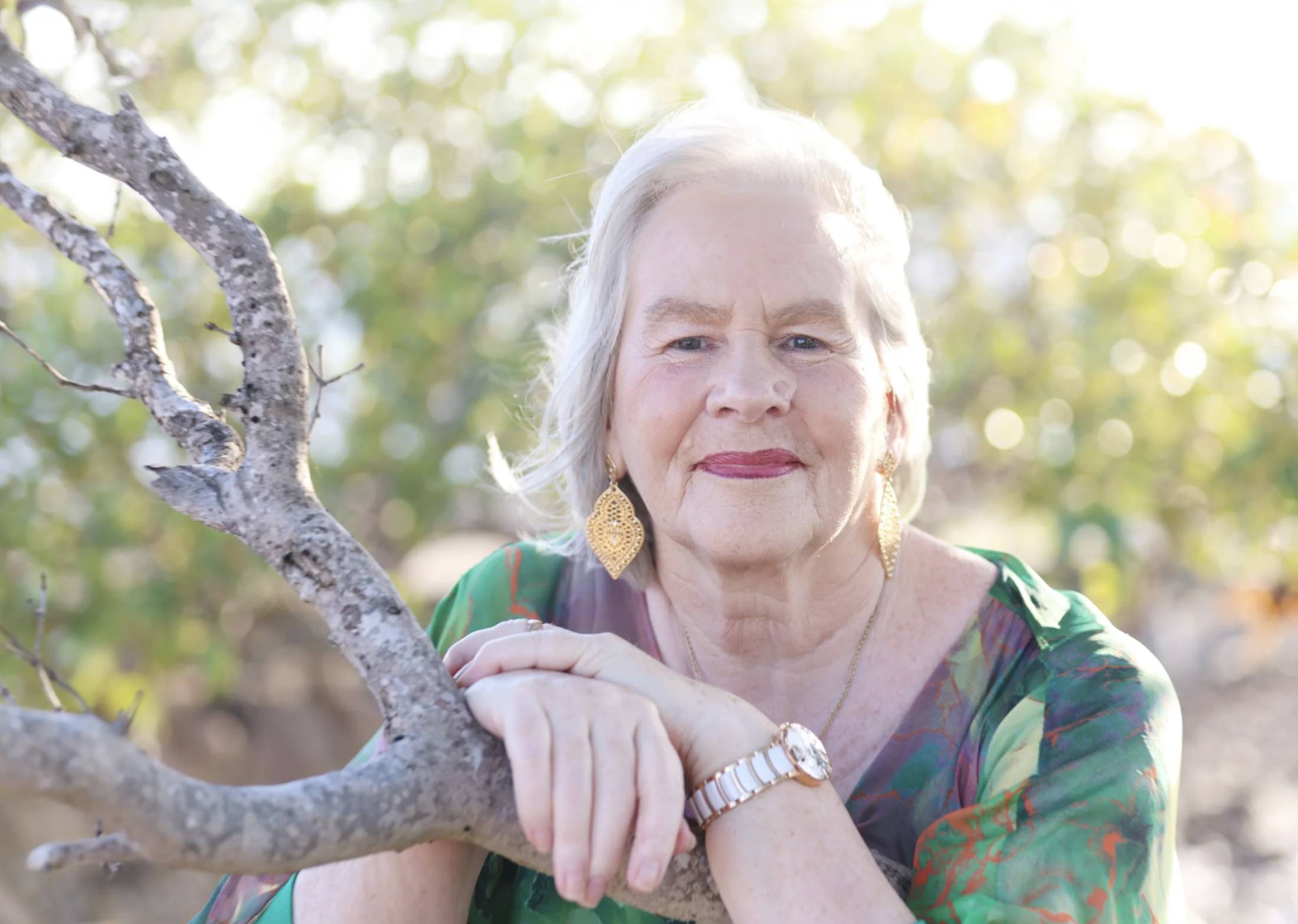
HEATHER MORRIS’ new book, The Wish, is a novel about a teenager’s dying wish that is not mournful, but full of the joy of living, JENNIFER SOMERVILLE discovers.
It takes only moments to die, but the rest of the time we are living … so live, says Heather Morris, author and former social worker who has used many of her experiences in this latest novel, The Wish.
The New Zealand-born, now Brisbane-based author has received international acclaim for her earlier works, mostly historical fiction based on real events, such as The Tattooist of Auschwitz. So, The Wish is her first contemporary story.
 It is by no means a new story. Twenty years ago she wrote it as a screenplay, hoping it would be made into a film.
‘When I started writing 20 years ago, I didn’t think I’d ever have the ability to write a book. I did a couple of courses, one online and one in person, and decided to write a screenplay, as that has rules and a formula, so all I had to do was follow the rules,’ she said.
‘The same thing happened with Tattooist, but it went from being a screenplay to a novel, and now back of course to a miniseries.’
The Tattooist of Auschwitz became a bestselling novel, has been published in more than 50 countries and last year was adapted into a TV miniseries.
Morris’s re-working of her screenplay for The Wish to be a novel deliberately has a neutral setting, so it could seem familiar to readers anywhere in the world.
She retired from social work at 65, seven years ago … when Tattooist was first published … and sees The Wish as covering a story close to her heart, one based on her experience working in hospitals.
Without giving away too much of the plot, it concerns Jesse, a 15-year-old girl with leukaemia, facing death, but using an organisation called Inspire a Wish to have a film made of her life with her family that they can watch when she is dead.
A computer game designer is selected to make her wish come true, but he is emotionally isolated because of his own life trauma. He comes into conflict with Jesse’s father who is seething with anger because he is unable to save his daughter’s life, whereas her mother is facing the fact with love and acceptance.
Morris says the story is not about a particular patient that she met during those 20 years, but is an amalgam of the many patients, their families and friends that she had been honoured to meet, get to know, and with whom she laughed and cried.
Her view is that the social workers’ main role is just to be there, listening to get a feel for what individuals and families need. She believes it’s the little details with which social workers can help, not the big picture matters that people have to work out for themselves.
She says that a social worker can make a difference by helping people understand what they are living with right then, what they’re going to be living with in the future and the best way to navigate that.
Morris writes feelingly about hope, rejecting the oft-used expression, ‘false hope’. She claims there is no such thing, just hope, a word she never uses lightly, but reverently, remembering the many ways it was said to her by people hoping to live long enough to mark milestones in their family lives.
Recalling her depiction of Jesse’s father, who is consumed by anger, still gives Morris goosebumps.
‘Some of the traumatic episodes I witnessed when working in the hospital involved fathers who maybe did not have the same emotional connection that females, such as mothers, did,’ she said. ‘For men determined to be who they want to be, to be strong, the person who keeps everything together, that comes at a cost to them. Just helping them and helping the other people in their lives, be it a partner, or a parent or a brother, is important.
‘I consider that siblings can have a tremendous role, as no-one on earth will ever know an individual as well as his or her siblings, not partners, and not best friends. I saw that many, many times.’
Morris pays tribute to the mothers whom she saw reach the point of accepting their children’s imminent deaths, being able to make the next step and get everyone through it, rather than fighting it.
She hopes some men will read this book and may see something of themselves in the male characters, the computer whiz and the father, each of whom has problems. She already has an established male readership, many of whom write to her, which her publishers tell her is really unusual, in comparison to other authors.
A significant part of The Wish is that Jesse has three friends in hospital, all teenagers with cancer, who support each other, have fun together, and like many teenagers Morris has known, can sometimes face death more realistically than their parents.
When she was a social worker, she saw that the support given to each other by drug and alcohol addicts was often matched by that seen in groups of teenagers with cancer. She believes that teenagers have a concept of death, whereas young children may not, and they have a maturity well beyond their years, knowing that they all have the same sort of condition, with some set to survive while others will not.
Their parents meanwhile grieve for what they know their children will never experience, finishing school, falling in love, being heartbroken, but those things are just concepts for the young people.
Morris says she wrote the story to show the courage and resilience of Jesse and Alex, the computer game designer who comes into her life, and finds his own narrow existence broadening as he struggles to make her wish come true.
Morris freely admits that she asked for expert help from a skilled son in the technical details of what Alex does and was determined that it had to be presented in simple enough terms for anyone to comprehend.
She wants readers to understand that it is never too late to reach out, to ask for help.
During her time working at a Melbourne hospital, Morris heard many dreams and wishes muttered to her, by patients as well as families. While Inspire a Wish is a fictitious organisation, her book lists others from Australia and overseas that people can contact if they wish to learn more about them.
Morris knows that one of the first lessons in writing classes is to ‘write what you know’. She says that is what she has chosen to do with The Wish.
In those 20 years that she worked in the social work department of a large city hospital, every day she came into contact with men, women and children because something tragic or traumatic had happened to them or a loved one. The words ‘chronic illness’ meant that often she would get to know a patient and family over many months, and then there were the words, ‘terminal illness’, which meant there were not happy endings to those stories.
Morris has seen the impact a sick child or teenager can have on their families, friends and neighbours. She has found it profound and long-lasting, so much so that while writing The Wish she did keep thinking of a particular patient’s prognosis.
In her efforts to keep the story universal, and the setting neutral, she is pleased that even the reader of the audiobook version will have a deliberately neutral accent.
So like the Tattooist, which evolved from screenplay to novel to TV miniseries, does Morris think The Wish could do the same?
‘I’m working on it,’ was her cryptic reply. •
**********
 ABOUT THE AUTHOR
 ABOUT THE AUTHOR
Born in Te Awamutu, New Zealand, Heather Morris has lived between Australia and New Zealand since 1971. After completing a Bachelor of Arts degree at Monash University, she worked for over two decades in the Social Work department at a major Australian teaching and research hospital. During this time, Heather continued to pursue her lifelong passion for storytelling, enrolling in professional scriptwriting courses in both Australia and the USA.
In 2003, Heather was introduced to an elderly man who ‘might just have a story worth telling’. The day she met Lale Sokolov changed both their lives. Lale’s story formed the basis for The Tattooist of Auschwitz, published in 2018, and for the follow-up novel, Cilka’s Journey (2019). Three Sisters (2021), the story of three Holocaust survivors who knew Lale from their time in Auschwitz-Birkenau, concluded the Tattooist trilogy. The Tattooist of Auschwitz went on to become one of the 21st century’s bestselling books, and in 2024 an adaptation of the novel was released as a Stan Original Series, to wide acclaim.
Her most recent historical novel, the heart-wrenching Sisters Under the Rising Sun, is based on the true-life experiences of women held in Japanese POW camps during World War II.
Together, Heather’s books have so far sold over 18 million copies worldwide.
The Wish is Heather’s first contemporary novel. It was inspired by her years spent working in a busy public hospital, alongside families facing the toughest of times with love and courage.

0 Comments