




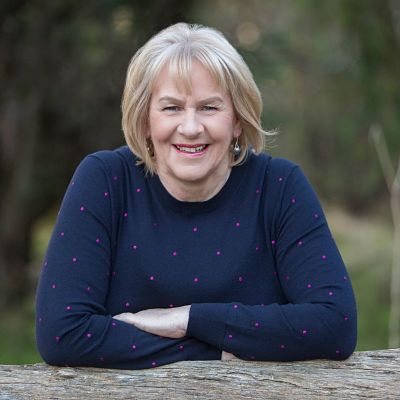
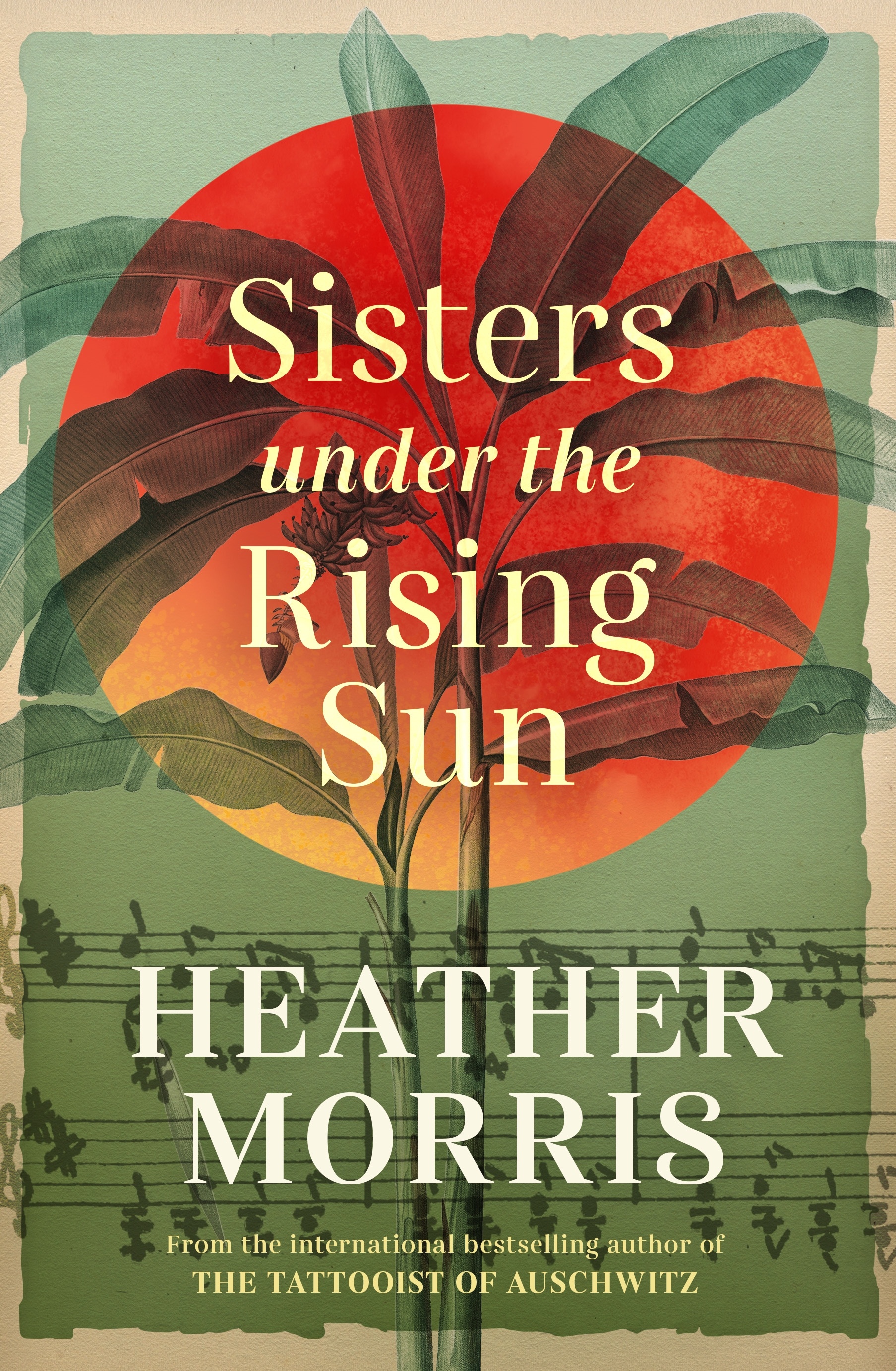
HEATHER MORRIS is a multimillion-copy bestselling author whose novels include ‘The Tatooist of Auschwitz’ series. Her latest novel Sisters Under the Rising Sun is a story of women and war. Good Reading caught up with Heather to discuss her new novel.
Your book is based on a true story – how did you first learn about this story?
I was starting to think about ideas for my next book. I wanted to remain in the same period of history, but was keen to explore another theatre of war, particularly from the perspective of the women and, because of my own background, I was drawn to explore the experiences of our nurses, who have largely gone unrecognised. When I discussed this with my London publisher, Kate Parkin, she talked about the Australian nurses who had been held captive by the Japanese Army in the Indonesian jungles during World War II. I then discovered that one of my colleagues at the Monash Medical Centre had a cousin who was one of those nurses.
I knew then that I had what I look for in all my novels: a personal connection to the story. The more I read about these remarkable women, the more obvious it became that I could not tell their story without including the story of Norah Chambers and the other English women who were imprisoned with the nurses. The two stories were intrinsically entwined.
The book focuses on Norah, Nesta and Vivian – how did you go about reimagining these real women? And what drew you to them?
Knowing someone who could tell me about Nesta from a personal perspective was of incredible importance in reimagining her. One aspect about Nesta stayed with me: her love of laughter. In their testimonies, both her family and many other survivors refer to her finding humour in any circumstance. That she was only 4 foot 10 inches tall, described as a pocket dynamo, created a wonderful visual for me in writing about her standing up to the incredible circumstances in which she found herself.
Vivian’s survival of the massacre on Radji Beach has been well documented, both in her own autobiography and in written and visual testimonies about her. I tried to picture this strong country woman for whom nothing was too much trouble; her courage and dedication to her profession were unshakeable. I needed to include her, but I strongly recommend readers seek out her biography – which covers her life after WW2 – and learn more about this truly amazing Australian woman.
I saw Norah as a somewhat privileged English woman with a brilliant musical ability, who used her skills and talent to make a difference to the morale of the camp internees. It was only when I got to meet her daughter and grandson on the island of Jersey that I heard about the loving, caring attributes she had been known for her whole life. I used the descriptions given to me by her family to create the woman you will read about.
The sisterhood of the women is a central part of the book. How did you approach writing about female friendship in a historical context?
Growing up in rural New Zealand only one generation removed from Norah, Nesta and the others, witnessing and remembering the community of farmers’ wives to which my own mother belonged helped me write about the bond of females of the time. The many testimonies and books I read about the survivors, most written many decades ago when memories were fresh, provided incredible insights into the behaviour of those women. Yes, they had their quarrels and disagreements, but they always seemed to get over them and come together for the common good.
In comparing their survival with that of the men under the same circumstances, it became obvious that one of the main differences was the refusal by the women to allow a hierarchy to dominate. Yes, they had their spokeswomen for each nationality, but there was very little argument about one group of women being superior or not doing their fair share of the work. When someone did do more than their neighbour, there seemed to be no resentment about this.
You spoke to the families of some of the survivors – can you tell us about this?
Spending time with Nesta’s family – both my ex-colleague in Australia and other family members of Nesta’s in Cardiff, Wales – was of immense value. Hearing about Nesta’s life – both growing up in Shepparton, Victoria, and after her return home – from those who knew her intimately, including her parents and her family in Wales as a young girl, gave me a window into the woman she was before she went to war, and the woman who returned. You can’t get this level of personal information from reading books, testimonies and so forth. I am so grateful to Deb, Kathleen and Brenda, who are proud to be her family.
It required the skills of a Sherlock Holmes for my researcher to discover that Norah and her family had gone to live on the island of Jersey following their return to England. Through the local church we found Sally, the eight-year-old daughter of Norah who had been placed on a ship with her aunt and two young cousins fleeing a burning Singapore a few days before her parents boarded the ill-fated Vyner Brooke. Spending time with Sally as an 87-year-old beautiful woman who never stopped smiling, and Norah’s grandson, Seán, is a memory never to be forgotten.
I returned to Jersey twice and received from Sally and Seán not only the story of Norah but also the most precious documents: music scores written by Norah 80 years ago on scrap paper in the jungles of Sumatra. To hold these precious documents was incredibly moving. I am so grateful to Sally and Seán for giving us permission to reproduce some of the many pages of music Norah wrote. Sadly, Sally died in May this year, before she got to hold a copy of her mother’s story, but not before she heard from me what I was writing.
Were you surprised by anything while researching?
Absolutely. Many of the early books and testimonies I read never mentioned the number of women in the camp – between 500 and 600 women and children. The most significant event I believe I have written about, concerns the Australian nurses being forced into being ‘comfort women’ for the Japanese officers. How this played out has for the most part been whitewashed from history, due to a pact the nurses made at the time; however, one of them, as an old woman, revealed what truly happened while still protecting the names of the nurses involved.
There is a lot more to this storyline untold. Discovering how the English women were treated on their return to England both surprised and angered me. If I had to name one aspect of this story that perplexes me, I would have to say that the fact this story of women’s survival during the Second World War has largely been ignored in the history books, particularly the Aussie nurses, is an insult to these brave women. Their names deserve to be written alongside the Australian men, both victims and survivors, who were held captive by the Japanese Army in Singapore and Malaya.
Why did you want to share this story?
I don’t go looking for stories about females only. What I look for are untold stories, or seldom-told stories. I feel an incredible injustice has occurred in not placing the Australian nurses and English women and their incredible experiences alongside the storylines –written, told, and filmed – of returning men, soldiers and civilians who were held captive by the Japanese. The women’s story is one of resilience, courage and commitment to others; a story that we can learn from.
 ABOUT THE AUTHOR
 ABOUT THE AUTHOR
Heather Morris was born in Te Awamutu, New Zealand, a small rural town in the middle of the North Island. I had an older brother, then three more boys followed. Her childhood was spent in the even smaller village of Pirongia with four generations of her family living within proximity of each other.
Her primary school years were spent at the local school which at that time only had a handful of classrooms. For secondary schooling she went to Te Awamutu College.
In 1971 she moved to Melbourne, Australia, to escape what she considered the claustrophobic environment of having too many extended family members around me. Soon after arriving in Melbourne she met her husband Steve (don’t call me Stephen) Morris and they were married in 1973.
In 1975 they returned to New Zealand, living in Christchurch, South Island. Their first son was born in 1976, another son in 1980 and our daughter in 1985.
In 1996 she decided to follow my passion for storytelling and enrolled in The Professional Scriptwriting Course through the Australian College of Journalism.
She went on to attend many screenwriting courses, seminars and workshops in both Australia and the U.. Her workplace provided her with a wealth of heroic storylines, several of which she adapted into screenplays that now line the bottom drawer of her desk.
And then she met Lale Sokolov.

0 Comments