



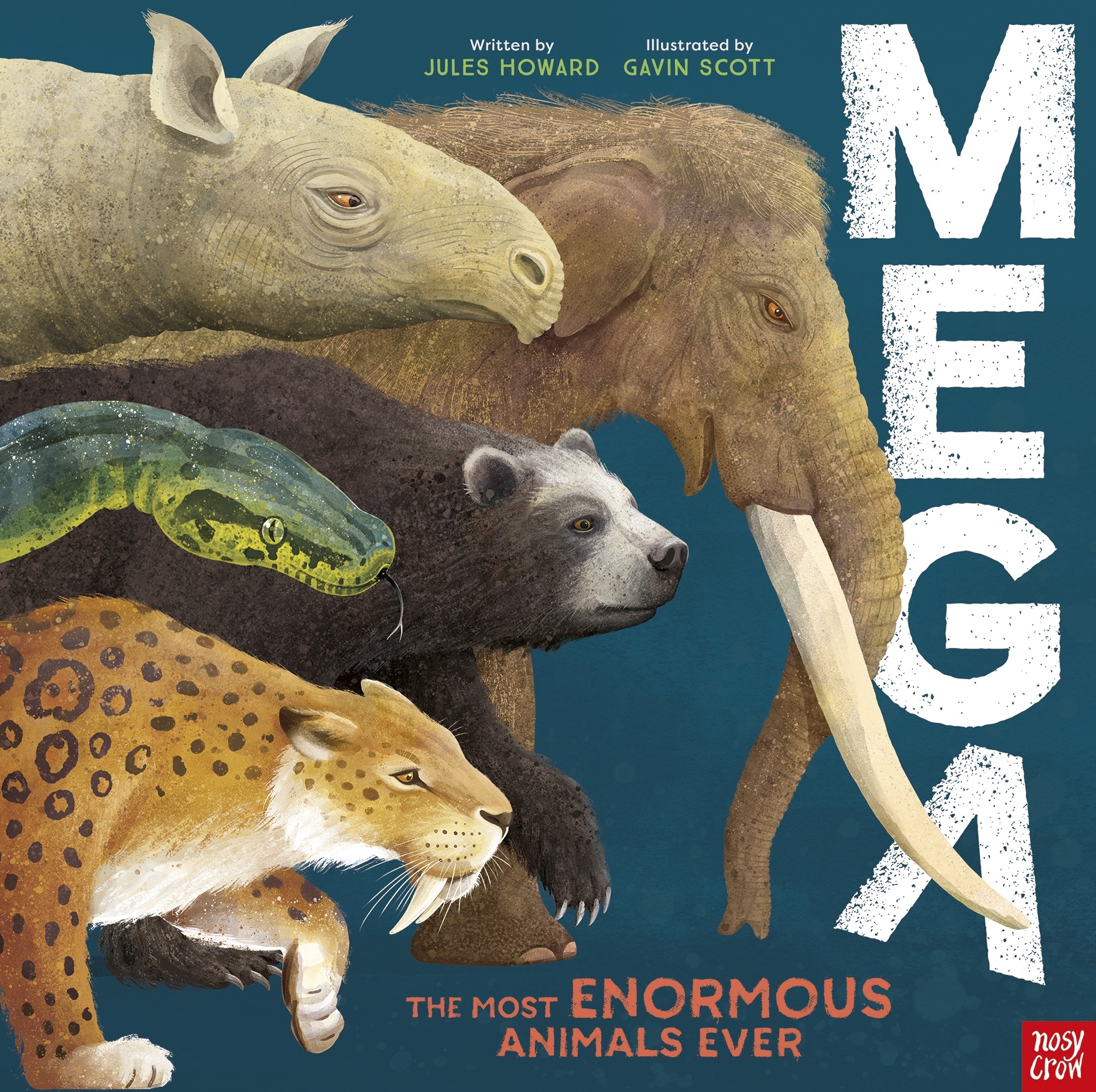
This book is simply mega all around.
The main part of the book is sectioned into Mighty Mammal, Really Big Birds, Rampaging Reptiles, Supersize Fish and Monstrous Molluscs.
After each extinct megafauna we explore the modern. From Madagascar’s largest flightless elephant birds (standing over three metres tall) to today’s ostrich and the colourful southern cassowary. The now extinct Asian straight-tusked elephant is considered to be the largest mammal to ever have evolved. It stood taller than a double-decker bus. The biggest elephants of today include the four metre tall African Bush elephant who is becoming rarer as it is hunted. We meet the extinct sabre-tooth tiger then the biggest felines of today like the lion and jaguar.
The extinct megafauna is fascinating. From the Paraceratherium, which lived 23 million years ago, who were a part of the giant odd-toed unguales, hooved mammals that walked on an odd number of toes. Their thigh bone was bigger than a human body! Of course there is Australia’s own marsupial, Diprotodon, a prehistoric wombat that lived 50 000 years ago. It is believed some may have weighed more than three tonnes.
A few pages at the back discuss extinction,
why it is still happening, and how we can care for our environment from citizen science to picking up litter.
Mega is chock-a-block with information, provided in small chunks for easy digestion. The colourful illustrations fill the oversized pages gloriously. It’s also considerable in length at over 130 pages, so great value.
Reviewed by Emily Ross
Age Guide 7+
ABOUT THE AUTHOR & ILLUSTRATOR

Jules Howard
Jules Howard is a zoology correspondent, author, science-writer and broadcaster. He writes for the Guardian, BBC Wildlife Magazine and Science Focus magazine and appears regularly on TV and radio, including Newsround and BBC Radio 5 Live. Jules’s popular non-fiction books for children include The Who, What, Why of Zoology, Respect the Insect and the bestselling Encyclopedia of Animals.


0 Comments