


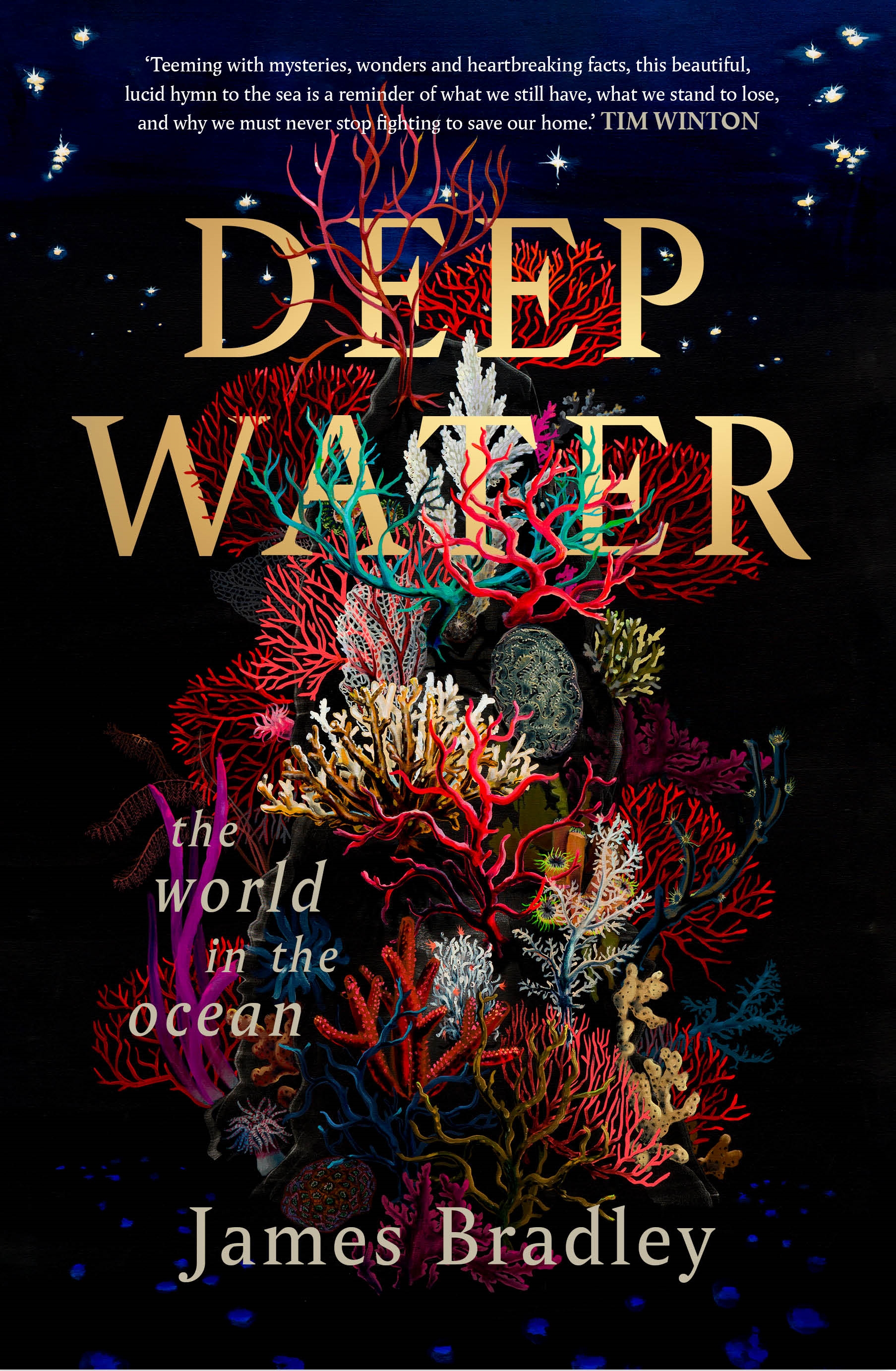
James Bradley is best known as a writer of fiction, although his bibliography includes essays and literary criticism. He’s also been shortlisted twice for his science writing. This non-fiction book draws together all these writerly skills in a comprehensive, dense study of the most important element of both our planet and ourselves.
Bradley has an enduring affinity with water. It offers him solace and peace in an otherwise chaotic world. The book begins – counterintuitively – with fire. Bradley was holidaying at Jervis Bay at the time of the catastrophic bushfires in that area. It was a time of personal crisis as well: his mother’s cancer had progressed. This book’s origins are personal.
Bradley describes the time when the Earth had no water, detailing the theories of its arrival, from Earth already bearing the necessary precursors, to the serendipitous strike from water-bearing asteroids. Bradley follows with an examination of both our body’s watery constitution and our cultural connection to it. For aquatic species, water is both ubiquitous and elemental to survival. For humanity, water has often been ripe for exploitation, from our own wastefulness to shipping in all its forms. As the book progresses, Bradley covers the mounting obstacles the planet – and its flora and fauna – faces in maintaining this vital resource.
Chapters in Deep Water begin with personal reflection, allowing the reader a point of access to the science which follows. This is a masterstroke, meaning that the science is detailed, yet comfortably delivered. The adjective in the title is relevant to more than water: it reflects Bradley’s extensive research and the command of his craft. More importantly, though, it refers to the author himself: this book is deeply felt and deeply personal.
Reviewed by Bob Moore
ABOUT THE AUTHOR
 James Bradley is a writer and critic. His books include the novels Wrack, The Deep Field, The Resurrectionist, Clade and Ghost Species, a book of poetry, Paper Nautilus, and The Penguin Book of the Ocean.
His essays and articles have appeared in The Monthly, The Guardian, Sydney Review of Books, Griffith Review, Meanjin, the Weekend Australian and the Sydney Morning Herald. In 2012 he won the Pascall Prize for Australia’s Critic of the Year, and he has been shortlisted twice for the Bragg Prize for Science Writing and nominated for a Walkley Award. He lives in Sydney.


0 Comments