




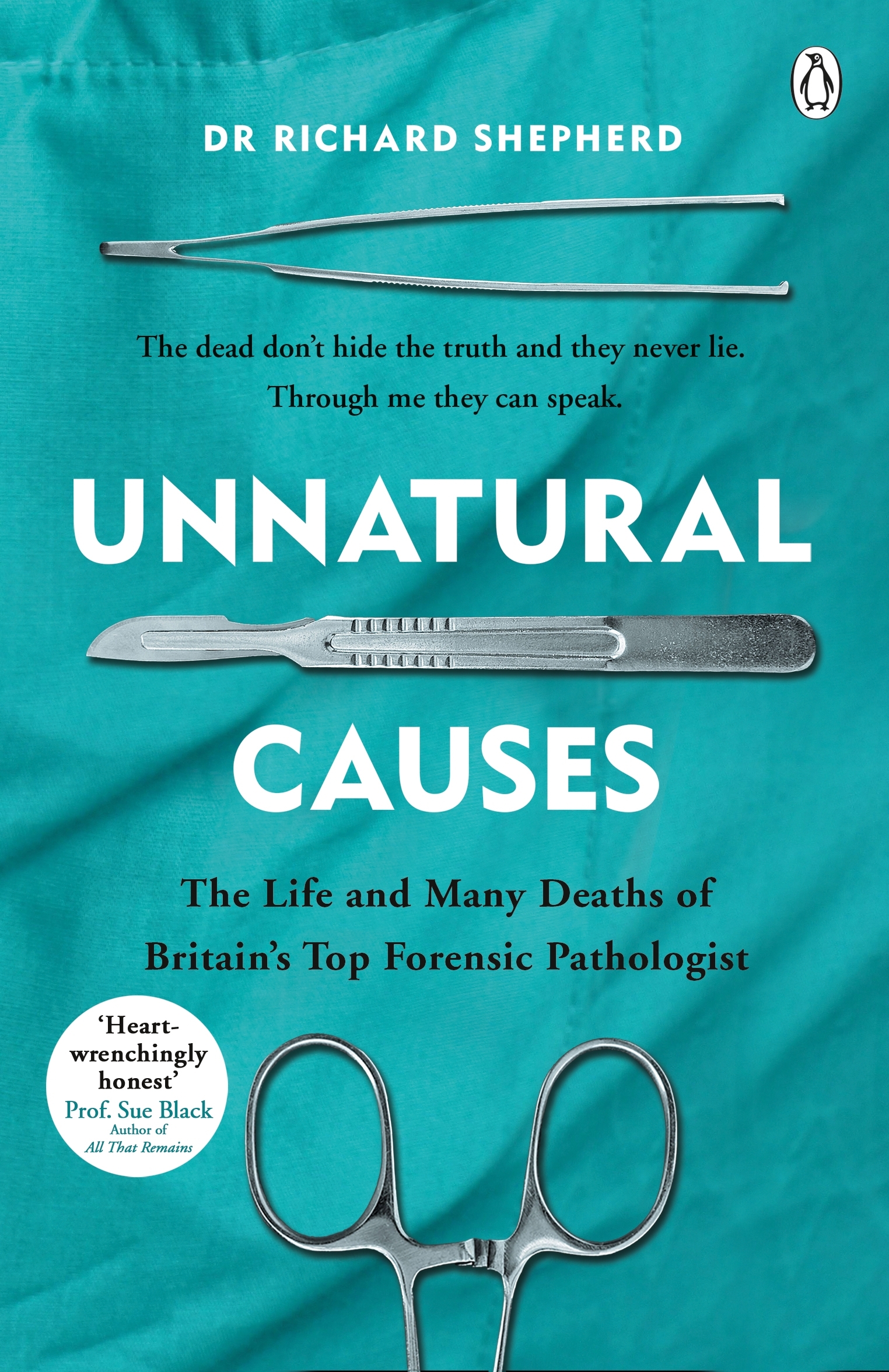
At an early age, allowed to spend time with the body of his dead mother, Richard Shepherd became curious of the internal workings of human life and why people die. This led him to a fascination with a copy of a book called Simpson’s Forensic Medicine.
This book inspired Shepherd to want to help police to solve crimes and a resolve to become Britain’s top forensic pathologist.
Being a forensic pathologist is different to other forms of medicine, in that their patients are already dead. Many have died from natural causes, or stabbings, shootings, natural disasters, traffic accidents and murders. Their goal is to provide detailed, proven and indisputable evidence of cause of death, often as a witness in a Coroners Court or at criminal trials. Shepherd became a renowned expert in wounds caused by knives. He practised on watermelons at home, in the kitchen, much to the dismay of his wife. He could tell if the protagonist was left or right handed, the direction of the knife’s entry, the type of knife used and the strength of the person delivering the blow.
His home life was often disrupted as he could be called out at any time, day or night. He took time to give assurance and explanation to victims’ families. His career, too, was not without controversy.
I was apprehensive about the detail of autopsies but Shepherd’s style of writing made me feel comfortable and allowed me to understandthat autopsies are necessary and a normal part of the cycle of life.
A really interesting read.
Reviewed by David Clive



0 Comments